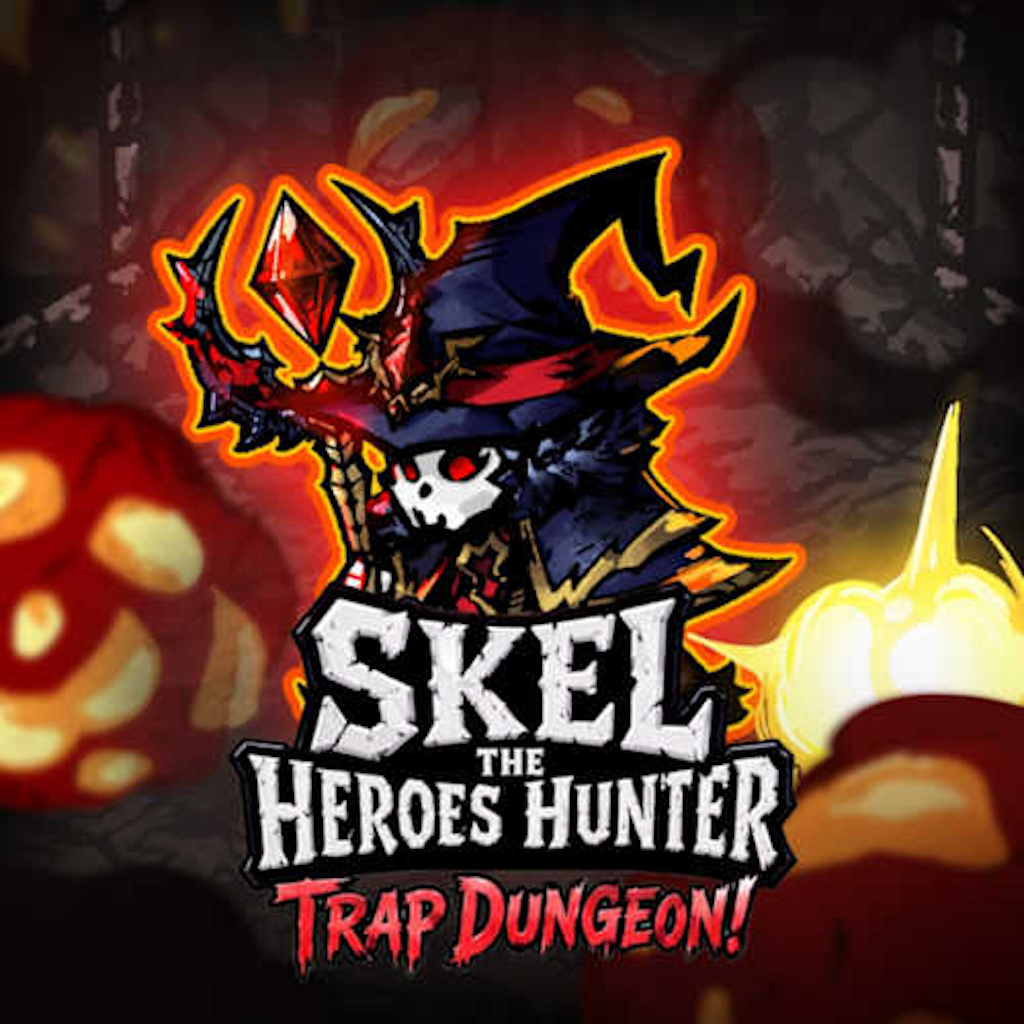
There is something wonderfully satisfying about finally asking the question that dungeon-crawling games have avoided for decades: what happens when the monster is actually the one we’re rooting for? Skel the Heroes Hunter: Trap Dungeon! turns the traditional fantasy adventure completely upside down, putting you in the bony little boots of a skeleton who has no intention of letting a procession of self-righteous heroes storm into his home and cause trouble. The heroes may believe they are marching in to cleanse an evil dungeon, but from Skel’s perspective, they are simply trespassers who have picked a very bad place to spend the afternoon. It is a wonderfully daft premise, but beneath the humour lies a surprisingly entertaining mix of dungeon defence, hack-and-slash combat and roguelite progression.
Developed and published by TROOOZE, Skel the Heroes Hunter: Trap Dungeon! takes the familiar dungeon-defence formula and gives it a rather wicked little twist. Instead of sitting safely behind the walls while traps do all the work, Skel eventually has to get his own skeletal hands dirty. By night, you build and upgrade your dungeon, arranging traps and experimenting with combinations that can turn the corridors into a nightmare for anyone foolish enough to enter. By day, you take direct control of Skel and go hunting, battling invading heroes and claiming their heads so you can steal their abilities.
Welcome to Skel’s Dungeon
The story begins with the Demon King defeated and his army apparently wiped out. The Demon King uses the last of his power to seal himself away in an abandoned dungeon, leaving only one humble servant behind. That servant is Skel, a seemingly insignificant skeleton who has survived where far more powerful creatures have fallen.
Humanity naturally assumes the threat has been dealt with. Unfortunately for them, heroes eventually arrive at the dungeon to finish the job, apparently unaware that the place is now Skel’s home. This gives the story its central joke, as the people storming into the dungeon believe they are the protagonists while you stand on the other side of the door wondering why these idiots keep turning up.
There is more going on beneath the comedy. As Skel defeats the invading heroes, he discovers that the weapons and powers he takes from them are linked to the Demon King’s possible resurrection. Blood Stones earned by sacrificing defeated heroes can be offered at the altar, slowly bringing the old master closer to returning. This gives the otherwise straightforward dungeon defence concept a little more narrative purpose.
Two Halves of the Same Adventure
The most interesting design decision is the division between night and day. These two phases give Skel the Heroes Hunter! a rhythm that prevents the experience from becoming purely one thing.
At night, you become the architect of misery. Traps can be placed, upgraded and combined throughout the dungeon, allowing you to build defensive setups based on the resources and abilities available to you. Fire, frost, spikes, poison, blood, lightning and summoning traps can all be used, and discovering combinations that work together is one of the more enjoyable strategic elements.
Then daylight arrives and planning gives way to action. Skel heads into battle and you take direct control, hacking through the heroes who have invaded his dungeon. It is a simple transition, but it gives the game a satisfying sense of cause and effect. You spend time preparing the battlefield, then get to see whether your clever little death maze actually works.
Becoming the Monster
Skel’s transformation system is one of the game’s best ideas. Defeating heroes lets him claim their heads and absorb their powers, allowing you to switch between combat styles.
A swordsman offers a different approach from a mage, while shield-bearing and rogue-style abilities provide further alternatives. This means your defeated enemies are not simply sources of experience or loot. They become new tools in your arsenal.
There is a wonderfully petty satisfaction in taking down a powerful hero and then using their own abilities against the next fool who comes through the door. It fits the game’s central concept perfectly. These heroes arrive believing they are going to destroy the dungeon, only to discover that their own strengths can be turned against them.
It also gives each run a little more flexibility. You can adapt your approach depending on what you have unlocked and the situation you find yourself in, rather than being locked into one character build from beginning to end.
Building the Perfect Trap
The dungeon-building side is where the game starts to show more strategic depth. There are more than 70 combo rooms to discover, each introducing new effects or interactions. The ability to combine different trap types encourages experimentation, particularly once you start thinking about how one effect can make another considerably nastier.
For example, a freezing effect followed by something more damaging can create a very different situation from simply relying on one trap repeatedly. The fun comes from discovering these interactions rather than being handed the perfect combination immediately.
That said, the system does not always reach the complexity its numbers suggest. The basic principles are easy to understand, and once you have found a few combinations that work reliably, it can become tempting to rely on them rather than constantly reinventing your dungeon. There is plenty to discover, but the underlying structure remains relatively straightforward.
The Heroes Are Coming
Watching heroes enter your carefully constructed dungeon is probably the closest Skel the Heroes Hunter! gets to genuine tower defence satisfaction. There is something deeply amusing about watching an adventurer confidently walk into a room you know is about to become a very unpleasant place.
The different trap types give you plenty of ways to deal with incoming enemies, and the best moments come when several effects combine exactly as planned. Seeing a carefully prepared section of the dungeon chew through an invading group provides that little burst of satisfaction that makes defensive games so addictive.
The problem is that enemy behaviour can be fairly predictable. Once you have played through the same sorts of encounters several times, the surprise starts to fade. The heroes are not always clever enough to force you to rethink your strategy, and repeated wave structures can make later runs feel familiar rather than exciting.
Hack, Slash and Repeat
The combat itself is accessible rather than particularly sophisticated. Skel can move into battle and attack his enemies directly, with his different forms providing some variation in how you approach encounters.
There is a satisfying immediacy to jumping into a fight after spending time preparing your dungeon. You are no longer thinking several steps ahead. You are simply reacting, attacking and trying to survive.
However, the combat does not quite have the weight or precision of the best action RPGs. Enemy encounters can sometimes blur together, and the limited visual variety means that the thrill of discovering something new gradually gives way to the familiarity of another battle against another group of invading heroes.
This is where the game’s budget nature becomes apparent. It has enough mechanical variety to keep you interested, but it lacks the presentation or combat sophistication to disguise its relatively modest ambitions.
Perks, Traits and Progression
The roguelite progression system helps give those ambitions longevity. Before each run, you can choose from more than 20 perks, allowing you to influence how Skel and his traps perform.
Trait points can also be spent to improve different aspects of your dungeon and character, creating a steady sense of progression even when a particular run does not go your way. The Bestiary provides another layer of tracking, helping you monitor what you have encountered and what remains to be discovered.
There is something satisfying about watching your options gradually expand. Early runs can feel relatively basic, while later attempts give you access to more transformations, trap rooms, artefacts and combinations. It creates that familiar roguelite temptation to think the next run might finally be the one where everything comes together.
The Joy of Being the Bad Guy
What ultimately gives Skel the Heroes Hunter! its personality is its willingness to embrace the ridiculousness of its premise. Skel is not some terrifying ancient evil. He is a little skeleton trying to defend his home, while the heroes marching towards him have somehow convinced themselves they are the good guys.
That perspective makes even familiar fantasy tropes feel slightly different. A knight approaching your dungeon is no longer someone you are expected to cheer for. They are an inconvenience. A mage is not a helpful adventurer. They are another potential source of stolen power.
It is a small change, but it gives the game an identity that many budget action RPGs struggle to establish. There is humour in the reversal, but there is also a strange sense of affection for Skel himself. You are not trying to conquer the world. You are simply trying to keep your little corner of it.
When the Formula Starts to Repeat
Unfortunately, the novelty of the premise can only carry the experience so far. Once you have seen the basic trap combinations, learned how the enemies behave, and settled into a preferred combat style, repetition begins to creep in.
The visual variety is also limited, with environments and enemy designs not changing enough to keep exploration feeling fresh. The recurring wave structures reinforce that sense of familiarity, and players looking for a deep strategic dungeon-management game may eventually find the systems a little too straightforward.
There is also a curious imbalance between the sheer number of things to unlock and the simplicity of the moment-to-moment gameplay. There are lots of traps, perks, forms and artefacts to discover, but the fundamental loop remains largely unchanged.
That makes Skel the Heroes Hunter! much easier to enjoy in shorter sessions than as an endless obsession. A few runs can be great fun, particularly when experimenting with a new combination, but the repetitive structure becomes more noticeable the longer you play.
Verdict
Skel the Heroes Hunter: Trap Dungeon! is a mischievous twist on the traditional dungeon crawler, and its greatest success is finding a fresh perspective on a genre that has been around for a very long time. Playing as the monster rather than the hero gives the entire adventure a playful personality, while the combination of trap building and direct combat provides a satisfying two-part gameplay loop.
The transformation system is particularly enjoyable, allowing Skel to steal the abilities of defeated heroes and turn their strengths against them. The large selection of traps, combo rooms, artefacts and perks also gives you plenty of opportunities to experiment with different approaches, while the story provides enough motivation to keep pushing towards the Demon King’s potential resurrection.
It is let down by predictable enemy behaviour, repetitive waves, modest visual variety and combat that does not quite have the depth of more ambitious action RPGs. Those limitations become increasingly obvious over longer sessions, and players looking for a truly demanding strategic experience may find themselves wanting more.
Yet there is a certain charm to the whole thing that is difficult to dismiss. Watching your little skeleton stand proudly in his dungeon while another group of self-proclaimed heroes comes marching towards their doom is inherently entertaining. Skel the Heroes Hunter! may not reinvent the dungeon defence genre, but it certainly has enough personality to make its upside-down take on the formula worth exploring.
Sometimes it is nice to be the bad guy. Especially when the bad guy is a tiny skeleton with a trap-filled dungeon, a collection of stolen hero abilities and absolutely no intention of moving house.