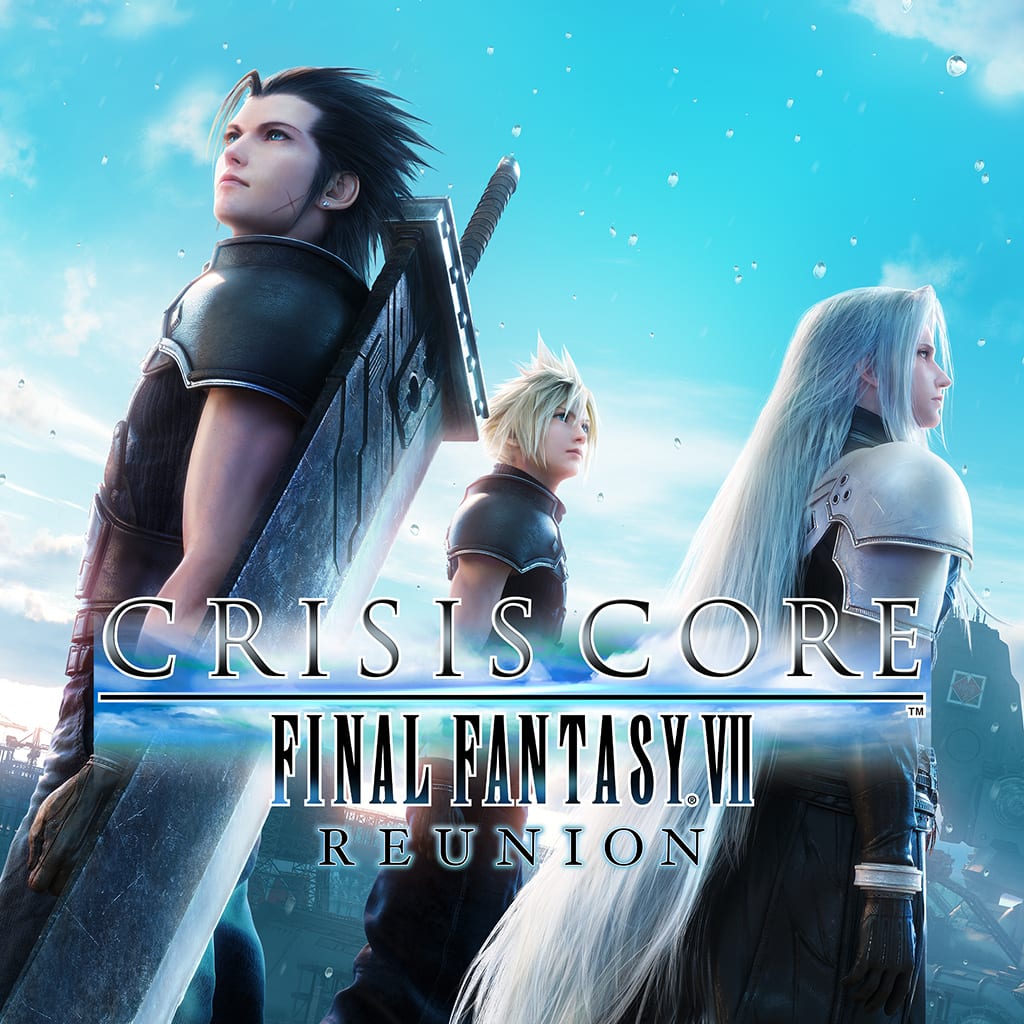
Some games simply refuse to disappear. They may have been released on older hardware, built around the limitations of another era, yet something about them keeps pulling players back. Crisis Core –Final Fantasy VII– Reunion is one of those games. Originally released for the PSP in 2007, the story of Zack Fair has spent years in the shadow of the much larger Final Fantasy VII saga, despite being one of its most important pieces. With Reunion, Square Enix has given Zack’s adventure a remarkable visual and mechanical overhaul, turning what was once a handheld spin-off into something that feels far more at home alongside the modern Final Fantasy VII experience.
What makes Reunion particularly interesting is that it is not simply a prettier version of an old game. The environments, character models, combat system, voice acting, user interface and soundtrack have all received substantial attention, while the fundamental story remains recognisably the same. That creates an unusual mixture of modern presentation and old-school design, and occasionally the two sides rub against each other. Yet when everything comes together, particularly during the game’s emotional peaks, there is a genuine sense that Zack’s story has finally been given the stage it deserves.
A Hero Worth Remembering
At the heart of Crisis Core is Zack Fair, thankfully one of the game’s greatest strengths. Zack is almost aggressively optimistic, enthusiastic and energetic, which initially makes him seem like a fairly straightforward young hero. As the adventure progresses, however, that enthusiasm becomes something much more meaningful. He genuinely believes in doing the right thing, even when the organisation he serves becomes increasingly difficult to defend.
Zack’s journey through SOLDIER brings him into contact with some of the most important characters in the Final Fantasy VII universe. Angeal becomes a mentor figure whose ideas about honour and responsibility profoundly influence Zack, while Sephiroth appears before his transformation into the legendary figure players know from the original game. Cloud is also present, though his importance develops gradually, and Aerith provides another emotional connection that becomes increasingly significant as the story moves towards its inevitable destination.
There is a bittersweet quality to the entire adventure because anyone familiar with Final Fantasy VII already knows that Zack’s story is heading somewhere painful. That knowledge doesn’t diminish the impact. If anything, it gives many of the quieter moments additional weight, as conversations, friendships and seemingly insignificant encounters can carry an uncomfortable sense of finality. Zack’s optimism becomes both his greatest strength and the source of much of the game’s emotional power.
Combat Gets a New Lease of Life
The original Crisis Core was built around the PSP’s controls and hardware, and its combat could sometimes feel awkward by modern standards. Reunion makes substantial changes here, creating an action system that feels considerably more responsive. Zack can attack in real time, dodge incoming strikes, block attacks and switch between materia abilities without constantly wrestling with the original system’s limitations.
The difference is immediately noticeable. Battles have much more momentum, and there is a satisfying rhythm to moving around enemies, finding openings and unleashing materia when the opportunity presents itself. Zack’s sword attacks feel considerably more impactful than in the PSP release, while blocking and dodging give the player more control over difficult encounters.
Materia remains central to character development, allowing Zack to equip offensive spells, support abilities and special techniques. Materia Fusion adds another layer of experimentation, giving players the opportunity to combine abilities and create more powerful options. It is an enjoyable system because there is always the temptation to try another combination, particularly when preparing for tougher encounters.
Then there is the Digital Mind Wave, or DMW. The strange slot machine system from the original game returns, spinning away in the corner of the screen and occasionally triggering powerful abilities, buffs, summons or limit breaks. It is still an unusual mechanic, and whether you love it or find it distracting will largely depend on how much randomness you enjoy in an action RPG. Personally, there is something wonderfully chaotic about watching those reels spin during a difficult fight and hoping they land on something useful.
The PSP Skeleton Beneath the Gloss
For all its improvements, Reunion cannot completely hide its origins. This is still a game originally designed for a handheld system, and that becomes particularly apparent when you venture away from the main storyline.
The most obvious example is the mission structure. There are hundreds of optional missions throughout the adventure, and while they can provide useful materia, equipment and other rewards, many of them take place in very compact environments. You will often find yourself entering an area, fighting a handful of enemies, reaching the target, returning to the menu, and then moving on to another remarkably similar location.
These missions are perfectly suited to the PSP’s short-session mentality, but they can feel repetitive on modern hardware. There is nothing wrong with dipping into them occasionally, particularly when you want to test a new build, but attempting to clear everything can quickly turn the adventure into a grind.
The main campaign fares considerably better. It has a clear sense of progression and manages to keep Zack moving between locations while introducing new characters, conflicts and revelations. The contrast between the focused main story and the sprawling collection of optional missions is quite striking.
A Beautiful Reunion
Visually, Reunion is arguably the most impressive part of the package. Character models have been rebuilt, environments upgraded, and the overall presentation brought much closer to the visual language established by Final Fantasy VII Remake. Seeing Zack, Sephiroth, Aerith and the other familiar faces rendered with modern character models makes a tremendous difference.
The upgrade is especially effective during the major story scenes. Faces are far more expressive, character interactions carry greater weight, and fully voiced dialogue gives important conversations a weight that simply wasn’t possible in the original PSP presentation. It also helps Zack enormously, as his personality is conveyed through his voice, mannerisms and enthusiasm.
The newly arranged soundtrack complements the visual overhaul beautifully. Familiar themes have been refreshed without losing their identity, and the music continues to provide much of the emotional foundation during the game’s quieter, more dramatic moments. The result is a presentation that feels considerably more substantial than the original hardware could ever have managed.
The Heart of Zack’s Story
Where Crisis Core –Final Fantasy VII– Reunion really earns its place is in its emotional storytelling. It isn’t perfect, and the script occasionally veers into the sort of melodrama that Final Fantasy has never been shy about embracing. There are moments when characters speak with almost theatrical intensity, and some of the dialogue can be wonderfully ridiculous.
But beneath that, there is genuine heart. Zack’s relationships with Angeal, Aerith and Cloud give the story its emotional foundation, while the unfolding mystery surrounding SOLDIER and Shinra provides the larger narrative framework. The further Zack travels, the more the pieces begin to connect with the events of Final Fantasy VII.
The tragedy works because Zack himself remains wonderfully sincere. He wants to become a hero, protect the people he cares about, and live according to the ideals passed down to him. Watching those ideals tested is what gives the story its soul, and the final stretch remains remarkably powerful even when you already know what is coming.
A Few Cracks in the Armour
Reunion isn’t without problems. The environments are often relatively simple, particularly when compared with modern full-scale RPGs. Some locations feel more like corridors connecting battles than genuinely explorable places, while the repetitive optional missions can become tiring surprisingly quickly.
There is also a certain oddness created by the collision between modern character models and older level design. Characters can look spectacular one moment before walking through an environment that clearly originated on much older hardware. It doesn’t ruin the experience, but it occasionally reminds you that this is a remaster rather than a completely rebuilt game.
The writing can also be an acquired taste. Some scenes are genuinely touching, while others lean heavily into anime melodrama and fantasy terminology. Yet that eccentricity is part of Crisis Core’s identity, and stripping it away would probably remove some of what makes Zack’s adventure memorable.
Final Thoughts
Crisis Core –Final Fantasy VII– Reunion is a fascinating example of how far a remaster can go without becoming an entirely different game. Square Enix has taken a PSP action RPG, rebuilt its visual presentation, modernised its combat, added full voice acting and refreshed its soundtrack, while retaining the original adventure’s structure and personality. The result is a game that occasionally shows its age beneath the polished exterior, particularly in its repetitive side missions and dated environmental design, yet rarely feels like an irrelevant relic.
More importantly, Zack Fair finally gets the spotlight. His story adds considerable context to the wider Final Fantasy VII universe, but it works because Zack himself is such an immediately likeable character. His determination, humour, friendships and unwavering belief in what it means to be a hero give the adventure an emotional core that endures despite the game’s quirks.
There are certainly more technically ambitious RPGs available today, but few have quite the same combination of nostalgia, heart and tragedy. Crisis Core –Final Fantasy VII– Reunion doesn’t erase its PSP origins, nor should it. Instead, it gives that old adventure a beautiful new coat of paint and a combat system capable of carrying it into the modern era.