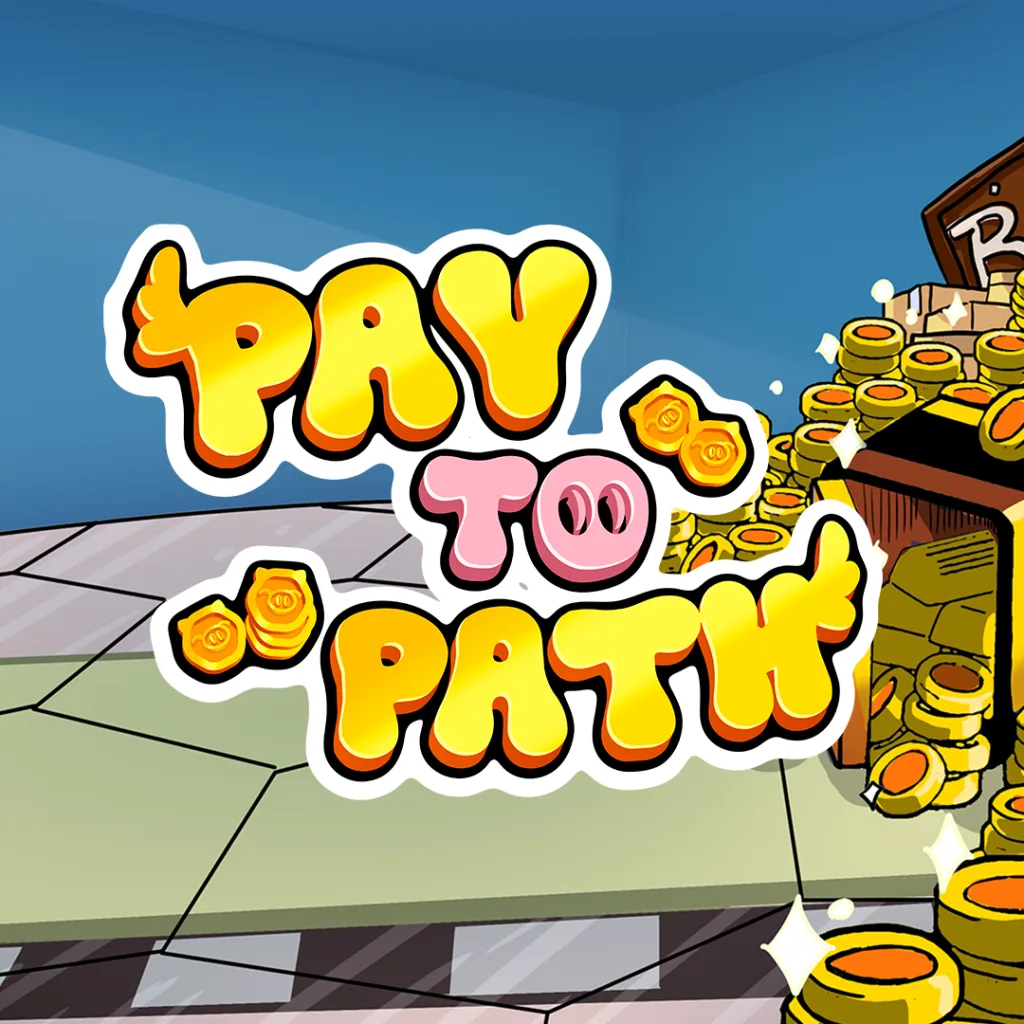
There is something wonderfully appropriate about a game called Pay To Path making you think twice before taking a single step. In a medium increasingly familiar with currencies, premium passes and the ever-present temptation to spend a little more, Pay To Path takes that idea and builds the entire foundation of a puzzle game around it. Rather than asking you to simply find the quickest route from A to B, it poses a much more interesting question: how much are you willing to spend to get there?
The result is a charming and surprisingly thoughtful puzzle experience that makes money management feel like a genuine gameplay mechanic rather than an annoying distraction. Your adorable piggy banks might look as though they have wandered out of a children’s board game, but getting them safely back to their vaults requires considerably more thought than you might expect. With 30 levels to work through, Pay To Path gradually turns its simple premise into a test of planning, patience and, occasionally, restraint.
Every Step Has a Price
The basic idea behind Pay To Path is wonderfully easy to understand. You have piggy banks that need to reach their corresponding bank vaults, but the roads between them are not necessarily arranged in a useful way. Paths need to be rotated, tiles moved and obstacles removed, with every alteration potentially eating into your limited budget.
That last part is what gives the game its personality. In most puzzle games, moving a tile or opening a route is simply something you do because the game expects you to. Here, every action has a financial consequence, so you have to think beyond whether something works and consider whether it is actually worth paying for. A route might get your piggy bank where it needs to go, but if you have blown most of your budget getting there, you have missed the real challenge.
There is something surprisingly satisfying about finding a solution that initially appears impossible, only to realise you have been looking at the problem from the wrong financial angle. The best solutions are not necessarily the most obvious ones. They are the ones that balance movement, cost and efficiency, creating that lovely little moment of satisfaction when everything clicks into place.
Spending Your Way to Victory
The limited budget gives Pay To Path an additional strategic layer that sets it apart from more conventional tile-based puzzlers. You are constantly weighing whether to spend now or save for later. Sometimes paying for a seemingly unnecessary piece of road can open up an incredibly efficient route, while in other situations the smart move is simply to stop spending and rethink the entire plan.
This creates a gentle form of tension without making the experience stressful. You are not racing against a clock, nor are you being bombarded with enemies while trying to solve a puzzle. Instead, the pressure comes from watching your available funds slowly disappear as you experiment. It makes failure feel useful because every unsuccessful attempt teaches you something about the level and the economy surrounding it.
The concept also fits beautifully with the game’s piggy bank theme. Money is not some abstract number tucked away in a corner of the screen. It is directly connected to the little characters you are trying to help. Watching a piggy bank finally trundle along a route you have painstakingly constructed provides a small but genuine sense of achievement.
Simple Rules, Clever Problems
The 30 levels are built on a straightforward philosophy: introduce an idea, help you understand it, then start asking you to use it in increasingly clever ways. Early puzzles are relatively gentle, giving you time to become comfortable with rotating paths and managing your budget. Later challenges require considerably more planning, particularly when multiple routes and obstacles compete for your attention.
This is where Pay To Path shines. The game rarely needs complicated mechanics to make a puzzle interesting. Instead, it takes a handful of clear rules and combines them in ways that force you to reconsider what you thought you had learned. A path that seemed the obvious solution five minutes ago might suddenly seem incredibly wasteful when you realise another arrangement could save several coins.
There is also a pleasant sense of experimentation throughout. You can try something, watch the consequences unfold, and then start again with a better understanding of the problem. The game encourages this without making you feel stupid for getting something wrong. That is important in a puzzle game, because the best experiences make failure feel like part of the learning process rather than a punishment.
Cute Enough to Spend Time With
Visually, Pay To Path embraces its friendly personality. The piggy banks are immediately likeable, while the bright environments and colourful paths give the whole thing the feel of a cheerful digital board game. It does not try to impress with cutting-edge graphics, nor does it need to. The clean presentation keeps your attention firmly where it belongs, on the puzzle in front of you.
The little details help enormously. Seeing the piggy banks move along the routes you have created gives the levels a sense of life that would be missing from a purely abstract puzzle grid. There is a certain charm in watching your carefully planned solution come to life, particularly when you have spent several minutes working out the most economical way forward.
The audio follows the same upbeat philosophy. Expect cheerful effects, satisfying sounds when paths are moved into place, and little touches that make spending and earning money feel playful rather than tedious. It all comes together to create an experience that feels welcoming from the moment you start playing.
When Money Becomes the Joke
The financial theme is not merely a clever gameplay idea either. Pay To Path clearly enjoys poking fun at how modern games can turn almost everything into something that apparently requires payment. That satire gives the experience an extra layer of personality, particularly when the game starts exaggerating the concept to ridiculous proportions.
What works especially well is that the humour does not completely overwhelm the puzzles. The joke is there, but it remains secondary to the core gameplay. You are still solving problems, planning routes and managing resources rather than simply watching a series of jokes about monetisation.
That balance is important because satire can become exhausting when every mechanic exists solely to deliver another punchline. Pay To Path generally avoids that trap. The financial theme is integrated into the gameplay so naturally that even if you ignored the humour entirely, the underlying puzzle mechanics would still be enjoyable.
A Little More Depth Would Help
If there is one area where Pay To Path could have gone further, it is longevity. Thirty levels provide a decent amount of content, but once you become comfortable with the game’s systems, you may find yourself wishing for more ambitious challenges. The underlying concept has enough potential to support considerably more complex puzzles, particularly if multiple piggy banks, interconnected routes and more elaborate financial hazards were introduced.
The game could also benefit from additional ways to approach individual puzzles. Its strongest moments come when you realise the obvious route is not necessarily the best, and expanding that idea could have given the later stages even more bite. There is clearly a good foundation here, and it would be interesting to see what the developers could do with it in a larger follow-up.
That said, the relatively compact design is also part of the game’s appeal. Pay To Path never outstays its welcome, and there is something refreshing about a puzzle game that offers a focused set of challenges rather than attempting to overwhelm you with hundreds of levels.
The Final Verdict
Pay To Path is a lovely little puzzle game with a genuinely clever idea at its heart. Turning money into a resource that directly affects how you build your routes gives familiar tile-manipulation mechanics a welcome twist, while the adorable piggy banks and colourful presentation make the whole experience wonderfully approachable. More importantly, the game understands that the satisfaction comes not from simply reaching the destination, but from finding the smartest, most economical way to get there.
It is at its best when you stop thinking like someone trying to solve a conventional path puzzle and start thinking like someone managing a tiny construction budget. Every coin suddenly matters. Every shortcut needs justification. Every unnecessary piece of road becomes a little financial mistake staring back at you.
There are moments when the relatively small number of levels leaves you wanting more, and the concept has enough potential that a deeper challenge structure could have elevated the experience even further. Nevertheless, what is here is polished, charming and surprisingly satisfying. Pay To Path takes an everyday annoyance, turns it into a joke and somehow makes it fun. In a world where games constantly ask us to spend money, it is rather satisfying to play one where the real challenge is learning how not to.