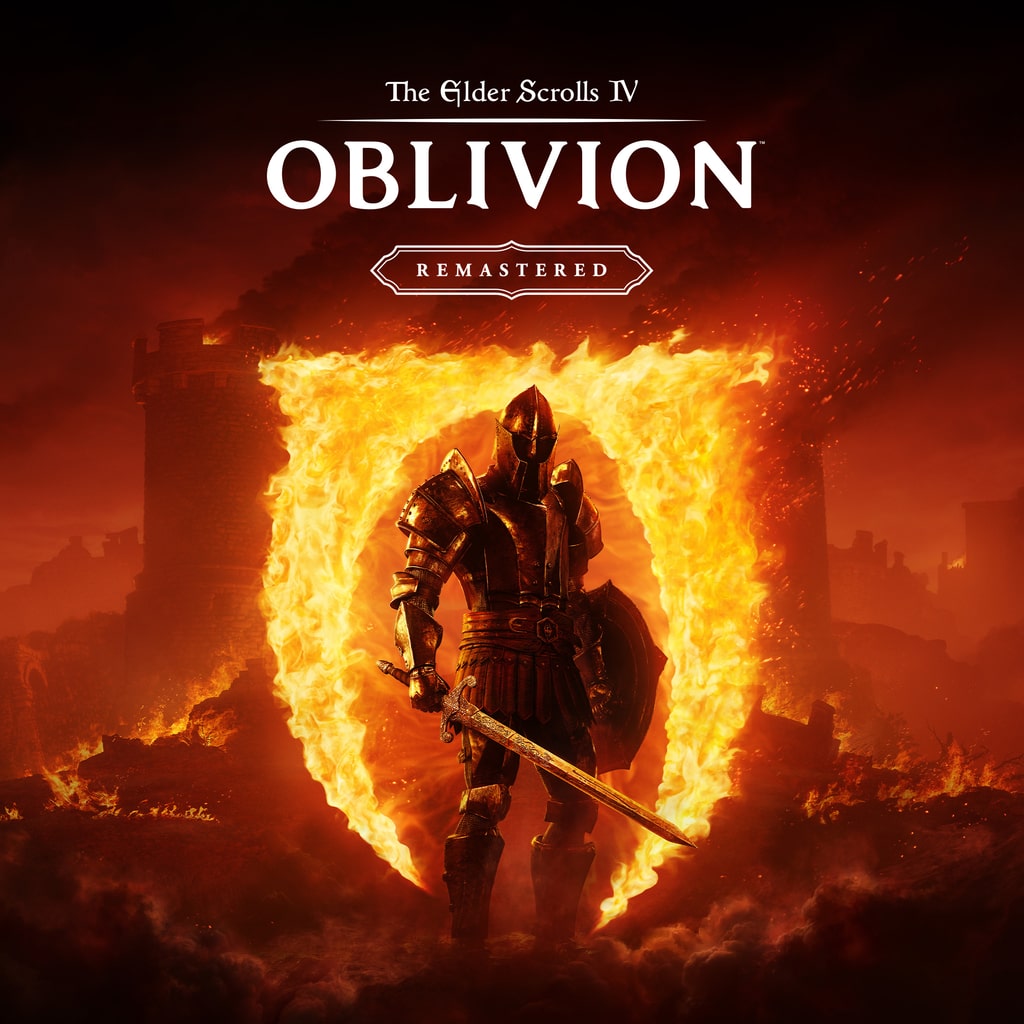
There are some games you remember playing, and then there are games you remember getting lost in. The Elder Scrolls IV: Oblivion belongs firmly in the second category. First released in 2006, Bethesda’s sprawling fantasy RPG became one of those rare adventures in which the story you experienced was only partly the one the developers intended. The rest was created by wandering off the beaten track, accidentally joining a guild, stealing something you absolutely should not have, becoming a vampire, getting arrested, or simply spending several hours wondering what lay beyond the next hill.
Oblivion Remastered understands that its greatest strength was never simply the size of Cyrodiil. It was the sense that this enormous world belonged to you. Developed by Virtuos and Bethesda Game Studios, the remaster gives that world a spectacular new coat of paint while introducing a number of welcome changes to how it feels to live there. The result is a fascinating blend of nostalgia and modernisation, preserving the original’s eccentric soul while making its sprawling adventure considerably easier on modern eyes and hands.
Welcome Back To Cyrodiil
The biggest change is impossible to miss. Cyrodiil has been transformed by Unreal Engine 5, and there are moments when the difference between the 2006 original and this remaster feels almost comical. Forests are denser, lighting is richer, distant landscapes have far more atmosphere, and caves and ruins possess a sense of depth the original could only dream of. Sunrise across the Imperial City can still stop you in your tracks, but now there is enough visual detail in the world to make simply walking somewhere feel like an adventure in itself.
What makes the visual overhaul particularly effective is that it does not completely erase Oblivion’s identity. The world still has that slightly strange fantasy aesthetic that made the original so memorable. The Imperial City remains grand, the countryside still feels wonderfully open, and those enormous Oblivion gates can still make you sigh when you realise another one has appeared just when you were trying to get somewhere else. It is polished, certainly, but it has not been scrubbed so clean that the personality disappears.
The characters benefit enormously from the makeover too. Faces, animations and environmental details have all been substantially improved, while conversations feel far less visually dated than they once did. There is still something wonderfully theatrical about Oblivion’s inhabitants, though, and that is important. These are characters who can be absurd, dramatic, strangely sincere and unintentionally hilarious within the space of a few minutes, and the remaster wisely allows that eccentricity to remain intact.
A World That Wants You To Get Distracted
The real magic of Oblivion has always been its freedom, and thankfully that remains the heart of the experience. You can follow the main story and try to save Tamriel from Mehrunes Dagon, or you can ignore the apocalypse and spend your evenings stealing valuables, hunting monsters, exploring caves, and becoming the most overqualified blacksmith in Cyrodiil. There is no shortage of things competing for your attention, and some of the best moments come when the game forgets you were supposed to be doing something important.
The quest design remains one of the strongest reasons to return to Oblivion. The Dark Brotherhood storyline is still wonderfully sinister, with its theatrical characters and increasingly uncomfortable situations, while the Thieves Guild offers a completely different flavour of adventure. There are quests that ask you to investigate, deceive, sneak, fight, and occasionally make decisions with consequences you might not immediately expect. Even after all these years, there is an impressive variety to what Bethesda asks you to do.
The beauty of the open world is that you can approach these situations in your own way. You might create a heavily armoured warrior who solves problems with a sword, a spellcaster who turns every encounter into a magical fireworks display, or a thief who would rather sneak past an enemy than acknowledge that enemy’s existence. Character development allows you to shape your own approach, and the remaster’s refinements make progression feel more comfortable without stripping away the systems that made Oblivion distinctive.
The Road Less Travelled
Exploration remains the beating heart of the experience. Cyrodiil is filled with caves, forts, ruins, settlements and strange little corners that exist largely because Bethesda wanted to put something there. You can set off towards a quest marker and arrive an hour later, having completely forgotten why you were travelling in the first place. That is not a criticism. It is precisely the kind of wonderfully aimless adventure that modern open worlds sometimes struggle to recreate.
There is a particular satisfaction in discovering something without being explicitly told to look for it. A distant tower becomes a destination. A strange ruin on the horizon becomes a mystery. A cave entrance beside the road becomes an excuse to delay your current objective for another twenty minutes. Oblivion Remastered preserves this feeling beautifully, as the world remains designed around curiosity rather than simply functioning as a collection of icons waiting to be cleared from a map.
The inclusion of Shivering Isles makes the package even more impressive. This expansion remains one of Bethesda’s most imaginative creations, taking the player into the bizarre realm of Sheogorath and replacing Cyrodiil’s more traditional fantasy landscapes with something much stranger. It is funny, unsettling, colourful and gloriously peculiar. Alongside Knights of the Nine and the other downloadable content, it gives the remaster a remarkable amount of content for anyone willing to disappear into it.
Combat Gets A Much Needed Lift
Combat was never Oblivion’s greatest strength, and thankfully the remaster makes an effort to improve how it feels. Sword strikes have greater impact, enemies react more convincingly to attacks, and movement feels more responsive thanks to additions such as sprinting. These changes do not suddenly transform Oblivion into a modern action game, but they remove some of the stiffness that could make the original feel cumbersome.
There is still a certain simplicity to the combat. Swing, block, cast, dodge, and manage your stamina while trying not to get surrounded. Magic remains enjoyable because of the sheer variety available, and there is satisfaction in developing a character who can turn an encounter around with the right spell at the right moment. The important thing is that combat no longer feels like such a barrier to enjoying everything around it.
The improved responsiveness also helps exploration, as movement itself feels more natural. Sprinting sounds like a small addition on paper, but it changes how you navigate the world and makes travelling through Cyrodiil less labourious. It is one of those quality-of-life improvements that you quickly stop noticing because it simply feels like something the game should always have had.
The Oddities Are Still Here
Perhaps the greatest compliment I can pay Oblivion Remastered is that it has resisted the temptation to turn Oblivion into something it was never meant to be. The original game had quirks, strange animations, bizarre character behaviour, and moments of accidental comedy that became part of its identity. Those oddities remain, and they provide a welcome reminder that this is not a sterile remake attempting to modernise every last inch of its personality.
That matters because Oblivion has always been slightly weird. Its characters can look serious while saying ridiculous things, its physics can occasionally have a mind of their own, and its world can produce situations no writer could have scripted. These moments are part of the charm. They make the world feel less like a carefully controlled theme park and more like a place where things can occasionally go spectacularly wrong.
There is an argument that some of the original rough edges should have been polished away, particularly for players coming to the game for the first time. Yet removing them all would have been a mistake. Oblivion’s personality is tied to its imperfections, and this remaster succeeds because it knows which parts needed fixing and which needed preserving.
A Classic Finds Its Second Wind
The Elder Scrolls IV: Oblivion Remastered is not simply an old game wearing a new coat of paint. It is a reminder of why Bethesda’s RPGs became so beloved. The sheer freedom, memorable guild stories, bizarre encounters, and the willingness to let the player become distracted remain as powerful as ever, while the new visuals and quality-of-life improvements make the journey far more inviting for modern audiences.
There are still moments when the design’s age shows. Some systems feel less sophisticated than those in contemporary RPGs, and certain aspects of combat remain relatively basic. Yet those limitations are surprisingly easy to overlook because Oblivion’s greatest strength has never been mechanical perfection. It is the feeling of possibility that comes from stepping through a gate and knowing that almost anything could happen.
More than twenty years after its original release, Cyrodiil still has stories worth telling. Sometimes those stories involve saving the world from a Daedric invasion. Sometimes they involve joining a guild, robbing a house, getting hopelessly lost, or discovering something ridiculous in a cave. That sense of freedom is still wonderfully intoxicating, and the remaster gives it the presentation it deserves.
Verdict
The Elder Scrolls IV: Oblivion Remastered is a loving revival of one of Bethesda’s most distinctive RPGs. Its spectacular visual overhaul brings Cyrodiil back to life, while improved movement, combat responsiveness and quality-of-life changes remove much of the friction of the original release. Most importantly, the remake recognises that Oblivion’s strange personality is something to celebrate rather than correct.
It is not the most modern RPG you can play, and it does not need to be. What it offers instead is a vast fantasy playground where curiosity is rewarded, distractions become adventures and the player is trusted to craft their own stories. With Shivering Isles, Knights of the Nine and the additional downloadable content included, this is an enormous package that can swallow dozens, if not hundreds, of hours.
For returning players, it is an excuse to walk those familiar roads again and see them in a completely different light. For newcomers, it is an opportunity to discover one of the genre’s most memorable worlds without having to accept quite as many of the visual and mechanical compromises of the 2006 original. Cyrodiil has changed, but thankfully, it has not grown up too much.