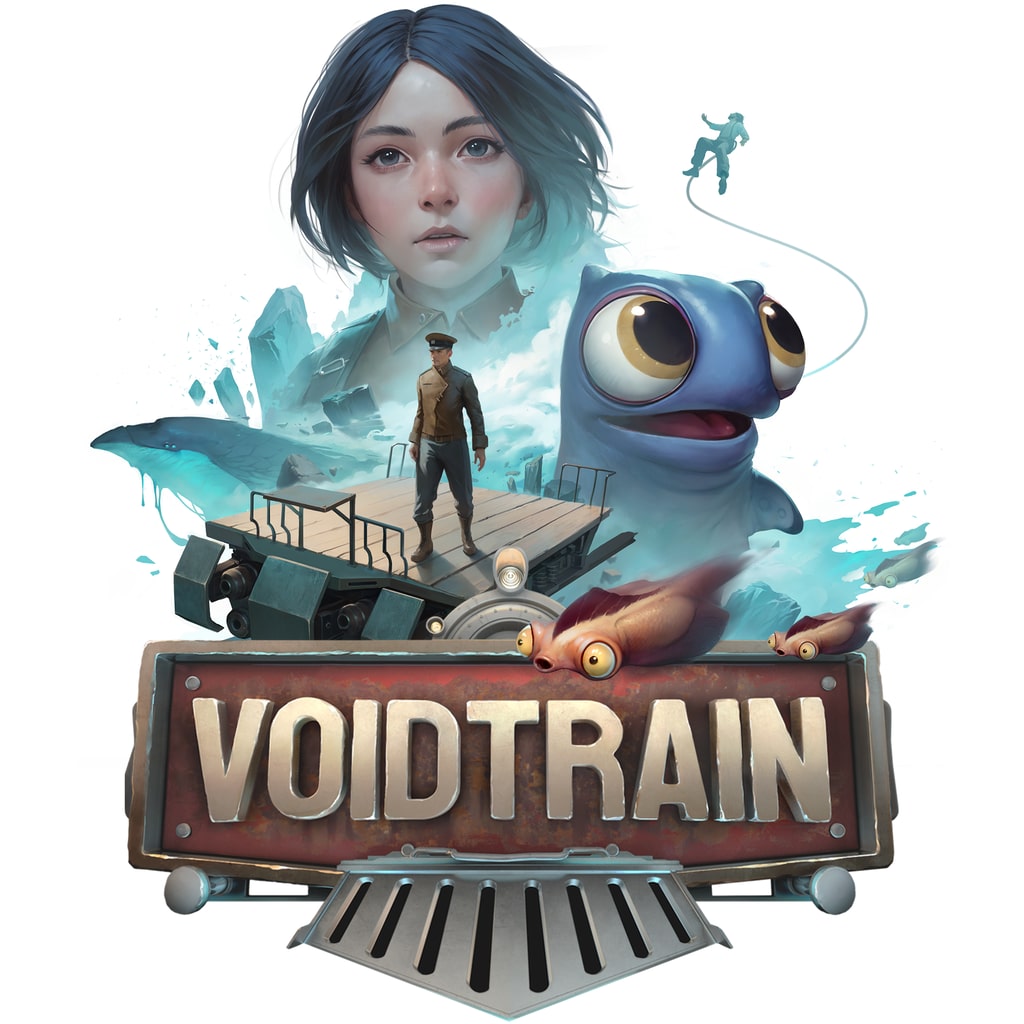
Survival games often ask you to build a shelter, defend a base, and slowly tame an unforgiving world. Voidtrain flips that familiar formula on its head by making your base a constantly moving train, hurtling through a strange dimension where gravity barely holds and the laws of nature seem to have taken a holiday. Developed and published by HypeTrain Digital, this long-awaited adventure blends crafting, exploration, first-person shooting, and co-operative survival into something refreshingly different, even if it occasionally struggles under the weight of its own ambition.
At first glance, Voidtrain looks like another crafting survival title in an increasingly crowded genre. Spend a few hours aboard its growing locomotive, however, and it quickly reveals an identity all of its own. There is something undeniably magical about watching your modest trolley evolve into a sprawling mechanical fortress as it drifts through an endless sea of floating islands, abandoned structures, and bizarre creatures. It is a game built on curiosity, rewarding players who are willing to slow down, gather resources, and embrace the unknown.
The result is an experience that delivers unforgettable moments, even if a few mechanical hiccups prevent it from becoming the masterpiece its incredible premise suggests.
Gameplay
Everything begins with a simple handcar rolling along an endless rail suspended in the mysterious Void. Before long, that humble platform becomes your home, your workshop, your armoury, and your means of survival. Every resource gathered helps expand the train, adding new wagons, crafting stations, storage areas, defensive equipment, and cosmetic touches that gradually make it feel genuinely personal.
Unlike many survival games where you repeatedly return to a fixed base, Voidtrain keeps everything moving. Your train never truly stops being important because it accompanies you everywhere. That subtle difference changes the rhythm of progression entirely. Building becomes less about creating the perfect fortress and more about designing an efficient mobile headquarters capable of supporting long expeditions into dangerous territory.
Exploration is equally distinctive. Using a tether system, players leap away from the rails to drift through low-gravity environments, scavenging floating debris, mining valuable resources, and investigating mysterious islands. The sensation of launching yourself into open space before being gently reeled back towards the train never loses its appeal. It creates a constant sense of freedom while maintaining enough tension that every excursion carries risk.
Crafting follows familiar survival conventions yet benefits from the game’s excellent pacing. New recipes arrive steadily, offering tangible improvements rather than overwhelming players with endless menus. Every upgrade feels worthwhile, as each new workbench or machine directly improves efficiency aboard the train.
Combat plays a far larger role than some may expect. Hostile soldiers, strange creatures, floating sharks, and heavily defended enemy outposts frequently interrupt your peaceful scavenging. Firearms handle well enough, while melee weapons provide a satisfying alternative in close encounters. Enemy variety remains respectable throughout much of the campaign, although prolonged sessions can begin to expose repetitive encounter design.
The newly included Tour de Void content adds another welcome layer, allowing the charming Rofleemo passengers to travel aboard your train. Escorting these peculiar tourists creates optional objectives that reward cosmetic upgrades, decorations, useful perks, and additional customisation options. Rather than feeling bolted on, the system gives the train even more personality, making it feel like a living space rather than simply another crafting platform.
A World That Constantly Surprises
The Void itself is easily the game’s greatest achievement. It never feels like a conventional open world, instead resembling an endless dream stitched together from impossible landscapes. Floating shipwrecks drift silently through space, abandoned depots appear from nowhere, and strange wildlife inhabits environments that seem disconnected from reality.
Every journey carries an underlying sense of discovery, because you genuinely never know what lies beyond the next stretch of railway. Some areas focus on resource gathering, others introduce environmental puzzles, while many escalate into frantic firefights that force players to defend both themselves and their beloved locomotive.
The environmental storytelling deserves praise as well. Rather than delivering lengthy exposition dumps, Voidtrain gradually encourages players to piece together the strange history of this mysterious dimension through exploration. It rarely explains everything outright, allowing the setting to retain much of its intrigue throughout the adventure.
Although procedural generation inevitably leads to repeated structures and familiar layouts over time, the game’s artistic direction consistently masks much of that repetition. The sheer beauty of the surreal landscapes encourages exploration long after practical resource gathering becomes the primary motivation.
Visuals and Sound
Voidtrain possesses an artistic confidence that immediately sets it apart from many survival games. The combination of industrial machinery, floating debris, glowing skies, and impossible architecture creates an atmosphere that feels both peaceful and unsettling.
Lighting deserves particular praise. Sunlight filtering through broken structures, shimmering reflections across mysterious energy fields, and dense fog rolling through abandoned stations all contribute to an environment that frequently looks spectacular. Performance on PlayStation 5 remains consistently smooth, allowing these visual flourishes to shine without significant technical distractions.
Audio complements the visuals beautifully. Ambient soundscapes reinforce the loneliness of drifting through the Void, while the soundtrack quietly supports exploration without becoming intrusive. Combat music increases the tension appropriately, though it wisely avoids overwhelming the quieter moments that define much of the game’s atmosphere.
Sound effects also deserve recognition. The clanking machinery aboard the train, distant echoes drifting across empty space, and satisfying mechanical noises accompanying construction all help sell the illusion that this locomotive truly exists within its bizarre surroundings.
Solo Journey or Shared Adventure
While Voidtrain remains enjoyable on its own, it becomes considerably more entertaining when played with friends. Supporting up to four players, cooperative play naturally divides responsibilities among exploration, construction, crafting, and combat. One player may focus on upgrading equipment while another ventures into dangerous areas in search of valuable resources.
The cooperative design rarely feels forced. Every participant has meaningful tasks, reducing downtime and keeping everyone actively engaged. Building the train together also creates a shared sense of ownership, making every successful expedition genuinely rewarding.
Solo players should not feel discouraged, however. The game remains well balanced for lone engineers, though it naturally requires more careful time management, as every responsibility falls to one person.
A Few Loose Bolts
Despite its originality, Voidtrain is not without shortcomings. Inventory management can become cumbersome as resources accumulate, demanding more organisational effort than feels necessary. Certain crafting chains are also unnecessarily time-consuming, particularly in the later stages of progression.
Combat, while enjoyable, sometimes lacks the creativity shown elsewhere. Enemy behaviour can become predictable, especially during repeated outpost assaults, and firefights occasionally feel like interruptions rather than natural extensions of exploration.
Progression likewise slows noticeably during longer sessions. Gathering increasingly rare materials creates stretches where advancement feels more like routine labour than meaningful discovery. Players who enjoy constant rewards may find these slower periods frustrating, even if the eventual upgrades remain worthwhile. None of these issues derail the overall experience, but they occasionally prevent the game from fully capitalising on its remarkable premise.
Verdict
Voidtrain succeeds because it dares to build something genuinely different within a genre that often relies on familiar routines. The idea of constructing a travelling fortress aboard an interdimensional railway sounds wonderfully eccentric on paper, and remarkably, the final product delivers on much of that promise. Every expansion of your train feels meaningful, every strange island invites investigation, and every successful journey reinforces the quiet satisfaction of surviving in a world that constantly defies explanation.
Not every system reaches the same level of excellence. Combat grows repetitive, progression occasionally drags, and some survival mechanics feel more conventional than the imaginative setting deserves. Yet these flaws never overshadow the sense of wonder that drives the experience. There are countless survival games available today, but very few feel as distinctive as this.
For players looking for another routine crafting sandbox, Voidtrain may initially seem familiar. Spend enough time aboard its ever-expanding locomotive, though, and you’ll discover one of the most inventive survival adventures in recent years. It is equal parts relaxing, mysterious, tense, and unexpectedly charming, delivering a journey well worth taking whether travelling alone or with friends.