Some mysteries ask you to find a missing key or solve a simple puzzle before pointing you towards the next objective. Others trust you to do the hard work yourself, leaving you to untangle a web of half-truths, scattered clues and forgotten conversations until the bigger picture finally comes into focus. The Incident at Galley House firmly belongs to the second category, and it is all the more rewarding for it.
Developed by William Rous and Evil Trout Inc., this expanded reimagining of the acclaimed browser mystery Type Help transforms a clever text-based deduction game into a richly atmospheric detective experience. Complete with full voice acting, striking illustrations and a beautifully eerie presentation, it feels less like a traditional adventure game and more like stepping into the role of an investigator determined to solve a tragedy that has remained unsolved for decades.
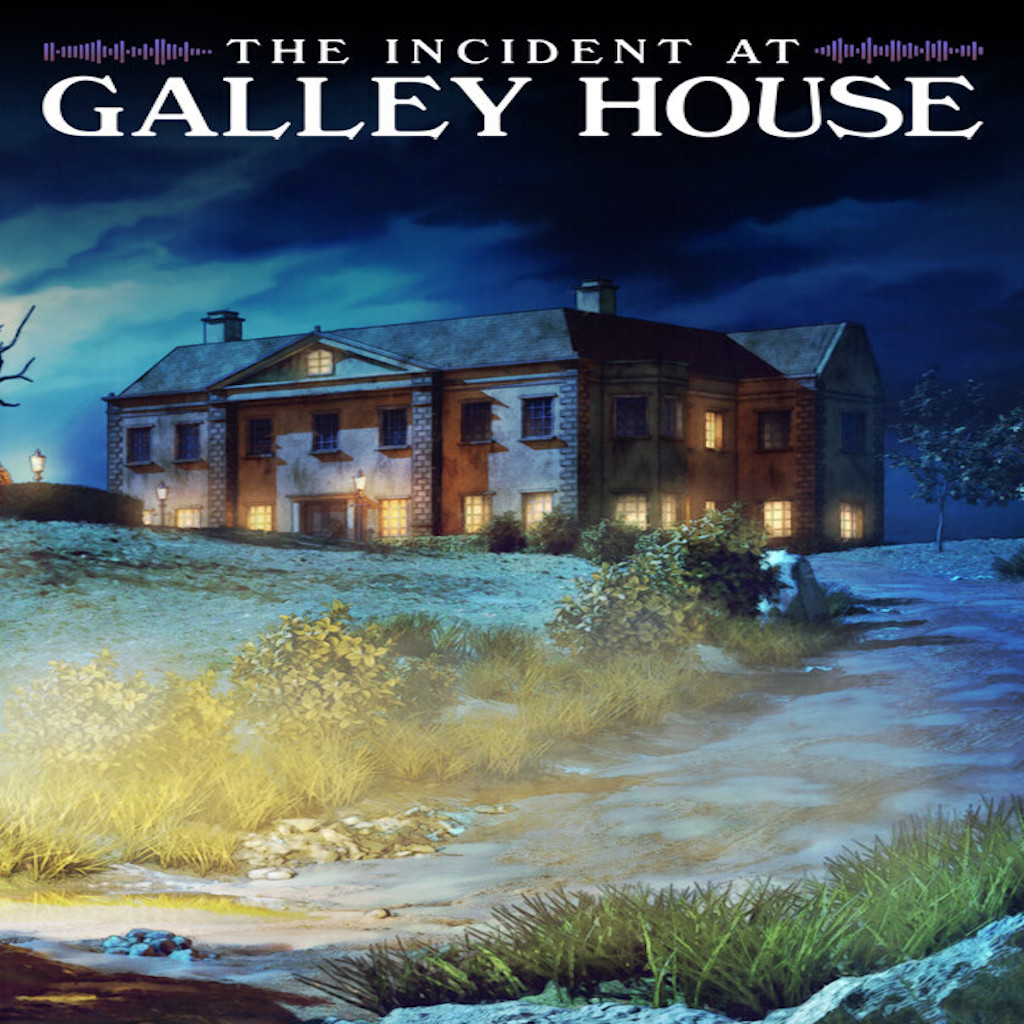
The premise is immediately compelling. In March 1936, eleven people were found dead inside the abandoned Galley House after locals stumbled upon a gruesome crime scene. The authorities searched for answers but never uncovered the truth behind the massacre. Years later, armed with an experimental device capable of listening to echoes from the past, you are given one final opportunity to reconstruct that dreadful night. It is a fascinating setup that wastes very little time before pulling you into one of the smartest detective games in recent years.
Rather than relying on dramatic action or supernatural spectacle, The Incident at Galley House builds its mystery through observation, deduction and patience. Every discovery feels significant because you earn it. The game rarely hands you answers, trusting your own reasoning to carry you forward. That confidence is one of its greatest strengths.
Listening to the Past
The centrepiece of the experience is the mysterious “Guess Who” machine, an ingenious device that lets players access fragments of conversations from the night of the incident. Using it is not as simple as pressing a button and watching events unfold. Each memory must first be located by correctly identifying three pieces of information: the time, the room and the people present.
This simple concept creates an incredibly satisfying gameplay loop. Each successful memory reveals fresh information that gradually deepens your understanding of the house, its occupants and the events leading to the inevitable tragedy. A passing remark in one conversation may reveal where another character travelled minutes earlier. An argument overheard in one room may explain suspicious behaviour witnessed elsewhere.
The result is a constantly expanding web of clues that feels remarkably organic. Rather than solving isolated puzzles, you are reconstructing an entire evening, piece by piece. Conversations overlap, timelines intersect and characters move naturally throughout the estate, creating the illusion of a living story unfolding independently of your investigation.
There is enormous satisfaction in finally identifying the correct combination that unlocks another crucial memory. Few detective games capture the thrill of genuine deduction quite as effectively as this.
A Detective Story That Respects Your Intelligence
Perhaps the most refreshing aspect of The Incident at Galley House is its refusal to over-explain itself. Modern detective games often interrupt the player with highlighted objectives, glowing evidence markers, or lengthy internal monologues spelling out obvious conclusions. Here, none of that exists.
Instead, the game expects you to listen carefully, make notes mentally or on paper, identify inconsistencies, and gradually build your own understanding of events. It assumes players are capable of making logical connections without constant reassurance, and that respect creates an unusually immersive experience.
There are moments when progress slows dramatically. You may find yourself revisiting previously unlocked memories, searching for one overlooked line of dialogue that suddenly changes your interpretation of an entire sequence. Rather than feeling repetitive, these moments reinforce the sensation of conducting a genuine investigation.
That approach will not appeal to everyone. Players seeking fast-paced progression or frequent rewards may occasionally become frustrated when the next breakthrough refuses to reveal itself. However, those willing to embrace slower, methodical detective work will likely find the challenge immensely rewarding. The game trusts your intelligence and, in return, asks for your patience. That relationship lies at the heart of everything it does.
Atmosphere Built Through Sound
Although Galley House rarely relies on traditional horror, it remains unsettling throughout. Much of that stems from its exceptional use of sound. Because the investigation centres on listening to echoes from the past, dialogue naturally becomes the primary storytelling tool, and the voice performances consistently elevate every scene.
Characters sound believable rather than theatrical. Casual conversations feel comfortably ordinary until subtle details reveal hidden tensions beneath the surface. As relationships become clearer and motives emerge, earlier exchanges take on entirely new meanings, prompting players to revisit previously heard memories with a fresh perspective.
The original soundtrack quietly supports this atmosphere without overwhelming it. Gentle piano melodies, ambient drones and moments of near silence create an emotional backdrop that constantly reminds players that something terrible is approaching. Even when nothing overtly frightening is happening, an uncomfortable sense of anticipation hangs over every investigation.
The visual presentation deserves equal praise. The illustrated character portraits capture personality with remarkable efficiency, while the mysterious interface surrounding the memory machine gives the entire experience an unusual, dreamlike quality. It successfully balances historical authenticity with subtle supernatural intrigue, never allowing either element to overpower the other.
Every Character Matters
Mysteries often succeed or fail on their cast, and The Incident at Galley House introduces an ensemble that gradually proves far more complex than first impressions suggest. Each of the eleven victims has distinct relationships, motivations and personal secrets that slowly emerge through countless overlapping conversations.
Initially, remembering everyone can feel slightly overwhelming. Names, faces and locations blur as the investigation begins. Fortunately, as more memories surface, personalities begin to stand out. Individual speech patterns, emotional reactions and interpersonal conflicts help each character become memorable in their own right.
The writing deserves enormous credit here. Nobody exists simply to deliver exposition. Even seemingly insignificant conversations often reveal deeper emotional undercurrents or provide crucial contextual information that pays off much later. The game consistently rewards attentive listening, making every interaction feel potentially important.
By the final hours, Galley House no longer feels like a crime scene populated by strangers. It feels like a home occupied by real people whose lives have become tragically intertwined. That emotional investment makes uncovering the complete truth considerably more powerful.
A Mystery That Stays With You
One of the greatest compliments a detective game can receive is that it lingers in your thoughts long after you stop playing. The Incident at Galley House achieves exactly that. Even after stepping away from the keyboard, it is hard to resist mentally replaying conversations, reconsidering theories and wondering whether a small detail was overlooked.
That lingering curiosity reflects the strength of its design. Rather than relying on spectacle or shocking twists, the game builds investment through careful pacing and intelligent structure. Every revelation feels like something you personally uncovered, rather than information simply delivered by the narrative.
There are moments when its uncompromising design may test players’ resolve. The absence of obvious guidance means periods of uncertainty are inevitable. Yet those temporary frustrations ultimately strengthen the experience, because every breakthrough feels genuinely deserved. It is refreshing to play a detective game that believes solving the mystery should remain the player’s responsibility rather than the game’s.
Final Verdict
The Incident at Galley House is an outstanding piece of investigative storytelling that shows how satisfying genuine deduction can be when developers trust their audience. Its haunting atmosphere, excellent voice acting and brilliantly interconnected mystery create an experience that feels deeply rewarding from beginning to end. Every conversation matters, every clue has purpose, and every breakthrough delivers the unmistakable satisfaction of solving a puzzle through careful observation rather than simple persistence.
Its deliberate pacing and uncompromising approach will inevitably divide opinion. Players seeking constant action or generous guidance may struggle during slower investigative stretches. Those willing to embrace its thoughtful design, however, will discover one of the smartest detective adventures available.
Galley House has stood silent for decades, its secrets buried beneath bloodstained memories and unanswered questions. Thanks to one remarkable little machine and a detective willing to listen, those forgotten voices finally have the chance to tell their story.