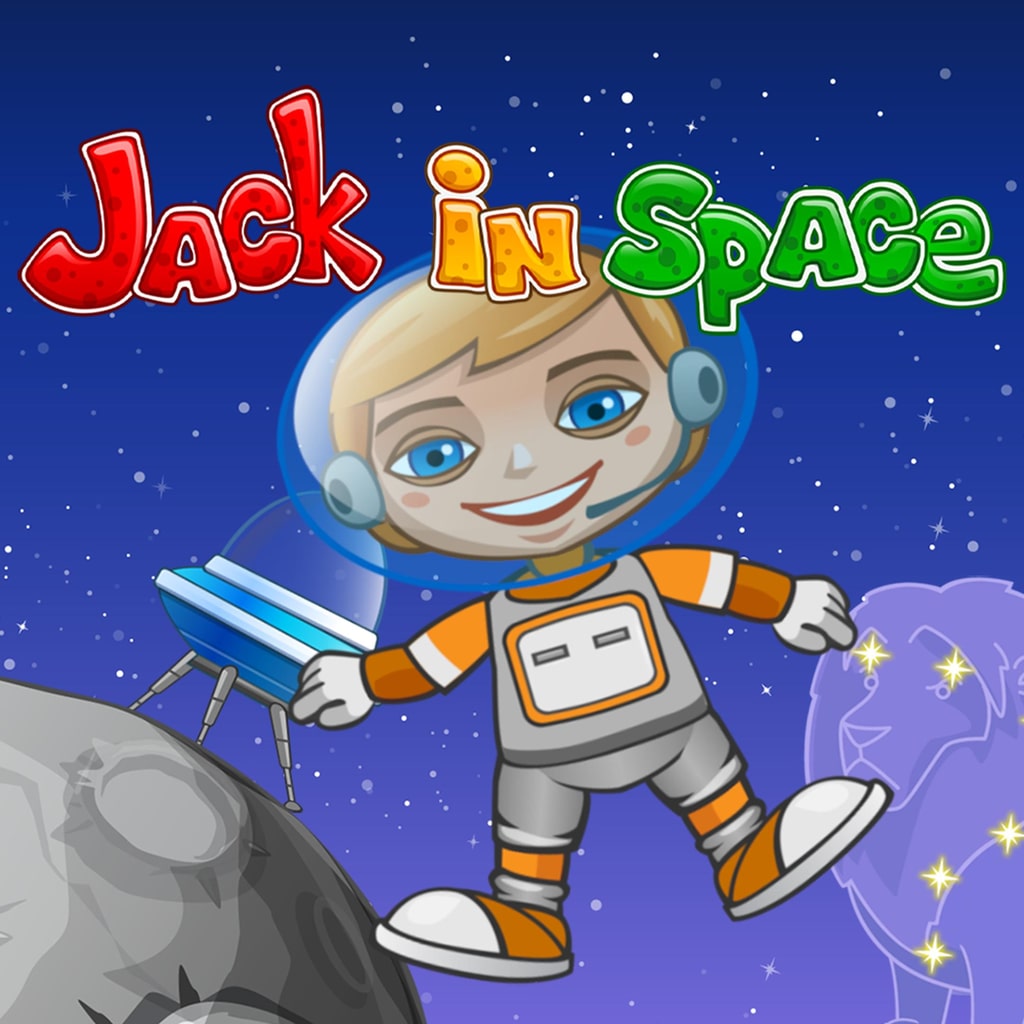
Not every game needs towering difficulty, sprawling worlds, or hundreds of hours of content to leave a lasting impression. Sometimes a game simply aims to introduce children to the joy of learning through play, wrapping educational ideas in colourful adventures that encourage curiosity rather than competition. Jack in Space is one of those games.
Developed by INLOGIC GAMES and published by EpiXR Games, Jack in Space is aimed squarely at younger players taking their first steps into interactive entertainment. Rather than overwhelming children with complicated mechanics or demanding platforming challenges, it offers a collection of simple, space-themed activities that encourage counting, observation, pattern recognition, and basic logical thinking. It is a gentle experience from beginning to end, designed to reward exploration rather than test reflexes.
That focus makes it easy to judge the game on its own terms. This is not intended to compete with family adventures designed for older children, nor is it meant to replace the classroom. Instead, Jack in Space succeeds by understanding its audience and creating a welcoming environment where young players can build confidence while enjoying colourful adventures among the stars.
Gameplay
Jack in Space revolves around a collection of bite-sized mini-games connected by a charming space adventure. Players join Jack as he explores observatories, laboratories, and futuristic control rooms, completing activities that gradually introduce simple educational concepts without ever feeling like formal lessons.
One moment you are counting stars scattered across a peaceful night sky, and the next you are assembling spaceship components inside a colourful factory. Elsewhere, picture-tile puzzles ask players to reconstruct cheerful images piece by piece, rewarding patience and observation rather than speed.
Every activity has been designed with accessibility in mind. Instructions are easy to understand, objectives remain clear throughout, and there is no pressure to rush. Children are free to take their time, experiment with different interactions, and learn through gentle encouragement rather than punishment.
The pace is perhaps the game’s greatest strength. There are no stressful countdown timers, frustrating fail states, or complicated scoring systems that could discourage younger players. Instead, every completed activity feels like a small personal achievement that naturally encourages children to continue exploring.
Learning Without Feeling Like Homework
Educational games often struggle to balance entertainment with learning. Lean too heavily into learning and children quickly lose interest. Focus entirely on fun and the educational value is lost beneath flashy distractions. Jack in Space finds a pleasant middle ground.
Counting challenges introduce early mathematical thinking in playful rather than instructional ways. Picture puzzles quietly develop spatial awareness, while assembly tasks encourage logical sequencing and problem-solving. None of these mechanics are particularly advanced, but they are entirely appropriate for the game’s intended audience.
Importantly, the educational elements are woven naturally into the experience. Children are not repeatedly reminded that they are learning. Instead, they simply help Jack complete another exciting activity before moving on to discover what comes next.
That sense of curiosity gives the game genuine warmth. Every completed task becomes another small step on Jack’s journey rather than another educational exercise to finish.
Presentation
Visually, Jack in Space embraces bright colours and cheerful simplicity. Every environment is filled with vibrant blues, soft purples, colourful machinery, and friendly character designs that immediately capture the imagination without overwhelming younger eyes.
The oversized buttons and clean interface deserve particular praise. Navigation remains straightforward throughout, making it easy for children to see where to go and what to interact with. Good interface design is often overlooked in children’s games, yet here it plays an important role in keeping frustration to an absolute minimum.
Animations also contribute to the welcoming atmosphere. Every successful interaction is rewarded with lively movement, playful effects, and satisfying visual feedback that reinforces each accomplishment. Watching rockets come together or puzzle images slowly reveal themselves creates an immediate sense of reward without relying on excessive spectacle.
Performance remains consistently smooth, allowing the experience to unfold without technical distractions. Stability is especially important for games aimed at younger audiences, and Jack in Space delivers a polished presentation that parents can hand over with confidence, without worrying about complicated controls or performance issues.
Audio
The soundtrack perfectly complements the game’s relaxed tone. Gentle melodies accompany each activity, fostering a calm atmosphere that encourages concentration rather than excitement. The music remains pleasant throughout extended sessions, never becoming repetitive or intrusive.
Sound effects are equally child-friendly. Every successful interaction produces cheerful audio cues that reinforce positive feedback and help children understand that they have completed tasks correctly. The balance between music and effects is carefully considered, ensuring neither overwhelms the other.
The overall audio design plays a significant role in the game’s comforting atmosphere. It creates an environment where mistakes never feel intimidating and success is quietly celebrated.
Accessibility for Younger Players
Perhaps Jack in Space’s greatest achievement is how approachable it feels. Everything has been designed with younger children in mind, from oversized interface elements to a forgiving gameplay structure.
Controls require only simple inputs, allowing even inexperienced players to become comfortable within minutes. Activities rarely demand precision, giving children room to explore without constantly worrying about failure. Parents introducing gaming for the first time will likely appreciate how little guidance is needed once children understand the basics.
The absence of pressure is equally important. Modern games often bombard players with timers, rankings, and constant objectives. Jack in Space deliberately slows everything down, allowing children to learn at their own pace without comparing themselves to others.
That slower approach makes it particularly suitable for family gaming sessions, where adults can sit alongside younger players, offering encouragement while giving children space to discover solutions independently.
Room for Improvement
While Jack in Space successfully achieves its educational goals, its simplicity also limits its longevity. Older children will likely exhaust the available activities quickly, and parents may find themselves wishing for additional mini-games or greater variety after repeated play sessions.
The educational mechanics themselves remain fairly basic throughout. This is entirely appropriate for toddlers and early learners, but children who already possess strong counting or puzzle-solving skills may progress through the content with little challenge.
Similarly, the overall adventure feels more like a collection of connected activities than a fully developed narrative. Jack is a likeable guide, but players hoping for memorable characters or deeper storytelling may find the experience somewhat lightweight.
Fortunately, these criticisms are largely tied to expectations rather than to flaws. Jack in Space clearly understands who it is designed for, and within that target audience it performs admirably.
Final Verdict
Jack in Space is a charming educational adventure that succeeds by embracing simplicity rather than chasing unnecessary complexity. Its colourful presentation, welcoming atmosphere, accessible controls, and thoughtfully designed learning activities create an experience that young children can enjoy with confidence.
It will not entertain older players for long, nor does it aim to be an ambitious family adventure. Instead, it focuses on creating a positive first gaming experience that encourages curiosity, problem-solving, and early learning through gentle exploration. That clarity of purpose is the game’s greatest strength.
Parents seeking safe, approachable games for younger children will find plenty to appreciate here. Watching little explorers confidently count stars, assemble rockets, and solve colourful puzzles carries its own quiet reward. Jack in Space may be a small adventure, but it understands that inspiring curiosity often begins with the simplest of journeys. Sometimes the first step towards the stars starts with nothing more than counting them one by one.