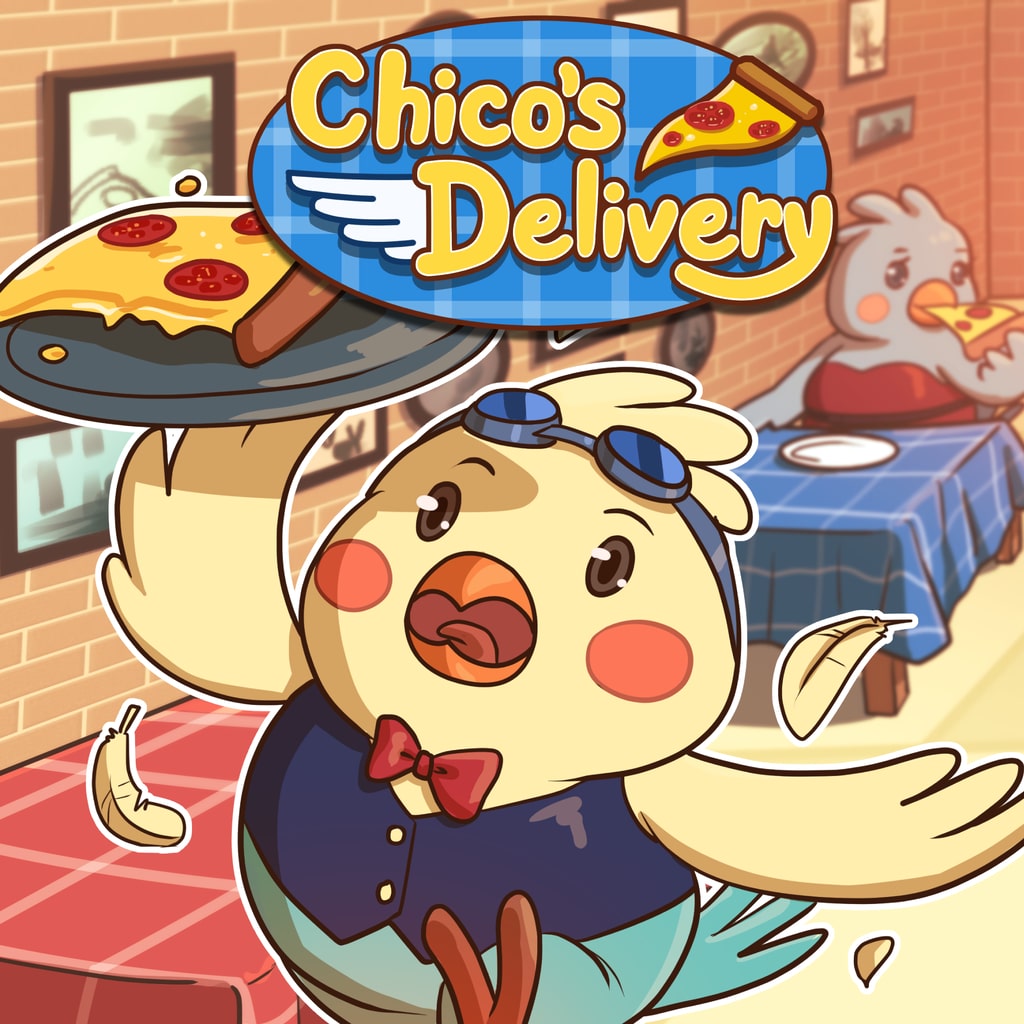
The puzzle genre often thrives on simplicity. Some of the most memorable brain teasers in gaming history have emerged from taking a single mechanic and exploring every possible variation. Chico’s Delivery understands this philosophy perfectly. Developed and published by Afil Games, this cosy puzzle adventure strips away unnecessary clutter and focuses entirely on delivering a polished, engaging logic experience.
At first glance, Chico’s Delivery looks almost deceptively modest. There are no sweeping story arcs, no elaborate cutscenes, and no grand ambitions to reinvent the genre. Instead, it presents a straightforward premise about a hard-working pizza-delivery bird navigating increasingly complex restaurant layouts. It is a simple concept executed with confidence, resulting in a game that feels approachable from the opening moments while steadily revealing surprising depth beneath its cheerful surface.
While its brief runtime means it will not occupy players for dozens of hours, the time it does demand is consistently enjoyable. This is the kind of game that knows exactly what it wants to be and rarely wastes a moment trying to become something else.
Delivering More Than Pizza
The narrative framework is intentionally lightweight, yet it serves its purpose well. Players take control of Chico, a uniform-wearing bird whose job is to deliver pizzas to hungry customers scattered across a variety of bustling restaurant environments.
Rather than walking freely around the stage, Chico is governed by a strict movement system that quickly becomes the centrepiece of the experience. Each restaurant effectively becomes a puzzle box, where reaching customers requires careful planning rather than quick reflexes. The simplicity of the setup allows players to jump straight into the action without lengthy tutorials or exposition dumps.
There is a certain charm to the presentation that makes the premise surprisingly endearing. Chico himself is instantly likeable, and the idea of a tiny bird desperately trying to fulfil increasingly complicated pizza orders creates a playful atmosphere that remains consistently enjoyable throughout the campaign.
Sliding Into Trouble
The heart of Chico’s Delivery lies in its movement mechanics, which are excellent. Once Chico begins moving in a direction, he continues sliding until something physically stops him. Walls, furniture, customer tables, and other environmental objects become essential tools for navigating each stage. The mechanic immediately recalls classic sliding puzzles from older role-playing games, yet Afil Games builds an entire experience around this singular idea without it ever feeling repetitive.
What elevates the puzzles beyond simple navigation is the clever use of turn limitations. Every customer table features a numerical counter that decreases with each move. If too many moves are spent before reaching the destination, the order expires and the puzzle must be restarted.
This creates an elegant layer of pressure. Every move matters. Every decision carries weight. Players cannot simply drift around the environment, searching for solutions through trial and error. Instead, success requires studying the layout, visualising routes, and committing to a plan before making the first move.
The result is a puzzle loop that feels incredibly rewarding. Solving a difficult stage often produces that wonderful moment when everything suddenly clicks into place. What initially looked impossible becomes obvious in hindsight, encouraging players to immediately tackle the next challenge.
Constantly Expanding Ideas
One of the most impressive aspects of Chico’s Delivery is its effective introduction of new concepts. Many puzzle games stumble by exhausting their best ideas too early, but Afil Games demonstrates admirable restraint. New mechanics arrive at a steady pace, keeping the experience fresh from beginning to end. Teleporters add unexpected shortcuts and complications. Directional arrow tiles alter movement patterns in creative ways. Dynamic environmental objects force players to reconsider previously reliable strategies.
None of these additions dramatically alter the core gameplay, yet each introduces enough variation to keep players engaged. More importantly, they are introduced gradually and thoughtfully. The game never overwhelms players with excessive information, instead building complexity layer by layer.
This careful progression creates a natural learning curve that feels welcoming to newcomers while still offering enough challenge to satisfy puzzle enthusiasts. It strikes a balance that many larger games struggle to achieve.
A Relaxing Slice of Puzzle Solving
Visually, Chico’s Delivery embraces a clean, colourful aesthetic that perfectly complements its accessible gameplay. Character sprites are simple yet expressive, while environmental elements remain easy to distinguish at a glance. This clarity is crucial in a puzzle game, where quickly grasping the layout can make the difference between success and failure. Every obstacle, table, and interactive object is instantly legible, allowing players to focus on solving problems rather than deciphering visual information.
The soundtrack also deserves praise. Its upbeat, jazzy melodies create a warm, welcoming atmosphere that helps sustain a relaxed mood even during more demanding puzzles. There is never a sense of stress or frustration hanging over the experience. Instead, the music encourages players to slow down, think carefully, and enjoy the process.
Controls are equally polished. Movement feels responsive, and failed puzzles can be restarted almost instantly. This may seem like a small detail, but it plays a major role in maintaining momentum. Because experimentation is encouraged, fast resets prevent mistakes from becoming irritating setbacks.
A Little Too Small
As enjoyable as Chico’s Delivery is, its biggest limitation is its size. Experienced puzzle players will likely complete the entire campaign in a single evening. While the puzzles remain consistently high quality throughout, there simply are not enough of them. Just as the game reaches its most engaging stretch, the credits begin to roll.
Replay value is another challenge. Because puzzle solutions are largely fixed, there is little incentive to revisit completed stages once every achievement has been unlocked. Unlike sandbox puzzle games that encourage experimentation and creative problem-solving, Chico’s Delivery is built around discovering specific solutions.
This is not necessarily a flaw, as many excellent puzzle games follow the same philosophy. However, it does mean the experience has a clearly defined lifespan. Once those solutions have been found, there is very little left to uncover.
Players seeking dozens of hours of content may walk away wanting more. In many ways, that is both a compliment and a criticism. The game is enjoyable enough that its brief length becomes noticeable.
Final Verdict
Chico’s Delivery is a wonderful example of focused game design. It takes a single mechanic, builds an entire experience around it, and executes that vision with confidence. The sliding-movement puzzles are consistently clever, the presentation is charming, and the steady stream of new ideas keeps the campaign engaging from start to finish.
Its modest scope prevents it from becoming a long-term obsession, and the lack of replay value means most players will only make a single trip through Chico’s restaurant adventure. Even so, what is here is polished, satisfying, and hard not to enjoy.
Sometimes a game does not need to be massive to leave a positive impression. Sometimes all it needs is a lovable bird, a stack of pizzas, and a collection of smartly designed puzzles. Chico’s Delivery delivers exactly that, and it does so with plenty of charm.