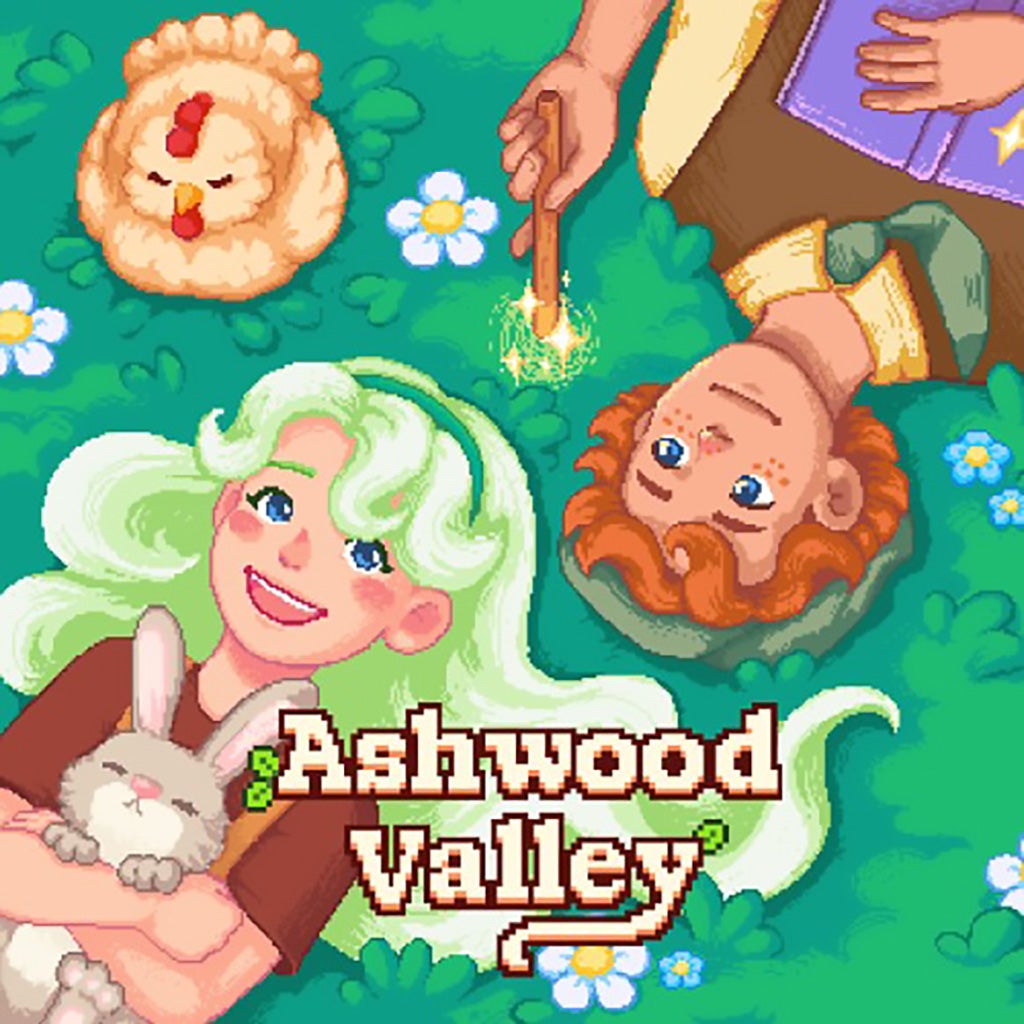
The cosy gaming boom has posed an interesting challenge for smaller developers. Players now have access to dozens of farming simulators, life sims, and wholesome adventures, all competing for the same audience. Some succeed through depth and long-term progression. Others win hearts with memorable characters and emotional storytelling. Ashwood Valley, developed and published by RedDeer.Games, takes a different route entirely. Rather than offering a sprawling farming epic, it presents a miniature adventure centred on a simple goal: save your sibling from a magical curse.
It is an undeniably charming premise. One accidental spell, one unstable portal, and suddenly your brother or sister has been transformed into a cat. The setup immediately establishes a sense of whimsy that feels perfectly suited to the genre. For a while, Ashwood Valley rides that charm surprisingly well. Unfortunately, while its heart is certainly in the right place, the experience beneath the surface often feels far thinner than its enchanting presentation suggests.
A Magical Mishap
The story begins with siblings Luna and Draco experimenting with magic. Predictably, a spell opens a portal to a mysterious realm, transporting the pair to the titular Ashwood Valley. Upon arrival, one sibling is trapped in feline form while the other is left to work out how to reverse the curse.
It is a wonderfully silly premise that immediately gives the adventure personality. There is something inherently amusing about embarking on an important magical quest only to discover your sibling is now wandering around as an ordinary house cat. The setup promises mystery, discovery, and perhaps even some emotional family storytelling.
Sadly, that promise never fully materialises. Narrative development remains extremely limited throughout the adventure. The curse serves as motivation, but there is very little meaningful character growth or story progression beyond the initial setup. While the whimsical world provides plenty of visual charm, the actual storytelling often feels like an afterthought. By the time the conclusion arrives, players may find themselves wondering where the rest of the story went.
Farming Without the Fuss
Mechanically, Ashwood Valley strips the farming formula down to its essentials. There are no shops, no currency systems, no complex crafting networks, and no stamina bars limiting how much work can be done each day. Instead, players focus on a handful of straightforward activities.
You clear weeds, till soil, plant seeds, water crops, and harvest vegetables. The process is simple enough to grasp within minutes. For younger players or those seeking an extremely relaxed experience, that accessibility has genuine appeal. There is never any pressure to optimise your farm or manage resources efficiently.
The problem is that simplicity eventually drifts into shallowness. Without meaningful progression systems driving your actions, the farming quickly begins to feel repetitive. Crops serve a purpose, but largely as food for the valley’s creatures rather than as components of a larger economy or crafting loop. Once the novelty wears off, there is little incentive to keep engaging with the farming beyond ticking off objectives.
The lack of inventory restrictions is one area where the game deserves praise. Unlimited storage from the start removes one of the genre’s most common frustrations. You can gather resources freely without worrying about chest management or backpack upgrades. It is a small quality-of-life feature, but one that genuinely improves the overall flow of exploration.
The Animals Steal the Show
If Ashwood Valley has a true star, it is undoubtedly its quirky animal residents. The valley is home to fourteen unique creatures, each with their own preferences and personalities. Some are cute, some are odd, and some are wonderfully ridiculous. Strawberry cows alone are enough to earn a smile from almost anyone. The game’s core progression revolves around discovering these creatures, feeding them their preferred foods, and gradually earning their trust.
As animals become domesticated, they move into your growing homestead. Watching your previously empty yard slowly fill with colourful companions creates a satisfying sense of accomplishment. There is also a playful cosmetic system that lets animals change colour through special treats, resulting in delightfully bizarre visual combinations.
This creature-collecting aspect becomes the heart of the entire experience. Unfortunately, it also highlights how little there is beyond it. Nearly every major objective eventually circles back to feeding and petting animals. While charming at first, the repetition becomes increasingly noticeable as the game progresses.
A Beautiful Little World
Whatever Ashwood Valley lacks in mechanical depth, it largely compensates for through presentation. The hand-animated pixel art is lovely throughout. Character portraits possess warmth and personality, while the environments capture the comforting atmosphere that cosy game fans seek. Seasonal changes bring welcome variety to the scenery, transforming familiar locations with fresh colours and visual details.
The animals themselves are particularly well animated. Tiny gestures and subtle movements give them life, making interactions feel rewarding even when the underlying mechanics remain simple. There is clear affection behind the artwork, and that passion shines through almost constantly.
The audio complements the visuals nicely. Gentle ambient sounds create a peaceful atmosphere as birds chirp, leaves rustle, and soft footsteps crunch across the landscape. It all contributes to a world that feels inviting to spend time in, even when the gameplay occasionally struggles to maintain momentum. For a while, simply existing within Ashwood Valley is enough.
Where the Magic Fades
Unfortunately, the game’s biggest problems emerge once players spend extended periods in that beautiful world. Movement feels oddly floaty and imprecise, particularly when using a controller. Simple tasks, such as lining up farming tools with specific tiles, can become surprisingly frustrating. What should be relaxing often turns into a minor battle against the controls.
The camera introduces additional problems. Every time movement stops, the screen recentres itself in a manner that feels abrupt and uncomfortable. During longer play sessions, this constant adjustment becomes distracting and can even cause discomfort for some players.
More significantly, there is a persistent sense that entire systems are missing. There are few meaningful relationships to develop, limited guidance on objectives, and very little sense of progression beyond collecting animals. The campaign itself is remarkably brief, often lasting less than a couple of hours for many players.
Then comes the ending. After investing time in befriending every creature and fulfilling the requirements to break the curse, the payoff is astonishingly minimal. The transformed sibling simply returns to normal, and the game effectively ends. There is no memorable finale, no emotional reunion, and no satisfying celebration of everything the player accomplished. For a game built around such a specific and personal objective, the absence of narrative closure feels particularly disappointing.
Final Verdict
Ashwood Valley is hard to dislike, so much of it is genuinely sweet. The artwork is lovely, the premise delightfully whimsical, and the animal companions consistently adorable. There is a sincerity to the experience that shines through every pixel.
Yet charm alone cannot carry a farming simulator for long. Beneath its cosy surface lies a surprisingly thin package, lacking the progression, storytelling, and satisfying rewards that help the genre thrive. The short runtime, awkward controls, and abrupt conclusion leave the experience feeling more like an early prototype than a fully realised adventure.
For very young players or those seeking an ultra-casual afternoon distraction, Ashwood Valley may still offer a few pleasant hours. However, anyone hoping for a meaningful farming adventure filled with depth, discovery, and emotional payoff may find this enchanted valley running out of magic long before the credits roll.