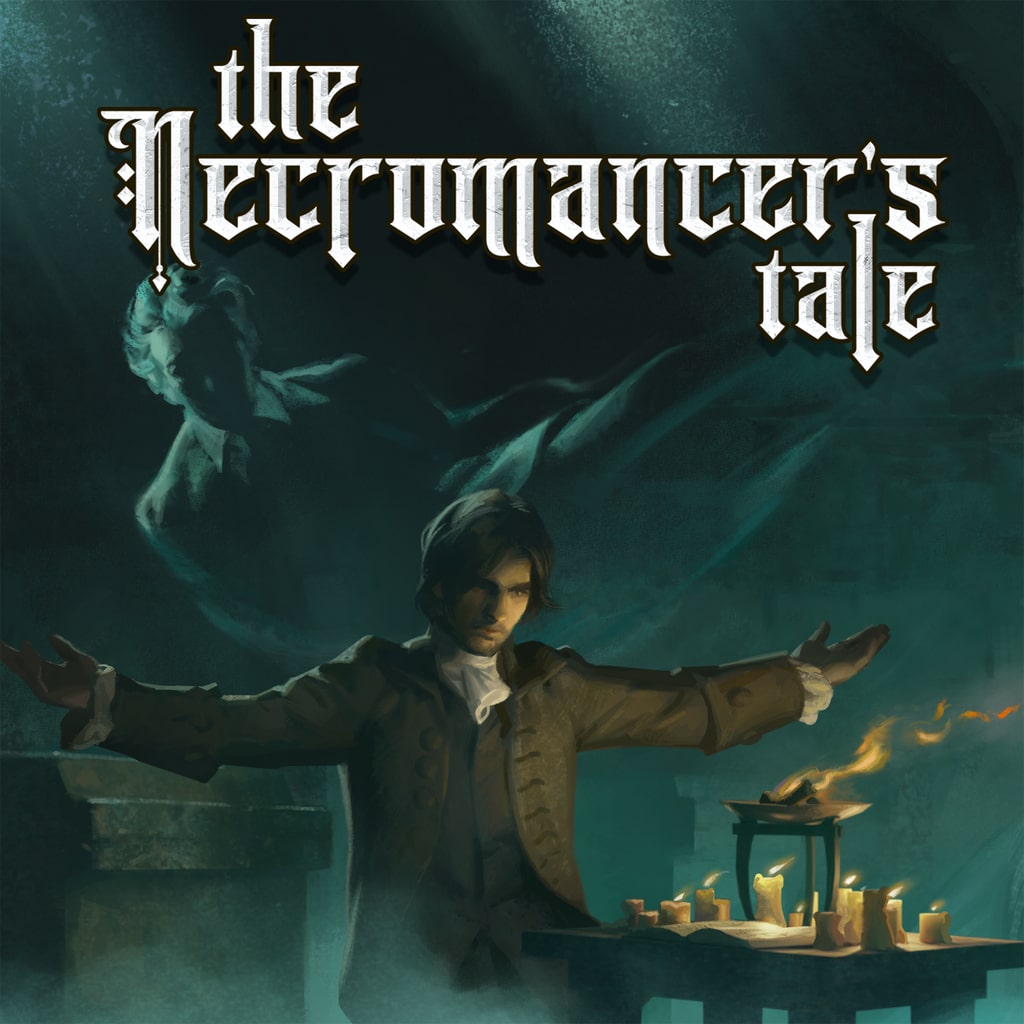
Some role-playing games ask you to save the world. Others ask you to conquer it. The Necromancer’s Tale poses a far more uncomfortable question: how much of your humanity are you willing to sacrifice in pursuit of justice?
That question hangs over every moment of Psychic Software’s ambitious gothic RPG. Set in an alternative 18th-century kingdom inspired by Venetian history and culture, The Necromancer’s Tale is less concerned with epic heroics than with obsession, corruption, and the seductive lure of forbidden knowledge. It is a game built on conversations, investigations, and moral compromise. Combat exists, certainly, but this is a story where words often cut deeper than swords and where the most dangerous enemy might be your own reasoning.
The result is one of the most fascinating narrative RPGs in recent memory. While some mechanical rough edges occasionally remind you that this is an independent production, the strength of its writing and worldbuilding ensures those flaws rarely overshadow its accomplishments.
A Descent Into Darkness
The story opens with the return of Mandel Van Elstrik, a young nobleman returning home after years abroad. What should have been a reunion quickly turns into a nightmare. His father is dead under suspicious circumstances, his mother has descended into mental ruin, and the city of Marns seems determined to bury uncomfortable truths beneath layers of politics, superstition, and fear.
While investigating his father’s death, Mandel discovers an ancient grimoire containing knowledge long deemed forbidden. Necromancy is not merely outlawed in this world; it is regarded as an affront to nature itself. Yet as the mystery deepens and traditional avenues of justice close, the temptation to embrace darker methods grows harder to resist.
What makes The Necromancer’s Tale so compelling is that it never casts Mandel as an obvious villain. His descent is gradual, believable, and often understandable. Every terrible decision stems from a chain of smaller choices that seem reasonable in isolation. Before long, you find yourself justifying actions you would have condemned hours earlier.
That slow moral erosion becomes the game’s greatest achievement. Rather than offering simplistic good-or-evil options, it invites players to navigate murky ethical waters where every answer carries consequences.
A City Full of Secrets
Marns is one of the most richly realised RPG settings in recent years. It feels alive not because of its size, but because of the people who inhabit it. More than 180 unique characters populate the city, each with distinct personalities, motivations, and relationships. Conversations rarely feel like simple quest exchanges. Every interaction serves a purpose, whether you are gathering information, building trust, manipulating social situations, or uncovering hidden agendas.
The writing shines throughout these encounters. Political intrigue, religious conflict, scientific curiosity, and supernatural horror intertwine naturally, creating a world that feels grounded despite its dark fantasy elements. The setting captures a fascinating moment in history when emerging rational thought clashes with ancient fears and traditions.
As a result, simply walking through town and speaking to residents often proves as engaging as any major story mission. Every conversation feels like another piece of a larger puzzle.
Necromancy As A Lifestyle
Many games treat necromancy as little more than a flashy combat mechanic. The Necromancer’s Tale takes a completely different approach. Learning forbidden rituals feels like genuine study. You decipher ancient texts, gather rare materials, perform elaborate ceremonies, and carefully hide your activities from suspicious eyes. Becoming a necromancer requires patience and commitment rather than simply unlocking a new skill tree.
This slower pace gives tremendous weight to every new power you acquire. Summoning an undead servant feels significant because of the effort involved and the risks attached. Every act of necromancy carries social consequences. If guards discover your activities or townsfolk witness your creations, your reputation can collapse rapidly.
The game constantly reminds you that power comes with a price. Even your own mind begins to suffer. As Mandel delves deeper into forbidden knowledge, strange visions and unsettling whispers gradually infiltrate his daily life. The line between reality and madness becomes increasingly blurred, creating a persistent atmosphere of unease that never fully lifts.
Politics Before Violence
Players expecting a combat-heavy RPG may initially be surprised by how much the experience centres on investigation and social interaction. Progress often depends on gathering information, cultivating relationships, and navigating delicate political situations. Blackmail, diplomacy, seduction, persuasion, and deception frequently prove more effective than brute force.
This approach works beautifully because it reinforces the game’s central themes. Power is not simply measured by the size of your undead army. It is measured by your ability to influence those around you and manipulate events from the shadows.
When combat does occur, it adopts a turn-based tactical format. Battles require careful positioning and resource management, particularly when commanding undead minions, whose presence can create complications both on and off the battlefield. Unfortunately, this is one area where the game occasionally loses momentum.
The Weakest Link
While perfectly functional, combat lacks the refinement found elsewhere in the experience. Character movement can feel awkward in larger encounters, and pathfinding issues occasionally create frustrating situations in which allies struggle to navigate tight environments. The tactical systems offer enough depth to remain engaging, but they rarely match the game’s investigative and narrative components.
Combat never becomes bad. It simply feels less polished than the rest of the experience. There are also moments when the game’s chapter structure feels slightly rigid. Certain story developments feel more scripted than organic, particularly when the narrative nudges players towards specific abilities or predetermined objectives. Thankfully, these issues remain relatively minor across a journey that can easily stretch beyond thirty hours for thorough players.
Gothic Atmosphere Done Right
Visually, The Necromancer’s Tale excels at establishing mood. The top-down presentation may seem modest at first glance, but the art direction does tremendous work. Fog drifts across cobblestone streets. Candlelight flickers through darkened hallways. Ancient estates creak beneath the weight of forgotten secrets. The city feels haunted long before any supernatural entities appear.
Sound design further enhances the experience. The musical score leans heavily into melancholy and tension, providing a constant backdrop of quiet dread. Gentle strings and sombre melodies accompany investigations, while darker compositions emerge as Mandel ventures deeper into the occult.
The atmosphere remains remarkably consistent throughout the adventure. Whether exploring aristocratic mansions or conducting rituals in hidden chambers, the game never loses its gothic identity.
Final Verdict
The Necromancer’s Tale is not a game for everyone. Players seeking fast-paced action or constant combat may struggle with its deliberate pacing and dialogue-heavy structure. Yet for those willing to immerse themselves in its world, it offers something genuinely special.
This is a role-playing game that understands the power of storytelling. It explores corruption, grief, ambition, and morality with intelligence and restraint. Rather than presenting simple heroes and villains, it invites players to confront difficult questions about power and the lengths people will go to achieve their goals.
Its combat systems occasionally reveal cracks in the foundation, and some structural limitations become more noticeable during longer play sessions. Even so, those shortcomings pale in comparison to the quality of the writing, the richness of the worldbuilding, and the emotional weight of Mandel’s journey.
The Necromancer’s Tale succeeds because it understands that true horror does not come from raising the dead. It comes from realising how easy it is to justify doing so.