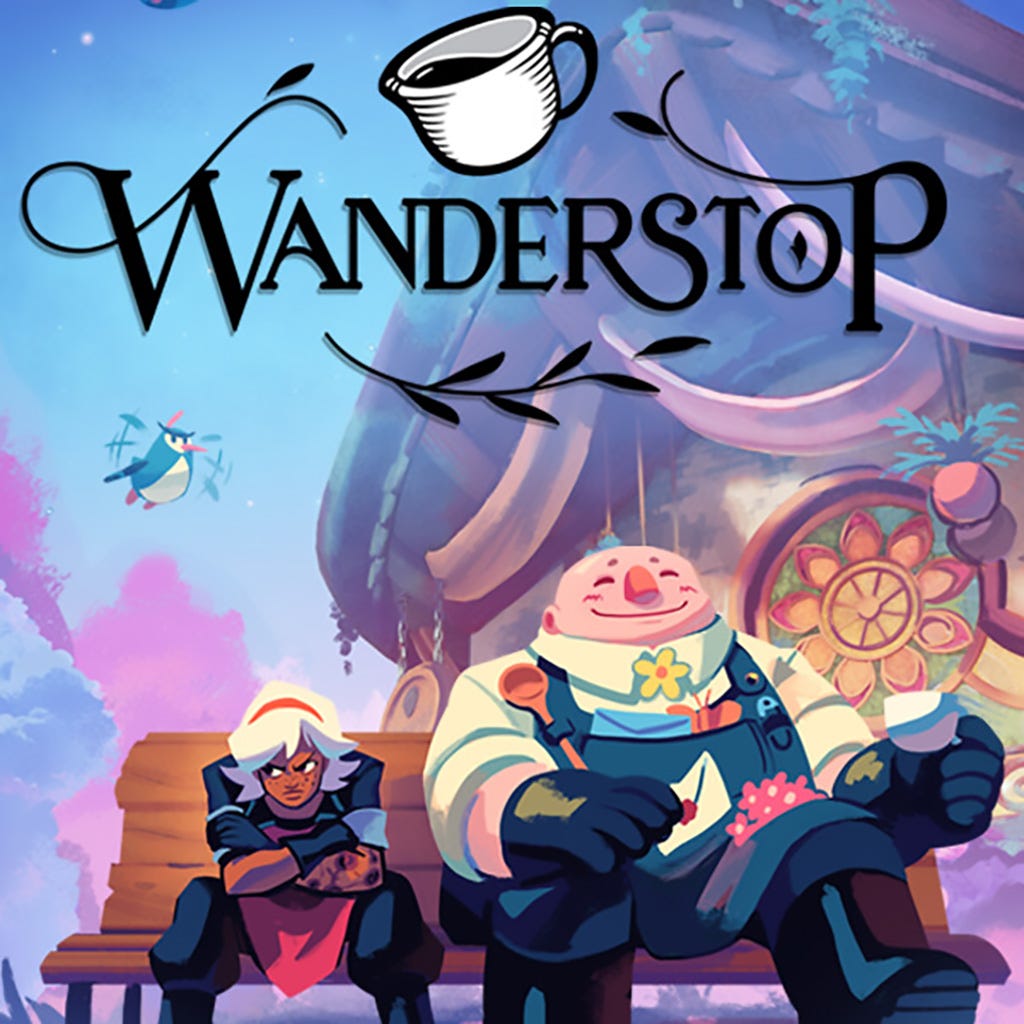
The cosy game genre has become one of the industry’s most popular comfort spaces. Players are invited to farm, decorate, craft, and manage peaceful little worlds where stress is rare and every task contributes to a sense of progress. At first glance, Wanderstop appears to fit neatly into that mould. It offers a beautiful, magical forest, a charming tea shop, colourful visitors, and a gentle pace that feels immediately welcoming. Yet within its opening hours, it becomes clear that this is not simply another cosy management simulator.
Developed by Ivy Road and featuring creative talent behind celebrated narrative experiences such as The Stanley Parable, The Beginner’s Guide, Gone Home, and Tacoma, Wanderstop approaches the genre from a completely different angle. Rather than celebrating constant productivity and endless self-improvement, it questions those ideas. It asks what happens when a person who has defined themselves through achievement suddenly loses the ability to keep moving forward. The result is one of the most emotionally mature and introspective games released in recent years.
A Protagonist Fighting Against the Premise
The story centres on Alta, a once-legendary fighter who built her entire identity around competition and victory. For years, she was unstoppable. Every challenge was another chance to prove her worth, and every success reinforced her belief that strength and achievement were the only things that truly mattered. When circumstances force her away from that life, however, she finds herself stranded in a magical forest, helping to run a tea shop alongside the gentle and endlessly patient Boro.
What immediately makes Wanderstop stand out is that Alta does not want to be here. Unlike many protagonists in cosy games who happily embrace a slower lifestyle, Alta actively resents her situation. She does not want to learn to make tea. She does not want to spend time listening to strangers. She certainly does not want to sit quietly and reflect on her life. Every moment she spends in the tea shop feels, to her, like a step away from the person she believes she should be.
That tension drives the narrative forward. The tea shop becomes more than a workplace. It becomes a space where Alta is forced to confront uncomfortable truths about herself. Watching her struggle against change, resist vulnerability, and slowly question the values she has spent her entire life embracing creates a deeply compelling character arc. She feels flawed, believable, and refreshingly human throughout the journey.
Brewing Tea with Purpose
The core gameplay centres on running the tea shop and serving travellers who pass through the forest. You spend your time gathering ingredients, cultivating plants, preparing tea blends, and learning your customers’ preferences. While these mechanics may sound simple on paper, they are presented with enough personality and charm to remain engaging throughout the adventure.
Tea brewing itself is surprisingly elaborate. Rather than selecting ingredients from static menus, players interact with a delightfully unusual machine that requires physical participation. You climb ladders, pull ropes, operate valves, and manage various components to create each drink. The process gives the act of making tea a tangible, almost ritualistic quality that fits perfectly with the game’s themes of patience and mindfulness.
The gardening systems add another layer of involvement without becoming overwhelming. Planting seeds, experimenting with combinations, and harvesting ingredients create a steady rhythm that feels rewarding without ever becoming stressful. Wanderstop understands that its mechanics exist primarily to support the story, but that does not mean they are shallow. They provide just enough interaction to keep players invested while ensuring the narrative remains the true focus.
The Courage to Slow Down
One of Wanderstop’s most remarkable achievements is how effectively it challenges established conventions within the cosy genre. Many life-simulation games are built around constant expansion. Bigger farms, larger houses, more resources, and greater efficiency are often treated as unquestionable goals. Progress becomes the central reward, and players are encouraged to optimise every moment of their virtual lives.
Wanderstop deliberately pushes back against that philosophy. Throughout the experience, it repeatedly questions whether constant growth is healthy. The game encourages players to pause, reflect, and simply exist within its world without feeling pressured to maximise productivity. There are moments when sitting quietly on a bench with a cup of tea feels more meaningful than completing another task.
What makes this approach so effective is that it never feels preachy. The themes emerge naturally through Alta’s journey and the situations she encounters. The game trusts players to draw their own conclusions while gently encouraging them to consider perspectives that many modern games rarely explore. It is a surprisingly bold creative decision, and one that pays off beautifully.
A Cast Worth Listening To
The travellers who visit the tea shop provide the emotional backbone of the experience. Each arrives carrying their own concerns, aspirations, fears, and personal struggles. Some interactions are light-hearted and humorous, while others touch on surprisingly profound topics. This variety ensures that every new visitor brings something fresh to the narrative.
The writing is outstanding. Conversations feel authentic and thoughtfully constructed, avoiding the exaggerated quirks that often plague cosy game dialogue. Characters reveal themselves gradually through natural interactions, making each relationship feel earned rather than forced. Even seemingly minor exchanges often contain observations that linger long after the conversation ends.
Boro is particularly memorable. Acting as both mentor and friend, he offers warmth and wisdom without ever becoming overbearing. His calm presence serves as a perfect counterbalance to Alta’s frustration and restlessness. The relationship between the two characters develops organically and becomes one of the strongest aspects of the story.
A Beautiful Place to Reflect
Visually, Wanderstop is absolutely stunning. The magical forest setting is filled with vibrant colours, rich detail, and a sense of tranquillity that immediately draws players in. Every corner of the clearing feels carefully crafted, creating an environment that is as inviting to explore as it is to simply sit and admire.
The visual design does more than provide attractive scenery. As the story progresses, subtle shifts in colour palettes and environmental details mirror Alta’s emotional journey. The world feels meaningfully connected to the narrative, allowing the presentation to reinforce the themes without relying solely on dialogue.
The soundtrack, composed by Daniel Rosenfeld, better known to many players as C418, is equally impressive. Gentle melodies drift through the forest with remarkable restraint and elegance. The music complements the experience perfectly, creating an atmosphere that feels soothing, reflective, and occasionally melancholic. Combined with the excellent visual presentation, it helps transform Wanderstop into a genuinely immersive experience.
Not Quite the Cozy Game Some May Expect
Despite its many strengths, Wanderstop may not resonate with every player. Those seeking a deep management simulator with extensive progression systems and endless customisation options may find the mechanics somewhat limited. The tea shop serves primarily as a storytelling device, and players expecting a highly detailed business simulation could be disappointed.
Similarly, the game’s deliberately measured pacing may prove challenging for players who prefer more action-oriented experiences. Wanderstop is content to spend time exploring emotions, conversations, and quiet moments of reflection. While these elements are central to its success, they do require a willingness to engage with the experience on its own terms.
These limitations ultimately reflect the game’s priorities rather than genuine flaws. Wanderstop knows exactly what it wants to be, and it rarely compromises that vision. Whether that approach works for an individual player will largely depend on what they hope to find within the genre.
Final Verdict
Wanderstop is far more than a cosy game about running a tea shop. It is a thoughtful, intelligent, and deeply human exploration of burnout, self-worth, and the difficult process of redefining who we are as the identities we have built for ourselves begin to crumble. Through its excellent writing, memorable characters, beautiful presentation, and surprisingly meaningful themes, it delivers an experience that feels genuinely distinct within a crowded genre.
Alta’s journey is one many players will recognise, even if their lives look very different on the surface. Her struggle to separate personal value from achievement resonates in ways few games attempt. Combined with a wonderfully realised world and a cast of characters worth spending time with, the result is a narrative adventure that lingers in the mind long after the credits roll.
Wanderstop may look like a cosy escape, but beneath its warm exterior lies something far richer and more memorable. It is a game about learning to stop running, and in doing so, it finds something truly special.