The farming simulation genre has become one of gaming’s most dependable comfort foods. Whether tending crops, raising animals, or slowly transforming a neglected patch of land into a thriving community, there is something inherently satisfying about watching steady progress unfold at your own pace. Over the years, developers have experimented with countless settings and themes, taking players from traditional countryside villages to prehistoric settlements and even distant planets.
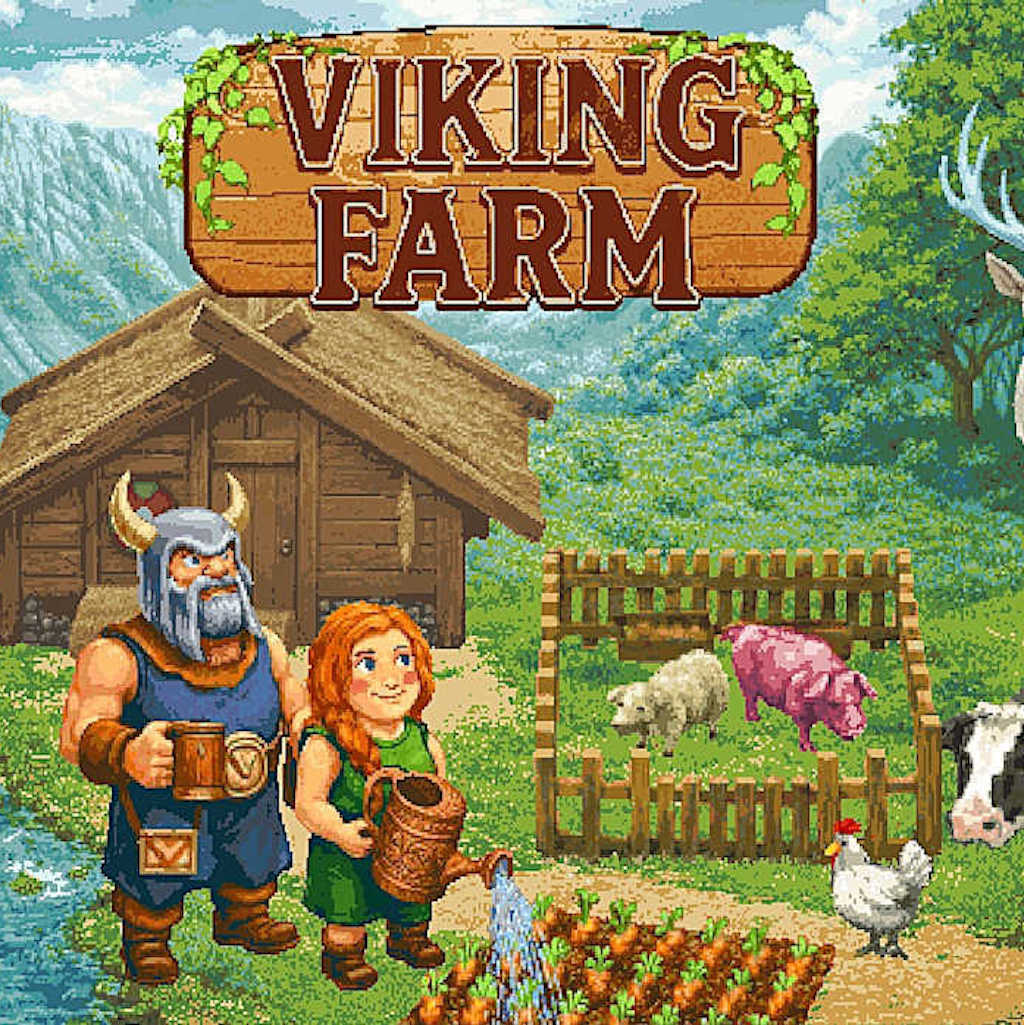
Viking Farm takes a different route. Developed and published by GAME NACIONAL, this budget-friendly farming simulator trades rolling green meadows for the rugged landscapes of Norse mythology. Here, players step into the boots of a Viking settler tasked with building a prosperous homestead while balancing agriculture, resource gathering, livestock management, and encounters with legendary creatures from ancient Scandinavian folklore.
It is an appealing premise on paper. After all, who wouldn’t be curious about running a farm where Fenrir and Jörmungandr might appear alongside cows and chickens? While Viking Farm succeeds in creating a relaxed and accessible management experience, its limited depth and repetitive progression mean it never fully capitalises on its unique setting. What remains is a pleasant but modest farming adventure that feels more like a casual distraction than a future genre classic.
Building a New Beginning
Viking Farm wastes no time throwing players into the action. There are no lengthy cutscenes, sprawling introductions, or complicated storylines to navigate. Instead, you choose a Viking character and are immediately handed a small plot of land that forms the foundation of your growing settlement.
The objective is straightforward. Gather resources, cultivate crops, care for animals, and gradually expand your farm into a thriving operation. This simplicity works in the game’s favour, particularly for players who prefer to jump straight into gameplay without being buried under tutorials or narrative exposition.
From the very beginning, there is a clear sense of purpose. Every tree chopped down and every crop harvested contributes to building something larger. The satisfaction of slowly transforming an empty field into a bustling Viking homestead provides a reliable motivation to keep pushing forward.
The Daily Rhythm of Farm Life
Much of Viking Farm centres on establishing a productive routine. Each day follows a familiar cycle of gathering resources, maintaining crops, feeding animals, and selling goods for profit. While this structure will feel instantly familiar to fans of farming simulations, the streamlined systems make the experience highly approachable.
Resource gathering forms the backbone of progression. Trees provide wood, rocks yield stone, and mining deposits offer valuable gold. These materials are used to construct new buildings, improve existing facilities, and unlock further opportunities for expansion.
The controls remain simple throughout. Tasks are performed quickly and efficiently, allowing players to focus on growth rather than wrestling with complicated interfaces. There is a pleasant sense of momentum as your farm gradually evolves from a humble outpost into a much larger operation.
However, simplicity is both a strength and a weakness. While the game remains easy to pick up, many of its systems never evolve beyond their most basic forms. Veterans of the genre may find themselves wishing for additional layers of complexity as the hours pass.
Crops, Livestock, and Legendary Beasts
The farming side of the experience offers a respectable variety of activities. Fields can be filled with carrots, wheat, cabbage, mushrooms, corn, and turnips, providing a steady source of income and resources. Watching your crops grow and harvesting them at the right time delivers the familiar satisfaction that farming enthusiasts expect.
Animal husbandry also plays a major role. Chickens, sheep, pigs, cows, and horses all require care and attention. Looking after livestock creates another valuable revenue stream while adding life to your growing settlement.
What sets Viking Farm apart from countless competitors is its incorporation of Norse mythology. Alongside ordinary farm animals, players eventually encounter legendary creatures pulled directly from Scandinavian folklore. Seeing Sleipnir grazing alongside traditional livestock is undeniably amusing, while encounters with Fenrir, Eikthyrnir, and Jörmungandr add an unexpected layer of fantasy to the otherwise grounded management gameplay.
Unfortunately, these mythological additions often function more as visual flavour than as transformative gameplay mechanics. They certainly add personality to the world, but they rarely impact the core systems in meaningful ways. As a result, the mythology feels somewhat underutilised despite being one of the game’s strongest selling points.
A Relaxing Pace
One area where Viking Farm consistently excels is its atmosphere. This is not a game that creates stress or demands lightning-fast reactions. Instead, it embraces a laid-back approach that encourages players to settle into a comfortable routine.
There are no looming disasters threatening your farm every few minutes. No punishing survival mechanics force constant micromanagement. Progress unfolds at a gentle pace, making the game particularly appealing for short play sessions or quiet evenings.
The relaxed structure gives Viking Farm a cosy quality that many players will appreciate. Sometimes there is comfort in performing simple tasks and seeing steady rewards. The game understands that appeal and leans into it.
For younger players or newcomers to farming simulators, this accessibility is likely to be one of its greatest strengths. The learning curve remains gentle throughout, ensuring that almost anyone can jump in and start building a settlement without feeling overwhelmed.
Functional Presentation
Visually, Viking Farm adopts a colourful, straightforward art style. Character models, animals, crops, and buildings are easy to identify at a glance, which is particularly important in a management-focused game where readability matters.
The environments are pleasant enough, even if they lack the detail and personality of more ambitious farming titles. Bright colours and simple designs help maintain clarity, though the world occasionally feels a little sterile as a result.
Performance remains stable throughout the experience. Menus are responsive, loading times are brief, and the controls generally behave as expected. While there are no technical achievements to highlight, the game accomplishes what it needs to without major issues.
The audio design follows a similarly functional approach. Background music provides a calming atmosphere without drawing attention to itself, while sound effects offer enough feedback to make everyday tasks feel responsive.
Where the Farm Begins to Stagnate
The biggest obstacle facing Viking Farm is repetition. While the early hours offer a satisfying loop of expansion and discovery, the game struggles to introduce meaningful new mechanics as progression continues. Gathering resources, planting crops, and caring for animals remain enjoyable for a while, but the routine eventually feels overly familiar.
Many modern farming simulations keep players engaged through social systems, festivals, crafting networks, relationship-building, exploration, or evolving storylines. Viking Farm largely avoids these complexities, leaving a gameplay loop that can feel somewhat one-dimensional over extended sessions.
The absence of deeper progression systems becomes increasingly noticeable as your farm grows. New buildings and upgrades provide short-term goals, but there are relatively few surprises around the corner. Even the mythological creatures, while charming, fail to fundamentally alter the experience in the way many players might hope.
As a result, long play sessions can start to feel repetitive. The game works best in shorter bursts, when its accessible design and relaxing atmosphere remain enjoyable rather than monotonous.
Final Verdict
Viking Farm is a pleasant, accessible farming simulator that delivers a low-pressure management experience set within a distinctive Norse mythology theme. Its straightforward gameplay, approachable controls, and relaxing pace make it easy to recommend to younger players or those seeking a simple farming game to unwind with.
At the same time, the game’s limited depth prevents it from reaching the heights of the genre’s best. Repetitive tasks, underdeveloped mythological elements, and a lack of long-term complexity leave the experience feeling somewhat lightweight compared with its competitors.
Still, there is a certain charm to Viking Farm’s simplicity. Not every game needs sprawling systems and endless content. Sometimes it is enough to tend a field, feed your animals, and watch your little settlement slowly grow beneath the northern skies.