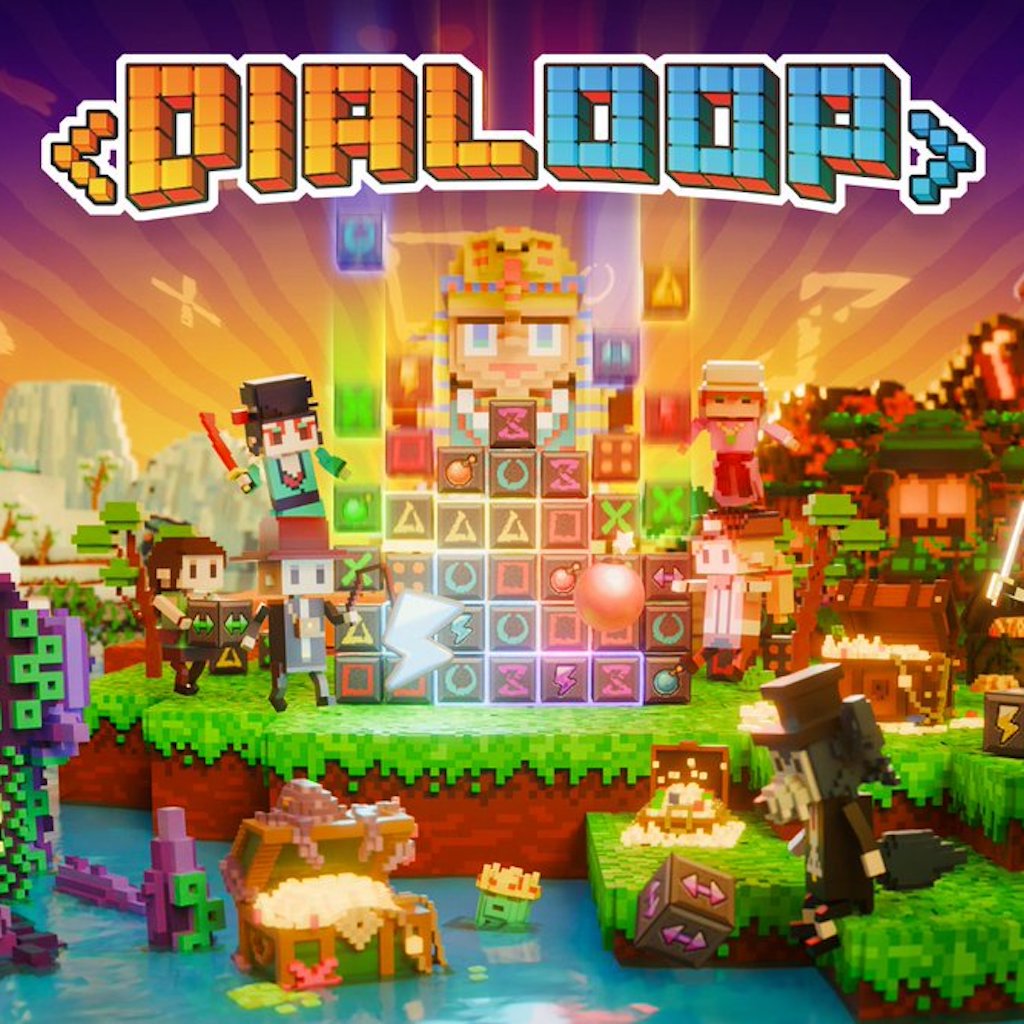
Puzzle games have always thrived on simplicity. Give players a handful of rules, a clear objective, and enough room to experiment, and remarkable things can happen. Over the years, developers have found increasingly inventive ways to build on familiar foundations, blending traditional puzzle mechanics with elements from roguelites, deckbuilders, and strategy games. Dialoop takes that modern approach and creates something that feels both familiar and refreshingly unusual. What initially appears to be a colourful arcade puzzler gradually reveals itself as a surprisingly deep and rewarding experience built around careful planning, clever adaptation, and the thrill of pulling off a perfectly executed chain reaction.
Developed and published by Byking Inc., Dialoop combines slide-based puzzle mechanics with roguelite progression and deckbuilding systems. It constantly encourages experimentation, rewarding players who are willing to think several moves ahead, while remaining accessible enough for newcomers to enjoy. Although a few accessibility concerns and occasionally overwhelming visual effects hold it back from true greatness, there is no denying that Dialoop offers one of the more distinctive puzzle experiences to arrive in recent years.
A New Spin On Familiar Ideas
At first glance, Dialoop resembles a traditional match-three game. Colourful blocks fill the screen, combinations yield points, and longer chains bring bigger rewards. However, the similarities quickly end once the mechanics reveal themselves. Instead of swapping individual pieces, players manipulate entire rows and columns across the board. This simple change dramatically alters how the game is played and immediately gives Dialoop its own identity.
Every move carries weight because shifting a single row can affect multiple sections of the board simultaneously. What initially looks like a straightforward match can quickly evolve into a complex sequence of interactions that ripple across the entire playfield. The game constantly encourages players to view the puzzle as a larger, interconnected system rather than focusing solely on isolated matches. As a result, every successful move feels earned, and every large combo is deeply satisfying.
One of the smartest design choices is the freedom Dialoop gives its players. You are free to experiment with possible solutions before committing to them. Rows and columns can be adjusted, plans can be tested, and if an idea does not work, you can simply undo the action and try again. This creates a far more welcoming experience than many puzzle games that punish experimentation. Instead of feeling anxious about making mistakes, players are encouraged to explore possibilities and discover creative solutions.
Roguelite Progression Done Right
While the puzzle mechanics form the backbone of the experience, Dialoop’s roguelite structure is what transforms it from a clever diversion into a genuinely addictive game. Every run offers new opportunities, varied rewards, and fresh strategic decisions. The items and upgrades available to you shift constantly, forcing players to adapt rather than rely on a single dominant strategy.
As you progress through stages, you earn resources to spend on upgrades and relics. Some enhance scoring potential, others manipulate colours on the board, while more advanced options create powerful chain reactions that can completely reshape how a run unfolds. What makes these upgrades so compelling is how they interact with one another. Individually, they may seem modest, but when combined effectively, they can produce spectacular results.
There is a constant sense of growth as a run develops. Early stages often feel straightforward as you learn the layout of the board and gather your first upgrades. By the later stages, however, the game becomes a puzzle-solving fireworks display where a single carefully planned move can trigger a cascade of events that fills the screen with points and destruction. Few things are as satisfying as watching a strategy you slowly assembled over an hour suddenly come together in a perfectly executed chain.
Importantly, failure rarely feels punishing. Every unsuccessful run teaches valuable lessons about item combinations, board manipulation, or resource management. Even when defeat arrives, there is almost always lingering curiosity about what might happen on the next attempt. That “one more run” feeling is incredibly hard to resist.
Bosses That Shake Things Up
Many puzzle games struggle to sustain momentum over extended periods. Dialoop sidesteps this by introducing boss encounters that serve as major milestones throughout a run. These battles are more than simple score checks. They force players to maximise their builds and use every tool available to survive.
The bosses themselves fit the game’s quirky voxel aesthetic perfectly. Massive mythical creatures stand in your way, creating encounters that feel distinct from standard puzzle stages. Facing these opponents adds tension and urgency to every decision, especially when resources are limited and your build is still developing.
What makes these encounters particularly effective is how they test your understanding of the game’s systems. Reaching a boss with a powerful collection of upgrades is one thing. Knowing how to fully exploit those upgrades under pressure is another matter entirely. The battles create memorable peaks within each run and help sustain excitement throughout the campaign.
Adding to the fun is the game’s sense of humour. Defeat often results in exaggerated voxel fatalities that feel more amusing than frustrating. They lend the experience a touch of personality, preventing it from becoming overly serious despite its strategic depth.
Competitive Chaos
While the single-player mode offers plenty of content, Dialoop’s multiplayer deserves recognition as one of its strongest features. Supporting online competition with up to eight players, these matches transform the game’s strategic puzzle-solving into a frantic battle for survival.
Large combinations become offensive weapons capable of disrupting opponents in real time. Clearing substantial chains sends garbage blocks onto rival boards, forcing opponents to adapt quickly or risk elimination. The resulting matches create a wonderful blend of strategy and chaos, where fortunes can change within seconds.
The multiplayer mode succeeds because it builds naturally on the existing mechanics rather than introducing unnecessary complications. Everything learned in single-player carries directly into competitive play. Players who understand efficient board management and combo creation are immediately rewarded, while newcomers can still enjoy the spectacle and excitement of the larger battles.
Matches often become loud, unpredictable affairs filled with dramatic comebacks and sudden collapses. It is the sort of multiplayer experience that generates stories, with players frequently surviving impossible situations or watching a perfectly constructed strategy unravel at the worst possible moment. Those unpredictable moments give the online component impressive longevity.
Style With A Few Drawbacks
Visually, Dialoop is bursting with personality. The voxel art style gives the game a distinctive identity, and the colourful environments help create a playful atmosphere that suits the light-hearted tone perfectly. Character designs are charming, animations are lively, and there is a genuine sense of energy throughout the presentation.
The problem is that Dialoop occasionally becomes a little too enthusiastic for its own good. As runs progress and larger combinations occur, the screen can become flooded with visual effects. Explosions, flashing lights, score indicators, and particle effects all compete for attention. During short sessions, this spectacle feels exciting and rewarding. During longer play periods, it can become surprisingly tiring.
Accessibility is another area where the game could have gone further. The absence of dedicated colourblind options is disappointing, given how heavily the gameplay relies on colour recognition. Likewise, the inability to fully remap controls feels like a missed opportunity in an otherwise polished package. Neither issue ruins the experience, but they stand out because so much of the rest of the game demonstrates thoughtful design.
Final Verdict
Dialoop is one of those rare puzzle games that feels genuinely fresh without abandoning the core principles that make the genre enjoyable. Its row-and-column manipulation mechanics offer a compelling alternative to traditional match-three design, while the roguelite progression system ensures that every run feels unique. The deckbuilding elements add meaningful depth, the boss encounters provide memorable highlights, and the multiplayer mode injects an entertaining dose of chaos that considerably extends the game’s lifespan.
There are certainly areas that could be improved. The visual effects can become overwhelming during lengthy sessions, and the lack of accessibility options feels increasingly outdated in a genre that should be welcoming to everyone. Even so, these shortcomings are relatively minor compared with everything Dialoop does well. Byking has created a puzzle game that rewards intelligence, experimentation, and adaptability without ever losing sight of the simple joy of making a spectacular combo happen. For puzzle fans searching for something a little different, Dialoop is an easy recommendation and one of the most engaging examples of the genre in recent memory.