Retro collections often arrive with a clear sense of nostalgia. They invite players to revisit familiar classics, celebrate forgotten gems, and reconnect with gaming history. Occasionally, however, a collection arrives that feels less like a nostalgic trip and more like an archaeological discovery. Alien Cat 2 – Retro Collection falls firmly into that category. While it may lack the widespread recognition of many retro re-releases, its clever design and deceptively deep mechanics make it a hidden treasure that puzzle enthusiasts will be delighted to uncover.
Published by Ratalaika Games and developed by PSCDGames, Alien Cat 2 – Retro Collection brings together multiple versions of a remarkably inventive puzzle experience. At first glance, the game appears to be a simple top-down adventure featuring a brave cat exploring dangerous alien labyrinths. Spend more than a few minutes with it, however, and it quickly reveals itself to be something far more demanding. This is a game built around planning, spatial awareness, and the ability to think several moves ahead. It may wear the clothes of a straightforward retro action game, but underneath beats the heart of a fiendishly clever logic puzzler.
A Cat Lost Among the Stars
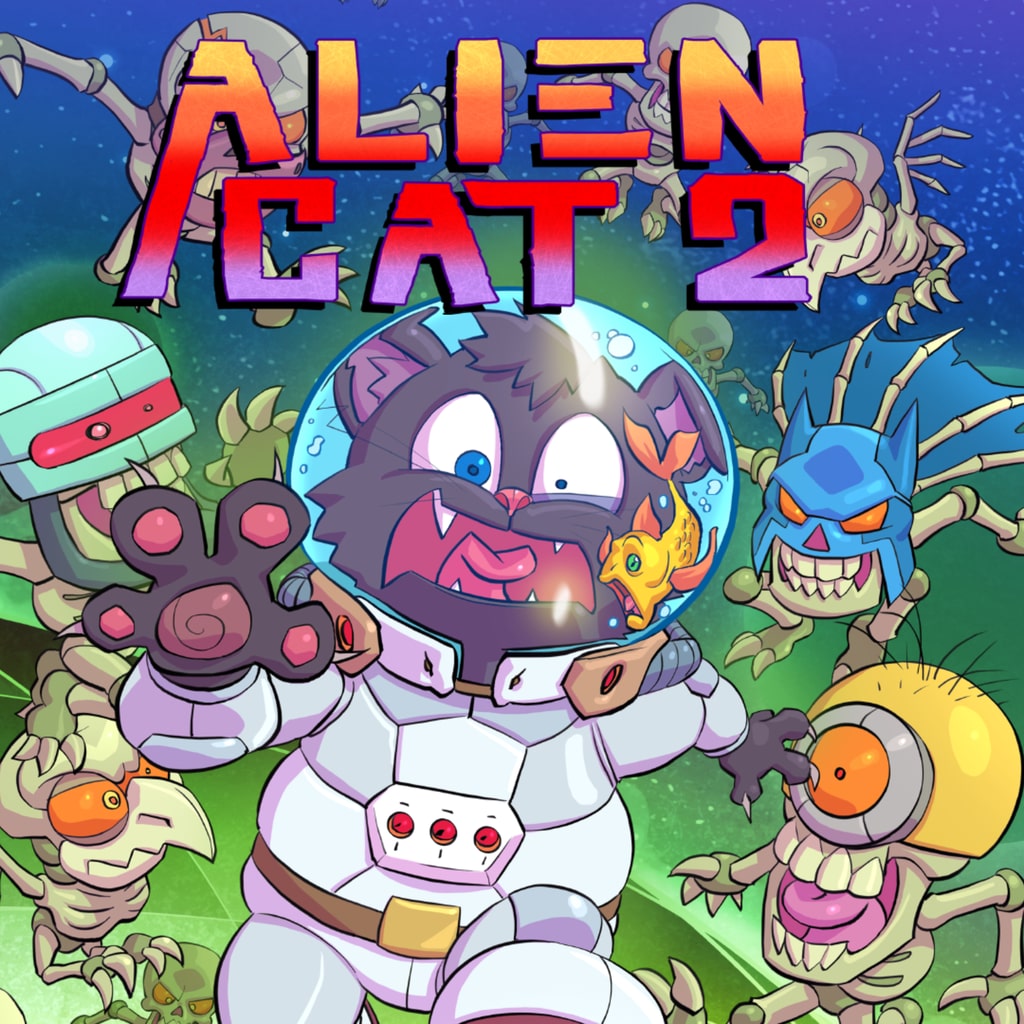
The story is intentionally simple, providing just enough context to support the gameplay without slowing things down. Our feline protagonist and his loyal goldfish companion are travelling through distant galaxies when disaster strikes. A catastrophic crash leaves their spacecraft scattered across an unfamiliar world, home to dangerous skeletal creatures and hazardous labyrinths.
The objective sounds straightforward enough. Collect the missing ship components, gather fuel, avoid the traps scattered throughout the environment, and find a way home. Yet, like many of the greatest puzzle games, the narrative serves primarily as a framework for the challenges ahead. The focus remains firmly on navigating increasingly complex stages and solving the mechanical problems placed in your path.
There is a certain charm to this minimalist approach. Rather than overwhelming players with lengthy cutscenes or complicated lore, the game gets straight to the point. The retro presentation complements this philosophy perfectly, creating an experience that feels refreshingly focused in an era when many games struggle to resist unnecessary distractions.
More Than Meets the Eye
One of Alien Cat 2’s greatest strengths is how it disguises its complexity. The opening stages introduce players to basic movement, simple hazards, and straightforward objectives. Initially, it feels like a modest puzzle adventure that can be completed with little more than careful navigation and good timing. That illusion does not last long.
The defining mechanic arrives in the form of synchronous clones. As you progress through the labyrinths, the planet begins creating identical copies of your cat. These clones mirror every movement you make in perfect unison. Move left and every clone moves left. Move down and every clone follows suit. At first, this sounds manageable, but the introduction of walls, obstacles, and environmental hazards quickly transforms the concept into something remarkably intricate.
Because clones can become temporarily blocked while your primary cat continues moving, their positions constantly shift relative to one another. Suddenly, every move carries consequences far beyond what is visible on screen. A decision that safely advances your main character might simultaneously guide a distant clone directly into a minefield. The game constantly forces players to think about multiple locations at once, turning each level into an elaborate exercise in spatial reasoning.
The Art of Planning Ahead
What makes Alien Cat 2 so compelling is its steady escalation of its central idea. Rather than introducing dozens of unrelated mechanics, it continually finds new ways to challenge your understanding of the clone system. Every stage feels like a carefully constructed puzzle box designed to test your ability to predict outcomes before they happen.
The best levels often resemble a game of chess. Success depends less on quick reactions and more on careful planning. You begin studying layouts, visualising future moves, and mentally tracking the positions of clones scattered across the map. The satisfaction of finally solving a particularly difficult room is immense because the game never hands you the answer. Every victory feels earned through genuine problem-solving.
This creates an experience that rewards patience above all else. Players who rush forward without thinking will quickly find themselves restarting levels after accidentally triggering traps. Those willing to slow down and consider every possibility will discover a wonderfully satisfying rhythm beneath the challenge.
A Celebration of Retro Design
The “Retro Collection” subtitle is more than simple marketing. Ratalaika has done an admirable job of preserving the game’s historical identity by including multiple versions originally designed for different generations of hardware. Players can experience both the Sega Master System and Sega Mega Drive interpretations, each offering its own visual flavour while preserving the same core gameplay.
Comparing the two versions offers a fascinating glimpse into how developers adapted their work to different technical limitations. The Master System edition embraces simplicity and clarity, while the Mega Drive version benefits from richer colours and enhanced presentation. Neither version feels objectively superior, making switching between them surprisingly enjoyable.
The emulation itself is handled with the professionalism players have come to expect from Ratalaika. Save states, screen filters, visual customisation options, and responsive controls all contribute to a polished package. These additions never interfere with the retro experience but instead make it more accessible to modern audiences.
Simplicity as a Strength
One of the most admirable qualities of Alien Cat 2 is its confidence. The game never tries to be something it isn’t. There are no sprawling upgrade trees, no crafting systems, and no endless progression mechanics designed to artificially extend playtime. Every element serves the puzzle design.
That simplicity allows the core mechanics to shine. Each level introduces a new challenge, asks you to solve it, and then moves on to the next idea. The pacing remains tight throughout, creating an experience that feels focused and purposeful from beginning to end. In many ways, it recalls an era when developers relied on strong gameplay concepts rather than elaborate feature lists to capture players’ attention.
This design philosophy may not appeal to everyone. Players seeking cinematic storytelling or constant rewards may find the minimalist structure too sparse. For puzzle enthusiasts, however, the purity of the experience is one of its greatest assets.
Not Without Frustration
As rewarding as Alien Cat 2 can be, it occasionally tests players’ patience. Later puzzles become significantly more demanding, often requiring multiple attempts before a successful solution emerges. Because the game expects careful planning, mistakes can sometimes result in lengthy resets after several minutes of progress.
The retro design also means the game offers limited guidance. Modern puzzle games frequently provide hint systems or subtle nudges towards the solution. Alien Cat 2 largely leaves players to fend for themselves. While this enhances the sense of accomplishment when solving a difficult puzzle, it can also lead to moments of frustration when progress stalls completely.
Visual repetition can occasionally become an issue as well. Although the different versions offer some variety, the environments remain relatively simple by modern standards. Players expecting dramatic visual evolution throughout the campaign may find the presentation somewhat uniform.
Final Verdict
Alien Cat 2 – Retro Collection proves that great puzzle design endures. Beneath its modest appearance lies a surprisingly deep and rewarding challenge built around a genuinely clever central mechanic. The synchronous clone system turns simple movement into a fascinating exercise in planning, prediction, and spatial awareness, keeping the adventure engaging throughout.
Ratalaika’s collection treatment preserves the game’s retro roots while providing enough modern conveniences to keep it accessible today. More importantly, the package allows a new audience to discover a puzzle experience that deserves far more attention than it has historically received. While its old-school difficulty and minimalist structure may not appeal to everyone, those willing to embrace its deliberate pace will find an exceptionally satisfying brain teaser waiting beneath the surface.
Alien Cat 2 – Retro Collection may look small, but its ideas are anything but. This is a game that constantly challenges players to think differently, rewards careful observation, and shows that some of the smartest puzzles ever designed can emerge from the simplest concepts. For retro fans and puzzle lovers alike, it is an easy recommendation.