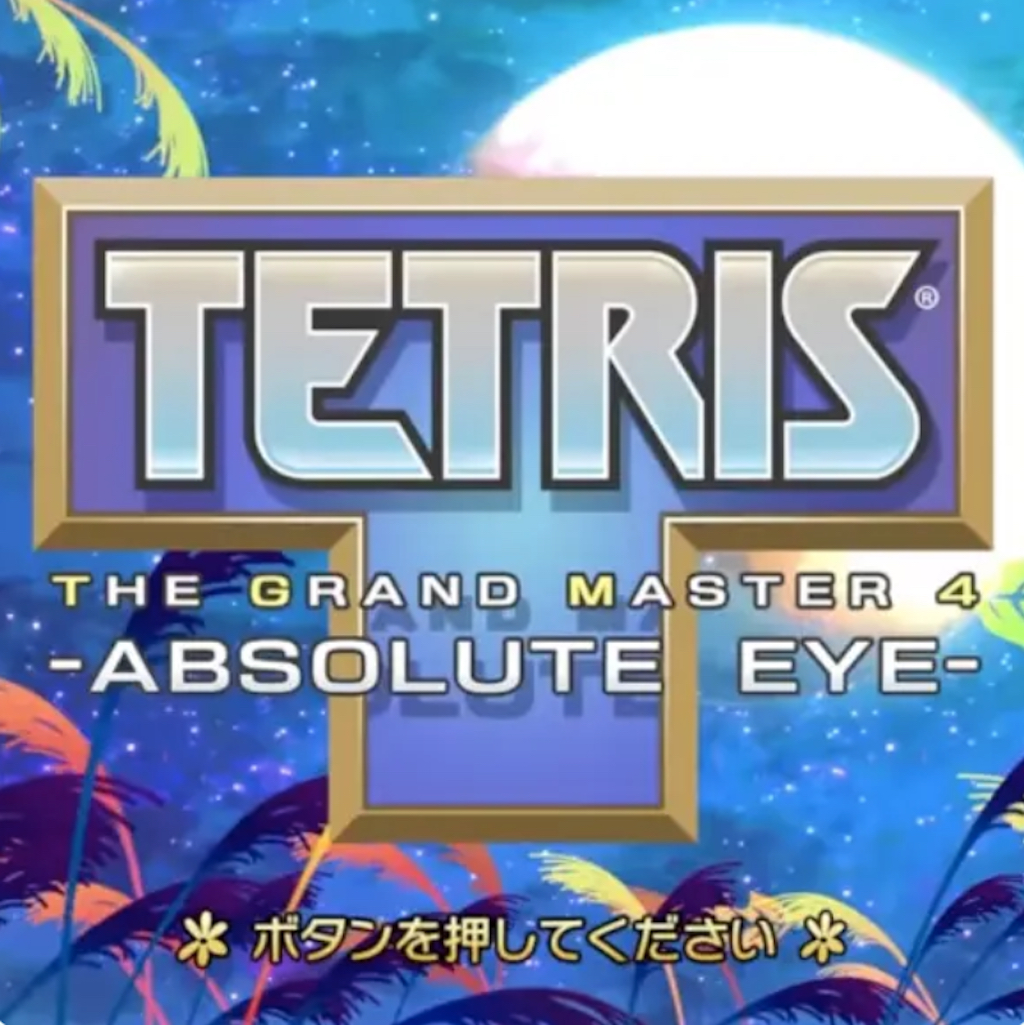
For many players, Tetris is comfort food. It is the game you boot up to relax, clear your mind, and lose yourself in the hypnotic rhythm of falling blocks. Tetris: The Grand Master 4 Absolute Eye has no interest in being that version of Tetris.
This is Tetris with its sleeves rolled up. It is fast, demanding, relentless, and often intimidating. It demands concentration, precision, and commitment from the moment you begin. After a twenty-year wait since the previous mainline Grand Master entry, developer ARIKA has finally revived one of the most revered puzzle series ever created, and the result is a game that remains fiercely committed to its identity. That commitment is both its greatest strength and its biggest obstacle.
The Return of a Legend
The Grand Master series has always held a unique place in puzzle gaming. While modern Tetris releases often prioritise accessibility and broad appeal, Grand Master has traditionally catered to players who treat Tetris as a skill to be mastered rather than a pastime to be enjoyed casually. Absolute Eye continues that philosophy without compromise.
From the moment the first pieces drop, there is a sense that this game expects something of you. It expects focus. It expects adaptability. Most importantly, it expects improvement. This is not a game where you simply survive. It is a game where you learn.
The structure may seem familiar on the surface. Blocks fall. Lines disappear. Scores rise. Yet the pace and pressure transform the experience into something entirely different. Every session feels more like a high-speed mental workout than a traditional puzzle game.
What makes the experience compelling is how clearly ARIKA understands its audience. Rather than modernising the series beyond recognition, the developers have carefully preserved the spirit that made the earlier entries legendary among arcade enthusiasts.
Speed That Demands Respect
The defining feature of Absolute Eye is speed. At lower levels, things feel manageable. Pieces fall at a reasonable pace, giving newcomers time to adjust. That sense of comfort does not last long. As levels climb, the game gradually reveals its true nature. Pieces begin arriving at speeds that seem impossible at first glance. Decisions that once took several seconds must now be made in fractions of a second.
The remarkable thing is how fair it feels. When failure occurs, it rarely feels random. The game simply exposes weaknesses in your play. A poor stack. A missed opportunity. A moment of hesitation. Every collapse becomes a lesson, and every lesson makes future runs stronger.
That relationship between failure and improvement forms the heart of the Grand Master experience. Losing can be frustrating, but it is rarely discouraging. Instead, it creates a powerful urge to jump straight back in and do better. The result is one of the most addictive gameplay loops in modern puzzle gaming.
Modes Built for Different Skill Levels
One of the most pleasant surprises is the extent of ARIKA’s effort to make Absolute Eye more approachable than its fearsome reputation might suggest. The inclusion of beginner-friendly modes offers a gentler entry point for curious players. NORMAL mode serves as an excellent introduction, allowing newcomers to become familiar with the game’s unique rhythms before tackling the more demanding challenges. Even so, the real stars of the package are ASUKA and SHIRANUI.
ASUKA introduces fascinating twists that encourage players to rethink board management and line clearing. It feels fresh without abandoning the core fundamentals that define Tetris. There is a constant tension between efficiency and survival, creating situations where every placement carries weight.
SHIRANUI, meanwhile, feels almost like a duel between player and machine. The mode pushes decision-making to extraordinary levels and creates some of the most intense puzzle moments in gaming. Success feels exhilarating because the challenge is so uncompromising. These modes ensure that Absolute Eye never becomes repetitive. Each offers a distinct flavour of challenge while remaining firmly rooted in the Grand Master philosophy.
Precision Above Everything
A game this fast lives or dies by its controls. Thankfully, Absolute Eye performs brilliantly. Every movement feels immediate, and every rotation occurs exactly when expected. Inputs register with remarkable consistency, creating an experience in which players can fully trust the game. That trust becomes increasingly important as speeds escalate and reaction windows shrink.
The technical precision on display is genuinely impressive. Even in the most chaotic moments, the game remains responsive and stable. There are no excuses when things go wrong. Success or failure rests entirely on the player’s execution.
That purity gives the game tremendous competitive appeal. When leaderboard rankings are determined by fractions of a second and microscopic decisions, precision becomes everything. Absolute Eye delivers that precision in abundance.
The Beauty of Simplicity
Visually, this is not a flashy game. Players expecting cinematic effects or elaborate presentation may initially find the aesthetic understated. The focus remains firmly on readability and performance rather than spectacle.
Yet there is an elegance to that restraint. Every visual element serves a purpose. The board remains clear. Information is easy to process. Animations communicate exactly what players need to know without unnecessary distractions. As speeds increase, that clarity becomes invaluable.
The soundtrack deserves praise as well. Rather than dominating the experience, it complements the mounting tension beautifully. Music gradually amplifies the pressure without overwhelming the concentration required to play effectively. Together, the audio and visual design create an atmosphere that feels intensely focused. Everything exists in service of the gameplay.
Not for Everyone
As impressive as Absolute Eye is, it would be dishonest to overlook its limitations. The difficulty curve remains intimidating. Even with beginner modes available, the jump to advanced play can feel overwhelming. Players accustomed to more forgiving Tetris experiences may bounce off the game before its brilliance fully reveals itself.
The educational tools also leave room for improvement. The Practice with Textbook mode is a welcome addition, but it sometimes assumes a level of prior knowledge that newcomers simply will not possess. More detailed explanations and stronger tutorials could have helped bridge the gap between casual players and aspiring experts.
There is also the reality that some players simply will not enjoy what Grand Master offers. This is a game built around repetition, mastery, and incremental improvement. Those seeking a laid-back puzzle experience may find its demanding nature exhausting rather than rewarding.
Final Verdict
Tetris: The Grand Master 4 Absolute Eye is one of the purest puzzle games available today. It knows exactly what it wants to be and never compromises that vision. While many modern releases chase accessibility and mass appeal, ARIKA has crafted a game that celebrates mastery, dedication, and skill.
Its intimidating difficulty will undoubtedly limit its audience, but those willing to engage with its systems will find something special. Every run becomes a lesson. Every mistake becomes an opportunity. Every milestone feels genuinely earned.
Twenty years is a long time to wait for a sequel. Thankfully, Absolute Eye proves that some legends are worth the wait. This is not merely a revival of a beloved franchise. It is a reminder of why The Grand Master series became legendary in the first place.