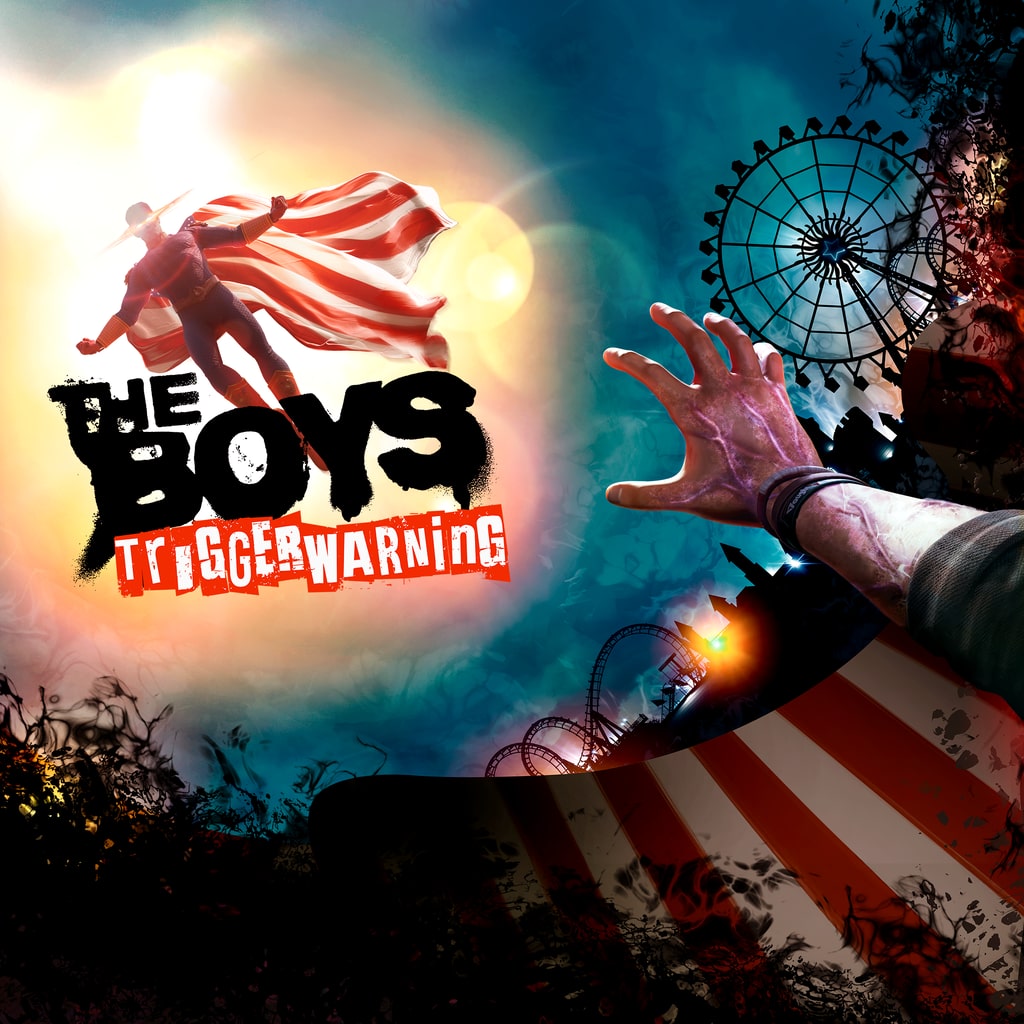
The Boys: Trigger Warning is one of those rare licensed VR projects that immediately feels like it understands the assignment. Developed by ARVORE, the studio behind the inventive Pixel Ripped series, and published by Sony Pictures Virtual Reality, it arrives with a clear intention rather than vague ambition. This is not trying to be an open-world superhero sandbox or a sprawling RPG adaptation. Instead, it commits fully to a tightly focused first-person VR action experience built around fear, improvisation, and the uncomfortable intimacy of power. Following its Meta Quest 3 launch earlier this year, the PlayStation VR2 version lands on June 9, 2026, and brings with it the most polished iteration of this chaotic, blood-soaked trip into Vought’s darkest corners.
Set within the live-action universe of The Boys, Trigger Warning expands the world with an original storyline that still feels tonally stitched into the show’s DNA. You are Lucas Costa, an ordinary civilian whose life is violently dismantled when a rogue Supe family known as the Armstrongs turns a harmless day into a massacre. What follows is not empowerment in the traditional superhero sense, but survival laced with instability. Recruited by Billy Butcher and Mother’s Milk and temporarily injected with Compound V, Lucas is pushed into a world where power is both a weapon and a liability.
Story and World
What makes Trigger Warning surprisingly effective is how restrained it is with its storytelling scope. Rather than attempting to retell the larger conflict between The Boys and Vought, the game zooms in on a smaller, more personal descent into that world. Lucas is not a soldier or a strategist. He is a man reacting to horror in real time, which gives the narrative a grounded emotional anchor even as the world around him spirals into exaggerated violence.
The writing team has clearly leaned into the show’s trademark tonal balance. One moment you are hiding in silence from a patrol of enhanced operatives, and the next you are listening to Butcher deliver a profanity-laced motivational speech that somehow feels both absurd and grimly sincere. The inclusion of original cast members such as Laz Alonso, Colby Minifie, and P.J. Byrne helps maintain continuity with the series, while Jensen Ackles’ appearance as a warped, experimental variant of Soldier Boy adds an unexpected layer of instability to the story’s later stages.
What stands out most is how the game uses perspective. In VR, even simple narrative beats carry more weight. Watching a Supe casually demolish a room while you are forced to stay still, breathing quietly behind cover, does more than any cutscene could achieve on a flat screen.
Gameplay and Mechanics
At its core, Trigger Warning is a stealth-action VR game that constantly shifts between tension and release. The stealth segments are where the experience is strongest. Movement feels deliberate rather than fluid in a way that actually benefits the design. You are not a superhero by default, even when infused with Compound V. You are improvising, hiding, and trying to make sense of environments that were never built for human vulnerability.
Combat, when it arrives, is intentionally messy. Motion controls are used to simulate superpowered bursts of violence, but the game resists turning you into an overpowered fantasy. Throwing objects, breaking through barriers, or unleashing temporary energy-based attacks all feel impactful, but never fully controlled. That unpredictability fits the tone of The Boys perfectly. Power here is unstable, physical, and occasionally overwhelming.
One of the most effective design choices is how limited your abilities feel in relation to your enemies. You are not competing with Supes on equal footing. Instead, you are surviving encounters where timing, positioning, and awareness matter more than mechanical mastery. This creates a constant sense of tension that never really disappears, even in moments of relative safety.
VR Immersion and Design
Where Trigger Warning truly earns its identity is in how it uses VR not as a gimmick, but as a storytelling device. Scale is a major factor. Standing in the same space as a Supe, looking up at someone who can kill you without effort, creates a physical reaction that traditional gameplay rarely achieves. The game understands this and leans into it, especially in sequences involving Homelander, which function almost like survival horror encounters rather than traditional boss fights.
These sections are deliberately uncomfortable. You are not expected to fight. You are expected to endure proximity. The sound design plays a huge role here, with subtle audio shifts signalling danger long before anything visually escalates. It is effective in a way that borders on oppressive, but that is entirely the point.
Environmental interaction is also well thought out. Vought facilities feel clinical and controlled, while underground resistance spaces are cluttered, improvised, and human. This contrast reinforces the central theme of the game, which is how fragile ordinary people are when placed inside systems designed by and for the powerful.
Presentation and Performance
Visually, Trigger Warning sits comfortably in the upper tier of VR adaptations. It does not chase hyperrealism, but instead focuses on readability and atmosphere. Lighting is used aggressively to direct attention and build tension, particularly in stealth sections where visibility is deliberately compromised.
Performance on PSVR2 is stable, with noticeably improved clarity compared to the Quest version. Load times are minimal, and haptic feedback adds a subtle but meaningful layer of physicality to actions like firing weapons or absorbing impact during combat. The headset vibration during high-intensity sequences is particularly effective, reinforcing the feeling that the world is reacting to your presence.
Audio design deserves equal credit. Dialogue is sharp and characterful, but it is the environmental soundscape that carries most of the tension. Distant footsteps, shifting metal structures, and the sudden absence of ambient noise all contribute to a constant sense of unease.
Final Thoughts
The Boys: Trigger Warning is not trying to be a definitive superhero game, and it is stronger because of that restraint. Instead, it focuses on proximity, vulnerability, and the psychological pressure of existing in a world where power is unpredictable and often lethal. Its VR implementation enhances that concept rather than distracting from it, creating moments of genuine tension that linger long after play sessions end.
It is relatively short, tightly structured, and sometimes mechanically simple, but it understands exactly what kind of experience it wants to be. For fans of the series, it offers a rare opportunity to step inside its world in a way that feels both intimate and dangerous. For VR players more broadly, it stands as one of the more confident licensed adaptations in recent years.