There is a deep-seated, universal comfort we all remember from childhood. That specific click of a lamp or the strike of a match that turned a room full of shadows into a space of safety. Velvet Bites understands that feeling intimately in Golem Lights, a minimalist puzzle experience that turns the act of illuminating darkness into something surprisingly emotional. Published by AFIL Games, this quiet little adventure trades explosions and urgency for reflection, patience, and the gentle satisfaction of watching light slowly reclaim the world around you.
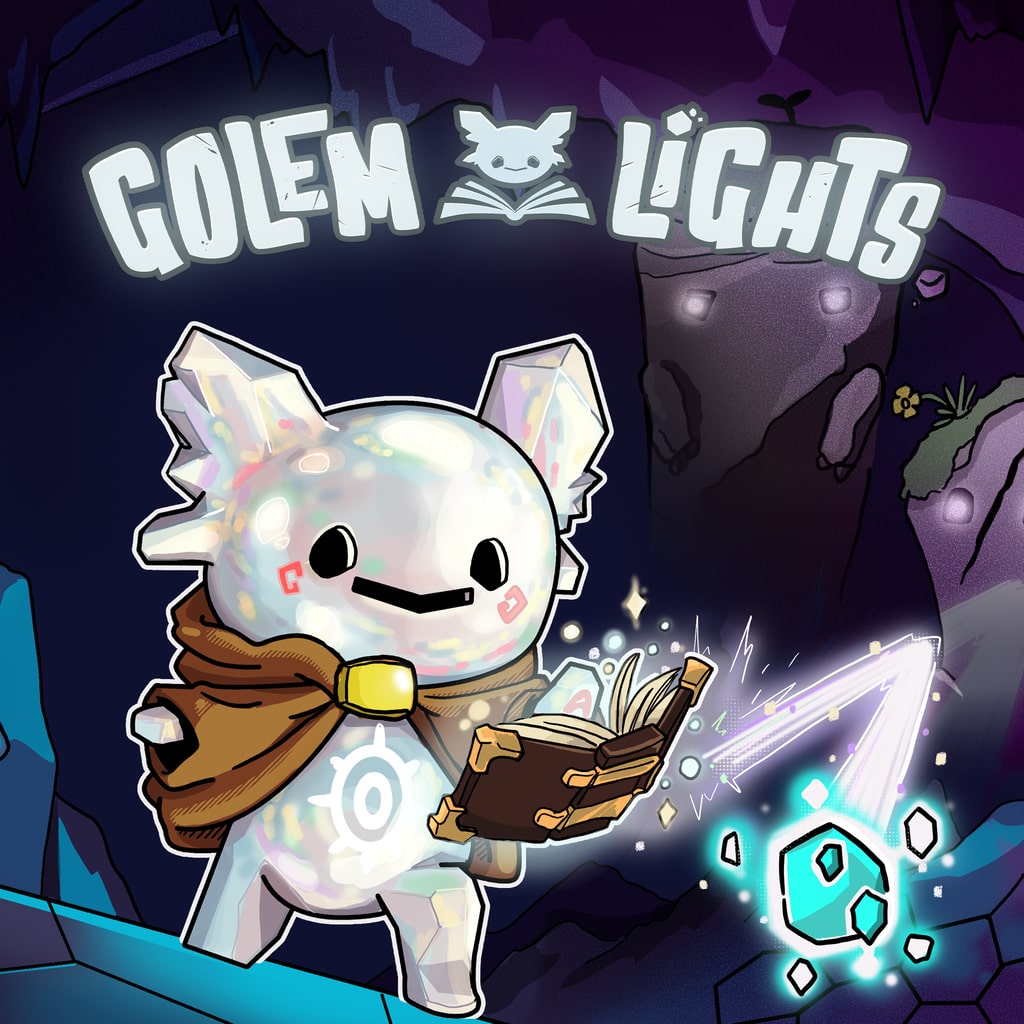
At first glance, Golem Lights appears almost deceptively simple. You control a Mage Golem capable of projecting energy beams through darkened environments, awakening dormant constructs and creating pathways towards mysterious Crystal Portals. Across sixty puzzles spread across three biomes, the game steadily introduces new mechanics involving mirrors, rotating golems, movable energy sources, and environmental interactions. It sounds straightforward because, mechanically, it is. Yet simplicity is exactly where Golem Lights finds its strength.
Gameplay
The core gameplay loop centres on experimentation. Every stage begins in near-total darkness, with only fragments of the environment visible. As you direct beams of energy through ancient machinery and sleeping golems, the map gradually illuminates itself. That sense of discovery becomes incredibly satisfying very quickly.
Rather than overwhelming players with endless mechanics or punishing failure states, Golem Lights encourages calm observation. There are no timers. No enemies. No looming penalties for mistakes. You are simply given a puzzle and trusted to solve it at your own pace. That design philosophy gives the game an almost meditative quality.
Some puzzles require redirecting beams through mirrors positioned at precise angles. Others ask you to awaken special golems with unique properties, such as movable energy carriers or rotating conduits capable of splitting light into multiple directions. The game consistently builds on earlier ideas without becoming repetitive, which is impressive given its relatively compact runtime.
What surprised me most was how tactile the puzzles feel despite the minimalist presentation. Every successful connection triggers a visible chain reaction as darkness retreats and hidden portions of the environment emerge from the shadows. It gives each completed puzzle a tangible sense of progress.
There is also something inherently satisfying about watching energy travel through an intricate network you carefully assembled yourself. The game never treats the player as needing constant instruction. New mechanics are introduced naturally through level design rather than lengthy tutorials. That trust in the player goes a long way.
The pacing deserves praise too. Puzzle games often stumble when difficulty spikes arrive too suddenly, but Golem Lights maintains a remarkably smooth curve throughout its three biomes. Early stages gently establish concepts before later puzzles begin layering mechanics together in clever ways.
The Crystal Core biome especially contains some genuinely smart puzzle design that forced me to stop, reconsider my assumptions, and experiment from entirely different angles. Those little “aha” moments remain the heart of the experience.
Graphics and Art Direction
Visually, Golem Lights succeeds through restraint. Rather than chasing hyper-detailed environments, the game embraces a clean, atmospheric style built on contrast. Darkness initially dominates each area, making every new burst of colour feel significant. Soft, glowing blues, purples, and golds gradually spread across ancient stone pathways and crystalline structures as puzzles are solved, creating a wonderful sense of transformation.
The three biomes each have distinct identities despite the minimalist approach. Cave’s Edge feels lonely and ancient, full of rough stone and hidden machinery. Overgrowth introduces softer natural elements, with vines and moss intertwining with forgotten structures. Meanwhile, Crystal Core becomes almost dreamlike, bathing the world in luminous reflections and shimmering energy. There is a quiet elegance to the presentation that reminded me of older puzzle games, where atmosphere mattered more than spectacle.
The animation is subtle but effective. Light pulses naturally through connections, dormant golems slowly awaken with weighty movements, and environmental illumination spreads across surfaces with a soft glow that makes the world feel alive. Importantly, the visual clarity never suffers for style. In a genre where readability is essential, Golem Lights keeps every puzzle element easy to understand at a glance.
Sound Design and Atmosphere
The soundtrack may be understated, but it plays a major role in shaping the game’s identity. Ambient melodies drift in the background without distracting from the puzzles. Gentle synth notes and slow atmospheric textures evoke a feeling somewhere between mystery and comfort. It is the kind of soundtrack that almost disappears into your subconscious until you suddenly realise how much it contributes to the mood.
Sound effects are equally restrained. Energy beams hum softly. Ancient mechanisms click into place with satisfying precision. Newly illuminated spaces emit faint shimmering tones that reinforce the sense of progress.
The audio design understands silence as well as sound. There are moments when the absence of noise becomes part of the atmosphere itself. Together, the visuals and music create a game that feels genuinely relaxing without ever becoming dull.
Accessibility and Structure
One of the smartest decisions Golem Lights makes is respecting the player’s time. The entire experience can be completed in a few hours, and completionists can likely finish everything even faster. Normally, that brevity might feel disappointing, but here it works in the game’s favour. Golem Lights never overstays its welcome.
Each puzzle introduces an idea, explores it thoroughly, then moves on before repetition sets in. That efficiency gives the game a clean rhythm from start to finish.
The approachable difficulty also makes it welcoming to players who may not usually gravitate towards logic-heavy puzzle titles. While later stages certainly require careful thought, the game rarely becomes frustrating. This feels intentional. Golem Lights is less interested in testing your intelligence than in encouraging curiosity.
The Emotional Side of Simplicity
What lingered with me most after finishing Golem Lights was not any individual puzzle, but the overall feeling it evoked. Modern gaming often feels obsessed with scale. Bigger worlds. Longer campaigns. Endless systems layered on top of one another. Golem Lights goes in the opposite direction. It strips everything back until only the essentials remain: darkness, light, and the satisfaction of connecting them. There is something deeply human about that simplicity.
Watching an empty black room gradually become warm and visible again taps into a very old emotional instinct. We naturally fear darkness because it hides uncertainty. Golem Lights transforms illumination into a symbol of understanding and progress, without ever needing dialogue or exposition to explain it.
That emotional resonance gives the game far more personality than its modest scope suggests. Even the Mage Golem itself carries a strange quiet dignity. There are no spoken words or dramatic cutscenes, yet the act of awakening forgotten machines and restoring light to abandoned places creates a subtle sense of purpose. Few games this small manage to feel this thoughtful.
Final Verdict
Golem Lights is a beautifully restrained puzzle game that values calm. Its glowing visuals, relaxing atmosphere, and clever light-based mechanics create an experience that feels soothing without sacrificing challenge.
It will not satisfy players seeking massive complexity or endless replayability, and its short runtime may leave some wanting more. Yet within its modest scope, Velvet Bites delivers something remarkably polished and emotionally resonant. This is a game about patience, curiosity, and pushing back darkness, one connection at a time. Sometimes that is more than enough.