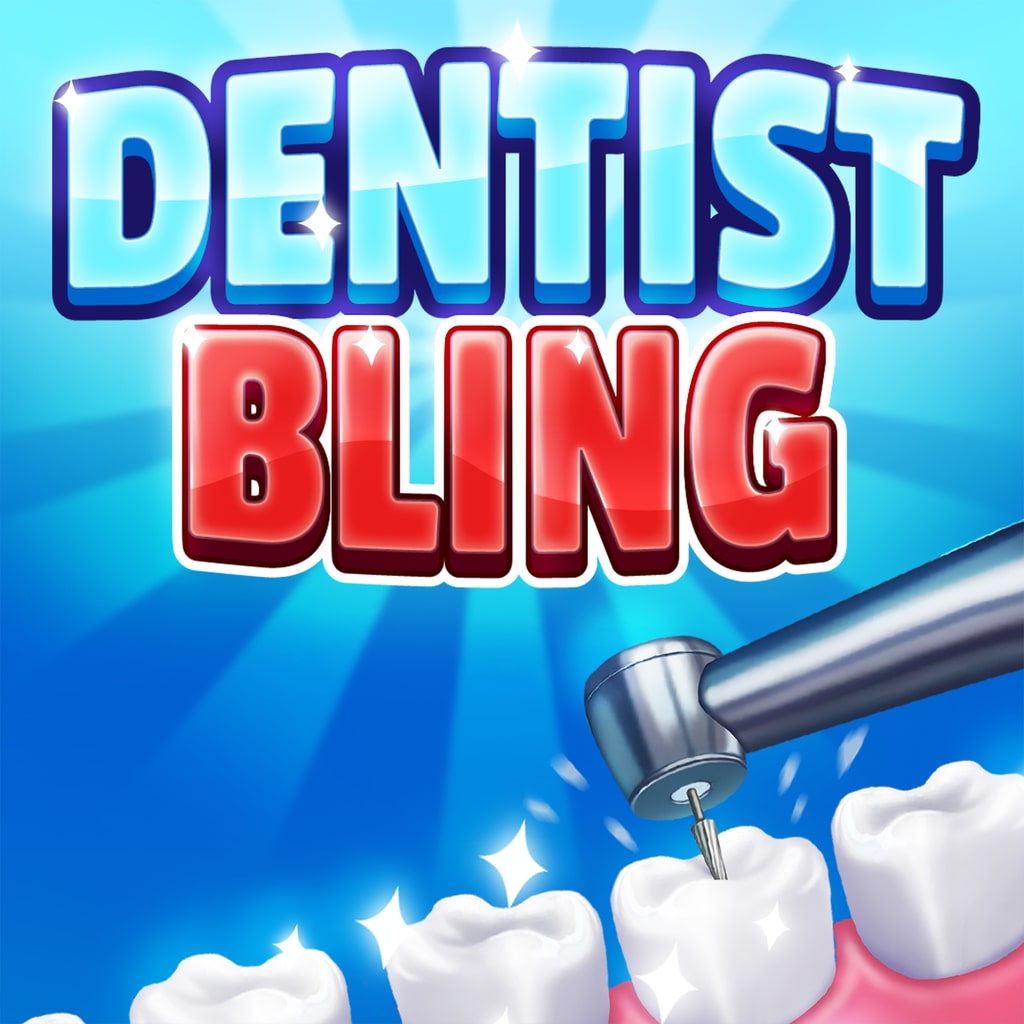
For most of us, the childhood trip to the dentist was a world of sterile smells, bright lights, and a lingering sense of trepidation. But in that same chair, there was often a secret fascination with the tools of the trade—the spinning polishers and high-tech gadgets that felt more like science fiction than medicine. Dentist Bling by Crazy Labs takes that clinical environment and tosses it into a bucket of neon paint and diamonds. Launched this week on the Nintendo Switch, it strips away the anxiety of the dental office and replaces it with pure, haptic satisfaction. It’s a whimsical, ‘guilty pleasure’ simulation that reminds us that sometimes the best way to conquer a childhood fear is to turn it into a high-fashion playground.
Developed and published by Crazy Labs, Dentist Bling arrives on Switch after finding a comfortable home in the hyper-casual mobile space. On console, it does not try to reinvent itself so much as refine the core loop that made it popular in the first place: quick, satisfying dental procedures that sit somewhere between simulation and a sensory toy. It is not subtle. It is not trying to be. And honestly, that is part of its charm.
Gameplay
At its core, Dentist Bling is a task-based simulation built around short, repeatable procedures. Patients arrive with various dental issues, and your job is to fix them using a growing toolkit of increasingly absurd dental instruments.
One moment you are filling cavities or removing plaque with careful precision. The next you are extracting teeth entirely and replacing them with gold, fangs, or diamond-studded replacements that feel more like a fashion runway than a medical necessity.
Each procedure is timed, which adds just enough pressure to keep things from becoming completely passive. Go too slowly and your patient becomes restless. Rush too aggressively and you risk causing discomfort, which reduces your reward. The loop is simple. Diagnose, treat, decorate, repeat.
There is no long-term narrative structure here, no deep management system tying everything together. Instead, progression comes through upgrades and cosmetic expansion. Better tools allow for smoother procedures, while clinic upgrades increase tolerance windows and improve efficiency.
The most entertaining mechanic is the “bling” system. Once basic treatment is complete, you can apply cosmetic enhancements like shimmering coatings, coloured enamel effects, and full diamond inlays. These are not medically necessary, but they are the main attraction. It turns dentistry into something closer to digital jewellery design. And yes, it is exactly as ridiculous as it sounds.
Graphics
Visually, Dentist Bling leans heavily into a bright, exaggerated aesthetic. Teeth are oversized, glossy, and almost cartoonishly clean once treated. The transformation is the real star here. Watching a damaged smile turn into a glowing, gem-covered display piece is oddly satisfying.
Environments are simple but functional. Your clinic evolves over time, moving from a basic, sterile room into something more extravagant, filled with neon accents and luxury décor. It is less about realism and more about escalation.
Visual feedback during procedures is strong. Tools sparkle, surfaces respond clearly, and every action has an exaggerated response designed to reinforce the feeling of progress. This is not a grounded medical sim. It is closer to a stylised arcade loop wrapped in dental imagery.
Audio
Audio design is one of the game’s most effective elements. Each tool has a distinct sound identity. Drills buzz sharply, polishers hum in rhythmic patterns, and extraction tools land with satisfying mechanical clicks.
There is a strong ASMR influence throughout the experience. Combined with the visual feedback, it creates a strangely calming effect, even when you are under time pressure.
Background music is light and repetitive, supporting focus rather than distraction. It never overwhelms the core actions, which is important given how short and frequent each session is. It is not memorable in a traditional sense, but it does its job well.
Performance and Controls
On the Nintendo Switch, Dentist Bling runs smoothly with very few interruptions. Load times are short, and transitions between patients are almost instant, helping maintain the pick-up-and-play structure.
Controls are intuitive, relying on simple motion and button inputs depending on the tool in use. Precision is not the focus here, but responsiveness is solid enough that frustration rarely stems from input lag or awkward mapping.
HD Rumble support is a standout feature. Different tools produce distinct feedback sensations that add an extra layer of physical engagement. It is a small touch, but one that significantly enhances the tactile nature of the experience. There is also touchscreen support, which makes certain procedures even more immediate, especially when performing cleaning or polishing actions.
Progression
Progression in Dentist Bling is light but effective. You earn currency from successful procedures, which can be reinvested in better tools, faster equipment, and cosmetic upgrades for your clinic.
New patients present slightly more complex dental issues, but the difficulty curve remains gentle throughout. This is not a game that seeks to challenge you deeply. It aims to keep you engaged in short bursts.
That design choice makes sense, though it does limit long-term depth. After several hours, the loop becomes predictable, and the novelty of cosmetic dental transformations begins to wear thin. Still, the upgrade path provides enough incentive to keep experimenting with different tools and visual styles.
Final Verdict
Dentist Bling is not trying to be a deep simulation or a realistic medical experience. It is a sensory-driven, hyper-casual loop centred on transformation and satisfaction. It succeeds most when it leans into that simplicity. Cleaning teeth, applying absurd cosmetic upgrades, and watching patients walk away with glittering smiles deliver a kind of low-effort gratification that is easy to return to.
Its limitations are clear. There is little narrative structure, minimal challenge depth, and a gameplay loop that eventually settles into repetition. But it never pretends to be more than it is. Instead, it embraces its identity as a short-session comfort game with a strong focus on tactile feedback and visual reward. In a library of complex simulations, Dentist Bling is the one you pick up when you want something immediate, colourful, and strangely soothing.