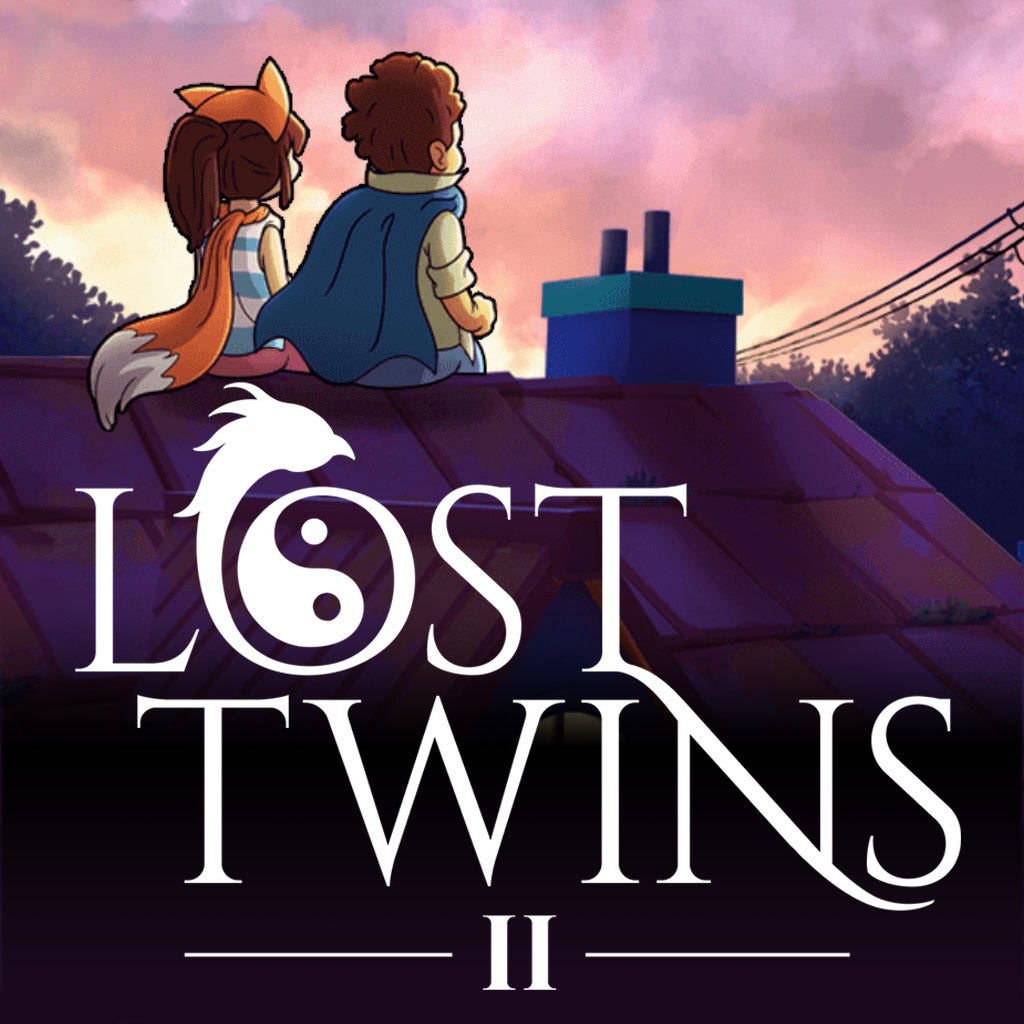
There is a quiet, haunting beauty to the childhood memory of being lost. A familiar park suddenly feels enormous, every street corner seems unfamiliar, and the world itself seems to shift shape the moment comfort disappears from view. Lost Twins 2 captures that sensation with remarkable tenderness. Developed by Playmerica and published by Silesia Games, this thoughtful puzzle-platformer turns disorientation into something strangely magical.
Rather than filling its adventure with danger or punishment, Lost Twins 2 invites players into a gentler experience centred on curiosity, patience, and emotional warmth. It is not interested in adrenaline. It wants you to stop, think, experiment, and slowly piece the world back together, one sliding tile at a time. The result is one of the most charming puzzle adventures of the year.
A World That Moves With You
At first glance, Lost Twins 2 appears deceptively simple. You guide siblings Abi and Ben through handcrafted 2D environments by rearranging sections of the level itself. Entire rooms slide horizontally or vertically, allowing pathways to connect like pieces of an interactive storybook. What begins as a straightforward mechanic quickly evolves into something wonderfully inventive.
Early puzzles teach the basics with elegance. Slide a room to create a bridge. Shift a platform into alignment so one twin can reach a switch. Rearrange doors and staircases to connect disconnected paths. The brilliance lies in how naturally these concepts build on one another. New mechanics arrive steadily without overwhelming the player.
Soon, puzzles involve flowing water systems, gravity-altering portals, moving lifts, pressure switches, and environmental interactions that demand precise timing between the twins. Yet even at its most complex, Lost Twins 2 never loses its sense of accessibility. It challenges your spatial reasoning without becoming cruel or exhausting.
That balance is surprisingly rare. Modern puzzle games often mistake frustration for intelligence, but Lost Twins 2 understands that satisfaction comes from discovery, not punishment. Every completed puzzle feels earned because the game trusts players to experiment freely rather than funnel them towards a single obvious answer.
Gentle Design With Genuine Depth
The pacing deserves enormous praise. Each new idea is introduced with restraint, giving players time to absorb mechanics before another layer is added. There are no bloated filler stages or recycled gimmicks stretched beyond their use. Nearly every level introduces a fresh wrinkle that keeps the adventure engaging from beginning to end.
Some of the most memorable sequences occur in the game’s later areas, particularly inside the enchanted toy castles and crystalline forest ruins. Here, puzzles begin to weave multiple systems together in ways that feel clever without becoming exhausting. You might need to reposition rooms while coordinating the twins along separate pathways, activating switches in sequence before water gates close again.
The cooperative design is especially strong. While the game can be played solo by swapping between Abi and Ben, local co-op transforms the experience into something more personal. Communication becomes essential as players coordinate movement and timing. There is a warmth to solving these puzzles with another person that fits perfectly with the game’s themes of connection and companionship.
Unlike many co-op puzzle games that can devolve into chaos, Lost Twins 2 keeps things approachable. Mistakes are easy to recover from, experimentation is encouraged, and the relaxed atmosphere prevents tension from overshadowing the fun.
Storybook Presentation
Visually, Lost Twins 2 is stunning in a quiet, understated way. The hand-painted art style draws clear inspiration from classic animated fantasy films, bathing every environment in soft light and warm colours. Forests glow with a golden haze, ancient ruins shimmer in moonlight, and mechanical toy kingdoms creak with whimsical charm.
Every location feels lovingly assembled rather than procedurally generated. Small environmental details constantly draw the eye to hidden corners and secret collectibles. Background animations add life without distracting from the puzzles themselves. It is the kind of game where you frequently pause simply to admire the scenery.
The twins themselves are beautifully animated. Their small gestures and reactions add personality without relying heavily on dialogue. Fenghuang, the siblings’ mystical robotic companion, also brings a gentle emotional presence to the adventure, guiding the pair through the dreamlike world with subtle warmth.
The soundtrack deserves equal recognition. Rather than dominating scenes, the music drifts softly through levels, with delicate piano melodies, ambient strings, and calming orchestration that adapts naturally to the pace of exploration. Combined with the game’s visual identity, it creates an atmosphere that feels genuinely comforting. There is a serenity here that few games manage to sustain for this long.
Small Frustrations
For all its strengths, Lost Twins 2 is not entirely flawless. The platforming occasionally lacks the precision needed for some later challenges. Abi and Ben can feel slightly floaty in jumps, particularly when quick repositioning is required. These moments are infrequent, but they stand out because the puzzle design is usually so carefully tuned.
There are also times when larger puzzle rooms become visually busy. Because the game encourages players to slide multiple sections around freely, it can occasionally be difficult to track exactly which configuration you were previously attempting. A more robust bookmarking or preview system might have helped reduce some trial-and-error confusion in the later stages.
Still, these issues rarely derail the overall experience. Lost Twins 2 succeeds because its emotional tone remains so inviting. Even when you become stuck, the game never feels hostile to the player.
The Comfort of Solving Things Together
What impressed me most about Lost Twins 2 was its emotional consistency. Many modern games struggle to maintain a tone, veering between comedy, melodrama, and spectacle without clear direction. Lost Twins 2 knows exactly what it wants to be from beginning to end.
This is a game about reassurance. It understands the fear of feeling disconnected, isolated, or unsure of the way forward. More importantly, it understands the comfort found in solving problems together. Every puzzle becomes a metaphor for rebuilding pathways between people, reconnecting fractured spaces, and slowly making sense of confusion.
That emotional clarity gives the entire adventure a sense of soul that elevates it above many puzzle-platformers. Even without enemies, combat, or traditional stakes, the journey remains engaging because the world itself feels sincere.
There is no cynicism here. No forced irony. No exhausting attempt to appear edgy or self-important. Just beautifully crafted puzzles, a heartfelt atmosphere, and the simple joy of helping two siblings find their way home.
Final Verdict
Lost Twins 2 is a wonderfully gentle puzzle-platformer that succeeds through warmth, creativity, and emotional sincerity. Its room-sliding mechanics evolve in clever ways, its presentation is consistently beautiful, and its relaxed pace makes it accessible to players of all skill levels. While the floaty platforming occasionally causes minor frustrations, those moments are easily outweighed by the game’s charm and thoughtful design.
More than anything, Lost Twins 2 feels comforting. It captures the magic of childhood imagination and turns it into a peaceful adventure about cooperation, trust, and finding clarity in unfamiliar places. In a gaming landscape increasingly obsessed with noise and spectacle, that quiet confidence feels refreshing.