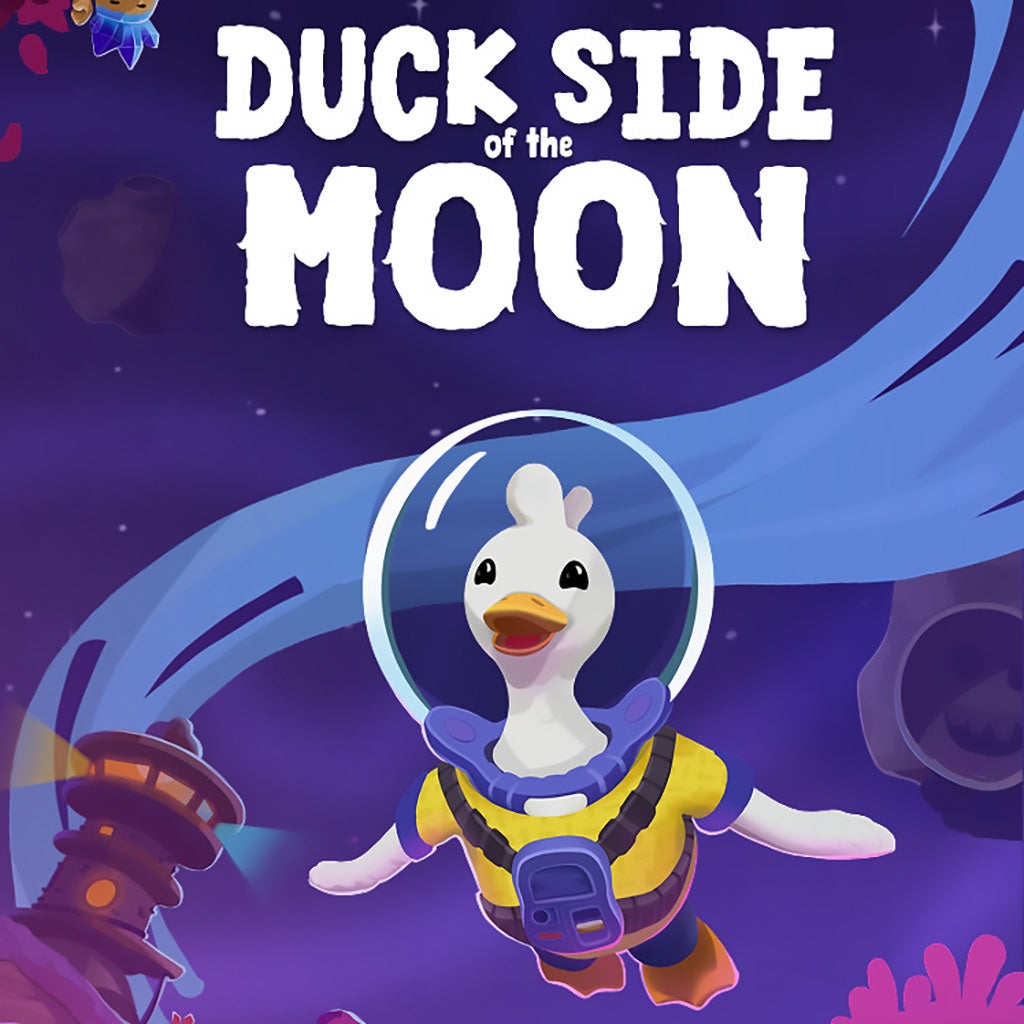
There is a particular kind of childhood wonder that comes from looking up at the night sky and imagining the most impossible things looking back at you, a giant made of stars, a rabbit on the moon, or perhaps a lone duck drifting through the cosmos. Duck Side of the Moon by Strongbeam Games takes that whimsical ‘what-if’ and turns it into a surprisingly technical physics odyssey. Moving away from the safety of the pond and into the vast, silent craters of the lunar surface, the game explores the ‘fish-out-of-water’ or rather, duck-out-of-atmosphere experience with equal parts humour and heart. It is a reminder that no matter how far we wander from home, a bit of grit and a well-timed quack can help us navigate even the most alien of landscapes.
That opening sentiment defines almost everything about Duck Side of the Moon. You play as Doug, an overworked astronaut duck who has quite literally fallen off course during a cosmic migration. Stranded on a strange, low-gravity moon, Doug is not a chosen hero or a destiny-bound saviour. He is just tired. And oddly enough, that makes him incredibly easy to connect with.
Strongbeam Games leans into this sense of accidental solitude with confidence. There is no looming apocalypse, no ticking clock. Instead, the game offers something far rarer: permission to drift.”
Quack-Navigation and Movement
At the centre of the experience is movement, specifically the so-called Quack-Navigation system. Doug’s quacks emit sonar-like pulses that reveal points of interest, hidden minerals, and subtle environmental clues. It sounds like a gimmick on paper, but in practice it becomes the emotional rhythm of exploration. You are not just moving through space; you are calling out into it, waiting for it to respond.
The physics-based traversal is deliberately loose. Doug flaps, tumbles, and glides through low gravity with an awkward grace that never quite settles into mastery. Even after several hours, you never feel entirely in control. That instability is not a flaw but a design philosophy. The moon resists you just enough to keep every small success feeling earned.
Jetpack bursts add direction, but fuel management and momentum make every ascent slightly unpredictable. Landing where you intended feels like a small victory. Landing somewhere interesting feels like luck. Either way, you keep moving.
A Moon Full of Stories
For all its comedic premise, Duck Side of the Moon is quietly preoccupied with history. Not human history, but something stranger: the remnants of a lost duck civilisation scattered across craters, caves, and hollowed lunar temples.
These discoveries are not delivered through exposition dumps. Instead, they emerge through environmental storytelling. Broken monuments carved with feathered motifs. Crashed vessels that resemble oversized nesting boats. Murals etched into rock that suggest migration, loss, and perhaps even a belief in the moon itself as a destination rather than a backdrop.
It is here that the game’s tone deepens. What begins as a light exploration game slowly reveals itself to be more reflective. Doug may be stranded, but he is not the first.
Crafting a Home in the Void
Beyond exploration, Duck Side of the Moon introduces a light crafting and base-building system aboard Doug’s damaged ship. This is where the game’s softer instincts fully come through. You are not building a survival bunker. You are building comfort.
A couch that wobbles slightly in low gravity. A small garden that grows glowing lunar moss. A basketball hoop mounted in a corridor for no practical reason other than to pass the time. These touches do not serve efficiency. They serve presence.
Materials gathered from caves and volcanic vents feed into these upgrades, but resource gathering never becomes oppressive. The game resists turning its systems into chores. Even crafting feels like part of the wandering rather than a break from it.
Companions and Quiet Company
One of the more surprising elements is the presence of other lunar inhabitants. Not hostile factions or quest-giving NPCs, but odd, gentle creatures who themselves hover between curiosity and loneliness.
You are encouraged to form small travelling groups, not for combat or optimisation, but for company. Some follow you briefly before wandering off. Others linger longer than expected. Conversations are minimal, often abstract, yet they lend emotional weight to otherwise silent stretches of exploration.
Helping these characters often yields small rewards, though the real payoff is the sense that Doug is not entirely alone in a place that should feel completely empty.
Where It Stumbles
For all its charm, Duck Side of the Moon is not without friction. The physics system, while expressive, occasionally works against the player. Tight cave systems can lead to awkward collisions or soft-lock moments when Doug becomes wedged in geometry that refuses to release him without a reload.
Navigation can also become uncertain in larger zones. While the quack sonar is clever, it sometimes struggles to distinguish between nearby distractions and critical objectives, leading to aimless drifting that may not always feel intentional.
There is also a question of pacing. Players seeking structured progression or escalating challenge may find the experience too diffuse. This is a game that values mood over momentum, and it will not suit everyone.
Final Verdict
Duck Side of the Moon is not trying to be a conventional space adventure. It is looser, gentler, and more introspective. It asks you to accept instability, to find joy in drifting, and to listen carefully to a world that rarely speaks directly.
When it works, it feels quietly magical. A duck floating through a forgotten moon, discovering echoes of its own kind and building small comforts in a place that was never meant to be home. It is not perfect, but perfection is not really the point.