There is a promise otome games make, and Court of Darkness: Captivation’s Kiss understands it well. It is not about mechanics or challenge in the traditional sense. It is about feeling. The slow pull of attraction, the tension of unspoken motives, and the quiet question that underlies every interaction: what does this person really want from you?
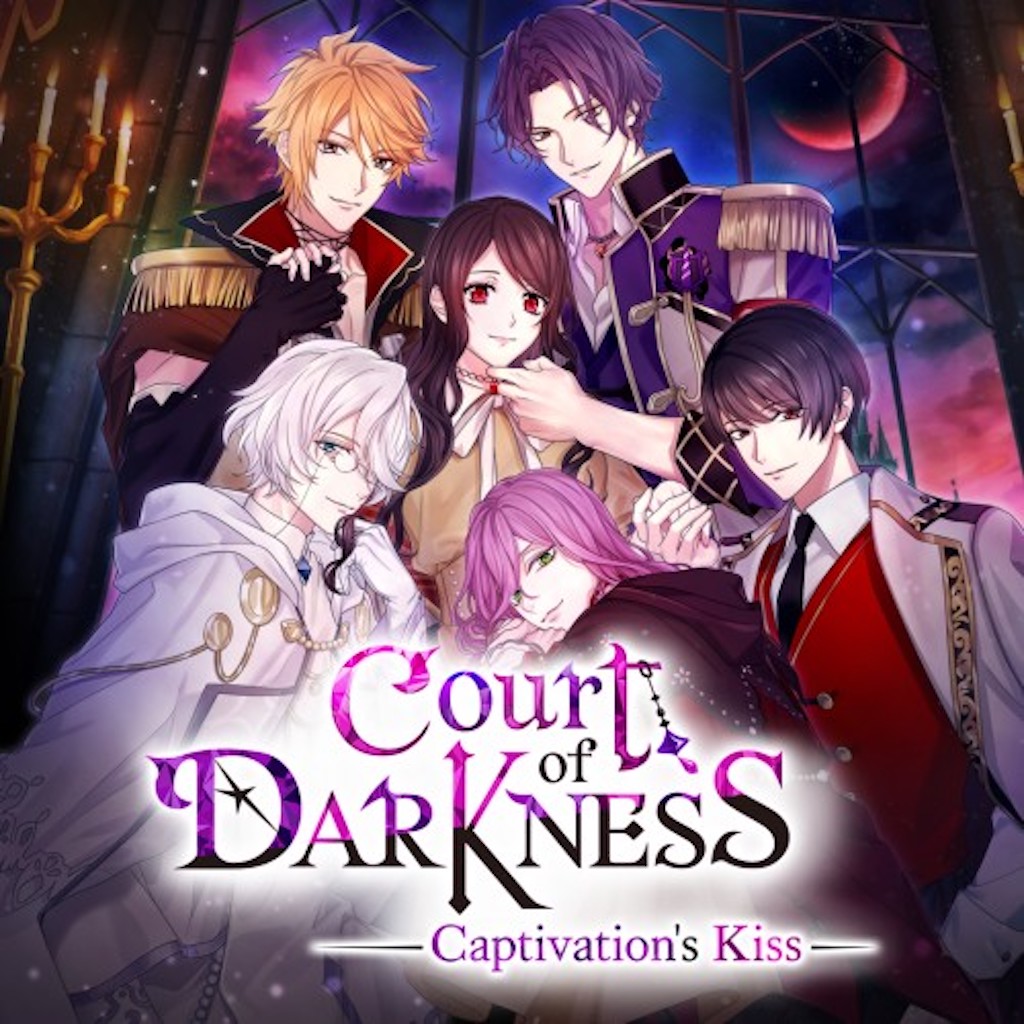
Developed and published by Voltage, this 2026 Nintendo Switch release continues the Court of Darkness series with a new cast of characters and a familiar premise. Under a crimson crescent moon, the protagonist is drawn into the magical realm of Saligia, where her kiss holds power that others seek to claim. What begins as confusion quickly becomes entanglement as five princes enter her life, each with their own desires, secrets, and carefully guarded intentions. It is a setup that leans into well-known genre territory, but what matters here is how those familiar elements are handled.
A World Built on Desire and Distance
Saligia is not introduced through spectacle. Instead, it unfolds gradually through conversation, implication, and the presence of its characters. Magic exists, but it is rarely the focus. What defines the world is its atmosphere, a sense that every interaction carries weight beyond what is immediately visible.
The protagonist’s power, tied to her kiss, is central to this dynamic. It creates a constant tension between affection and utility. Every romantic moment is layered with uncertainty. Is this connection genuine, or is it driven by the need for power? That tension gives the narrative a steady undercurrent. Even quieter scenes carry a sense of unease, as motives remain partially obscured.
The world itself does not demand attention through scale or complexity. It supports the characters, providing just enough structure to contextualise their actions.
Characters That Carry the Experience
As with any otome title, the strength of Captivation’s Kiss rests heavily on its cast. Each prince represents a distinct emotional and narrative direction, offering paths that shape how the story unfolds.
Rio Voleri’s warmth feels immediate, yet not entirely without calculation. Lance Ira carries a more guarded presence, his distance creating a slow burn that builds over time. Dia Akedia leans into melancholy, offering moments that feel reflective rather than reactive. Lou’s inscrutability creates a constant sense of unpredictability, while Aquia Avari balances authority with subtle vulnerability.
These archetypes are familiar, yet they are given enough space to develop beyond their initial impressions. Conversations reveal layers gradually, allowing characters to shift in subtle ways rather than through dramatic reversals.
What stands out is the consistency of tone. Even when routes diverge, the emotional core remains grounded. Relationships are not rushed, and moments of connection are allowed to settle.
Choice as Emotional Direction
Gameplay in Court of Darkness: Captivation’s Kiss centres on decision-making, but not in a way that emphasises strategy or optimisation. Choices shape relationships, guiding the story towards different outcomes, yet the focus is on emotional alignment rather than mechanical consequences.
You are not solving problems. You are interpreting people. This keeps the experience accessible. There is no pressure to navigate complex systems or manage resources. Instead, attention is directed entirely towards dialogue and character interaction.
At the same time, this simplicity defines the limits of the experience. Players seeking deeper gameplay systems will not find them here. The structure remains consistent, with variation coming primarily from narrative paths rather than mechanical change.
A Transition That Feels Complete
Moving from a mobile origin to a console release often brings complications, but Captivation’s Kiss handles the transition smoothly. The removal of energy systems and timed progression creates a more cohesive experience.
Without those interruptions, the story flows naturally. You are free to move through scenes at your own pace, allowing emotional beats to land without disruption.
The interface has been adapted effectively for the Switch, keeping navigation intuitive and unobtrusive. It does not draw attention to itself, which is exactly what this type of experience requires.
This structural shift makes a noticeable difference. The game feels less fragmented, more like a complete narrative than a series of gated segments.
Presentation That Supports the Fantasy
Visually, the game delivers what fans of the genre expect. Character art is detailed and expressive, with designs that emphasise personality through posture, expression, and subtle variation.
Backgrounds provide a consistent sense of place without overwhelming the scene. They frame interactions rather than competing with them, keeping the focus on the characters.
Audio design follows a similar philosophy. Music supports the tone of each moment, shifting gently to match emotional changes without becoming intrusive.
Voice work adds an additional layer of presence, bringing characters closer to the player. It enhances the sense of connection without overshadowing the written dialogue. Everything works together to maintain immersion, reinforcing the central focus on relationships.
Familiar Structure, Measured Execution
There is no denying that Captivation’s Kiss operates within well-established genre boundaries. The isekai premise, the ensemble of romantic interests, and the branching narrative structure are elements otome players will recognise immediately. What matters is how those elements are handled.
The game does not attempt to reinvent them. Instead, it refines them, focusing on pacing, character development, and tonal consistency. It understands what its audience expects and delivers it with care.
This approach will satisfy those seeking a polished, reliable experience. For others, particularly those seeking innovation or mechanical depth, it may feel too familiar. The game is confident in its identity, but that confidence has clear limits.
Final Verdict
Court of Darkness: Captivation’s Kiss is a focused and well-executed otome visual novel that prioritises character, atmosphere, and emotional tension over mechanical complexity. It builds on a familiar foundation, delivering a cohesive experience that feels complete and thoughtfully paced.
Its strengths lie in its cast and presentation. Characters are given room to develop, relationships unfold naturally, and the overall tone remains consistent throughout. Its limitations stem from its adherence to genre conventions, with little deviation from established structures.
Even so, it succeeds in what it sets out to do. It offers a romantic experience that feels intentional, measured, and grounded in its own world. For those drawn to its premise, it delivers exactly what it promises.