There is a particular kind of anxiety that comes with being watched. Not in the abstract, but in the constant, live, chat-filled reality of modern streaming culture. Hacked: The Streamer understands that feeling and builds an entire interactive thriller around it.
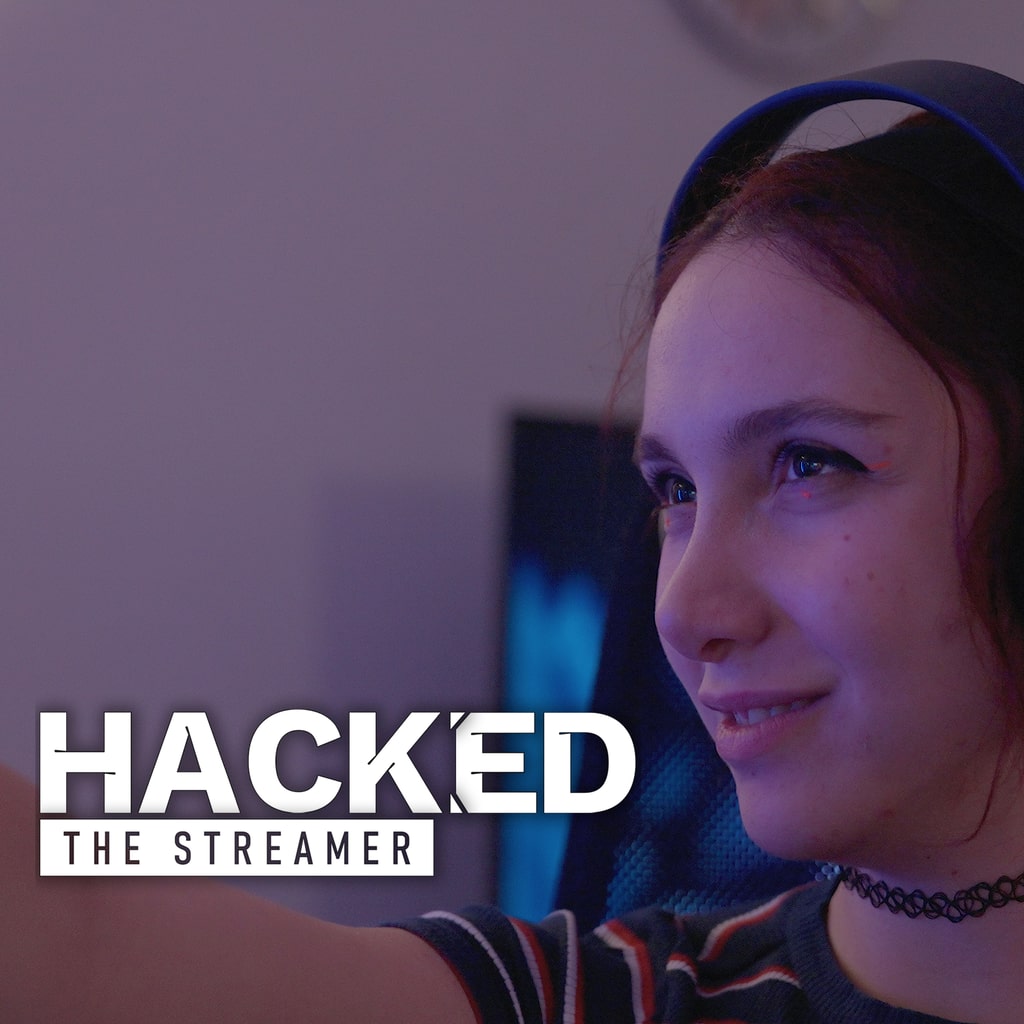
Developed by indie studio Button Interactive, this FMV experience drops you into the life of PinkyPie, a popular streamer whose career begins to unravel in real time when a blackmail message interrupts her broadcast. What follows is a single night’s spiral of paranoia, investigation, and increasingly desperate decisions, all unfolding through a mix of live-action footage and player-driven branching choices.
It is an immediate hook. The idea of watching a carefully curated online persona collapse under pressure is fertile ground for an FMV game. And for the most part, Hacked: The Streamer commits fully to that premise.
The Illusion of Control
FMV games live or die by how much agency they make you feel. Here, the structure is built around a simple but effective loop. You investigate clues, interrogate suspects, and make timed decisions that shape how the story unfolds. A point-and-click interface ties everything together, giving the experience a familiar investigative rhythm.
There is a satisfying tension in how the game handles time. Messages arrive mid-scene. Choices interrupt conversations. You are constantly aware that things are moving, whether you are ready or not. It mirrors the chaos of a live stream quite effectively, where control is always partial at best.
The narrative branches are also more substantial than they first appear. Early choices ripple outward in ways that are not always immediately visible, encouraging repeat playthroughs. It is not a deeply complex system, but it is smart enough to keep you curious.
A Digital Persona Under Pressure
At its best, Hacked: The Streamer captures something specific about internet fame. PinkyPie is not just a character. She feels like a constructed identity, slowly being peeled apart. The presence of moderators, friends, and distant family members creates a web of relationships that feels recognisable, even if exaggerated for dramatic effect.
The writing leans into this tension well. Conversations often feel like performances within performances. People are always aware of how they might be perceived, even in private moments. This awareness creates a subtle unease that underlies almost every interaction.
There is also a voyeuristic quality to the experience that the game never lets you forget. You are always watching someone who is being watched. That layered perspective gives even simple scenes a sense of weight.
FMV Growing Pains
For all its ambition, Hacked: The Streamer is not without its rough edges. FMV as a genre is notoriously difficult to execute consistently, and this project is no exception.
The most noticeable issue is uneven performance quality. PinkyPie’s actor carries much of the experience with a believable blend of charisma and vulnerability, but the supporting cast varies wildly in tone and delivery. Some performances feel grounded and natural, while others slip into something closer to community theatre.
This inconsistency can occasionally break immersion, especially during emotionally charged scenes. When the story is working, it is genuinely gripping. When it falters, it becomes harder to stay invested.
There are also moments when the game leans too heavily into mechanical interactivity for its own good. Certain sequences introduce quick-time-style inputs or button-mashing segments that feel at odds with the otherwise narrative-focused design. Rather than increasing tension, they often interrupt it.
A Mystery That Holds Attention
Despite these flaws, the central mystery is strong enough to carry the experience. The blackmailer’s identity is not immediately obvious, and the game does a good job of casting suspicion across multiple characters without feeling unfair or artificial.
Clues are scattered across conversations, chat logs, and environmental details, keeping you alert even during seemingly minor exchanges. There is a steady drip of information that keeps you engaged from start to finish.
What works particularly well is how the game ties the mystery to its commentary on online culture. It is not just about who is responsible, but about how quickly trust can erode in a space built on visibility and performance. Everyone has a motive. Everyone has something to lose.
Presentation and Pacing
Visually, Hacked: The Streamer is functional rather than flashy. The production values are solid enough to maintain immersion, but do not exceed what is necessary for the format. Stream overlays, chat windows, and interface elements are integrated cleanly, reinforcing the sense that you are watching a live broadcast unfold.
Lighting and framing do much of the subtle work here. PinkyPie’s streaming setup feels authentic, and the contrast between on-stream persona and off-camera moments is handled with care. It is in these transitions that the game’s strongest visual storytelling emerges.
Pacing, however, is uneven. The first half of the game builds tension effectively, but the middle section occasionally stalls as it cycles through similar investigative beats. It recovers in the final act, where choices begin to converge more meaningfully, though the slowdown is noticeable.
A Strong Idea With Rough Edges
It is worth acknowledging what Hacked: The Streamer gets right. This is a confident debut for Button Interactive, particularly in how it uses the FMV format to explore modern digital anxiety. There is a clear understanding of its subject matter, even when the execution does not always match the ambition.
The replay value is also respectable. Different choices lead to meaningfully altered outcomes, and uncovering the full scope of the mystery requires at least a second run. It is not exhaustive, but it is enough to justify revisiting.
Still, the game does not quite escape the limitations of its production constraints. Uneven acting, occasional technical glitches, and pacing issues hold it back from being truly exceptional.
Final Verdict
Hacked: The Streamer is a tense, often compelling FMV thriller that succeeds more on concept and atmosphere than on technical polish. It captures the uneasy intersection of performance, identity, and online visibility with genuine insight, even if its execution wavers.
When it works, it is absorbing and unsettling in equal measure. When it does not, it feels like a promising idea struggling against its own limitations. Even so, the ambition behind it is hard to ignore.