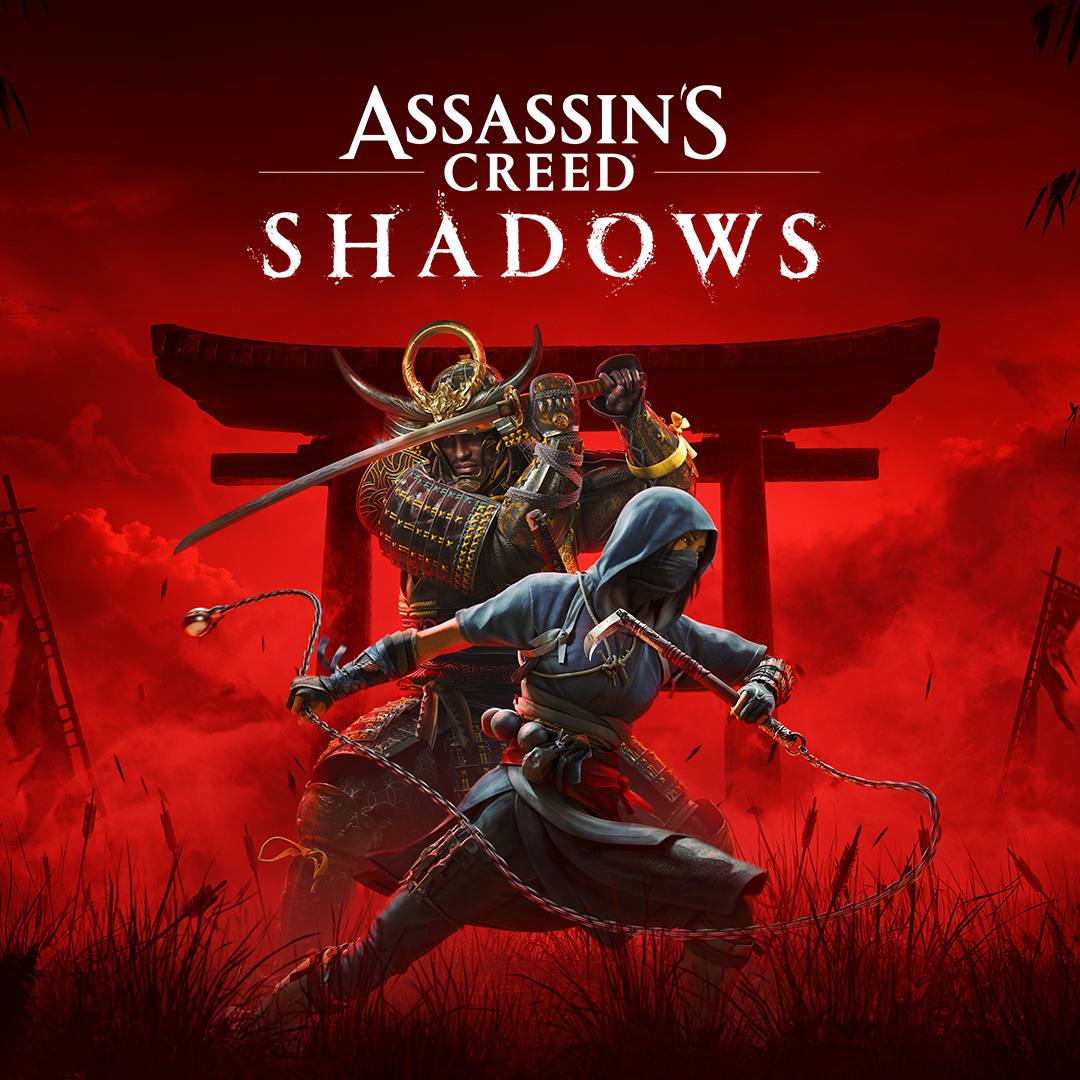
With Shadows, Ubisoft attempts to recalibrate the long‑running Assassin’s Creed franchise, blending the series’ stealth roots with its modern RPG mechanics — and for the most part, it succeeds. Set in Sengoku‑era Japan, the game introduces two protagonists with vastly different styles: the samurai warrior Yasuke and the shinobi assassin Naoe. Their contrasting approaches give the open world fresh depth and replay potential, even if some familiar formulaic traps remain.
Story & Setting
Shadows takes place during the late 1500s in a richly realised Japan torn between warlords and power brokers known as the Shinbakufu. Players switch between Yasuke and Naoe as they uncover conspiracies, master their crafts, and navigate allegiance, betrayal, and cultural collision.
The game’s strongest asset is its setting. The provinces of Japan — lush valleys, mist‑covered mountains, fortified castles and ancient temples — feel alive and atmospheric. Seasons shift, light changes, and the world responds dynamically. Numerous reviews praise this aspect: “the best‑looking Assassin’s Creed game” with an immersive world design.
However, the narrative is more mixed. While reviews revered the dual protagonists, they often found the larger story somewhat flat and repetitive. As one reviewer put it: “a good idea at the core … proves too repetitive and dramatically flat to wholeheartedly recommend.”
Still, the personal stories of Yasuke and Naoe carry emotional weight, especially when their arcs intersect and diverge. For players invested in the lore and character work, it offers genuine moments of resonance.
Gameplay: Two Plays in One
The major gameplay innovation in Shadows is the dual‑protagonist system. Players can switch between Yasuke — strong in direct conflict — and Naoe — agile, silent and deadly. Combat and traversal vary significantly between them.
Combat is stronger than it’s been in the series. Yasuke’s samurai edge delivers satisfying blows, heavy parries and fortress breaches, while Naoe’s stealth toolkit brings back classic assassinations: hiding in shadows, silent kills, grappling across rooftops. Reviews point to this balance as one of the game’s highlights.
Yet, it’s not perfect. Some critics noted that Yasuke’s traversal and parkour feel clunkier compared to Naoe’s fluid movement, creating an imbalance in “fun factor.”
The open world is generous without being overwhelming. Shadow refrains from the gargantuan sprawl of some previous entries, which is welcome: one review notes the map is similar in size to Origins, but dense with content.
Stealth fans will be pleased: Naoe’s toolkit is arguably one of the best “Assassin” solutions in years. Meanwhile, exploration and optional side quests reward curiosity and thoroughness.
Yet, repetition does creep in. Many side‑activities fall into predictable patterns, making the mid‑ to late‑game drag for some.
Still, the combo of stealth, samurai action, and flavourful world traversal makes Shadows an enjoyable blend of styles.
Visuals & Audio
Aesthetic presentation is where Shadows really shines. From the golden leaves of autumn forests to the stark winter snows, the game’s cinematics, lighting and environmental detail stand among the best in the franchise. Reviews call it a “gorgeous open‑world” with “satisfying improvements” in combat and stealth.
Sound‑design and voice performance receive more mixed marks. While ambient audio, sword clinks and wind in the pines excel, some reviewers found the English voice acting inconsistent and the conversation animations jarring.
Graphically and atmospherically, however, Shadows delivers one of the most immersive entries in the franchise.
Strengths & Weaknesses
Pros:
- Dual protagonist design gives meaningful gameplay variety
- Strong stealth and samurai mechanics, combat is satisfying and tactical
- A stunning depiction of feudal Japan with rich environments
- Exploration, optional content and side missions feel rewarding
- A more compact open world than some bloated predecessors
Cons:
- Narrative isn’t as strong or focused as the world would suggest
- Yasuke’s traversal and some mechanics are less refined
- Side‑activities and open‑world loop show signs of repetition
- Voice work and character animations sometimes undercut dramatic beats
Replayability & Longevity
Shadows offers solid replay value. Choosing between Yasuke and Naoe, pursuing different playstyles, discovering hidden provinces and tackling optional challenges all support repeat playthroughs.
Main story runs roughly 20‑30 hours, with full completion extending beyond 50 hours depending on how much you pursue optional content. Reviews suggest that while the base formula remains familiar, the twin‑protagonist setup and refined world structure give new energy to the series.
For longtime fans and newcomers alike, Shadows delivers a substantial single‑player experience. If Ubisoft supports it with post‑launch content and quality‑of‑life updates, the game’s lifespan will be strong.
Final Verdict
Assassin’s Creed Shadows is not a perfect reboot, nor a radical departure — but it strikes a compelling balance. With its dual protagonists, refined stealth and combat, and lovingly realised world, it’s one of the more focused and satisfying entries in the series in years. The story may not soar, and the open‑world engine occasionally creaks, but the experience of stalking targets as Naoe or charging into battle as Yasuke is deeply enjoyable.
For fans of the franchise and players seeking a top‑tier action‑stealth outing in a lush historical setting, Shadows is well worth your time.
A strong, stylish entry that revitalises the series, even if it stops short of being truly exceptional.