There’s a quiet kind of courage in telling small stories. Not the world-ending, fate of the universe kind, but the deeply personal, fragile moments that shape who we become. The Day I Became a Bird, developed by Hyper Luminal Games and published by Numskull Games, is built entirely on that idea.
Adapted from the children’s book by Ingrid Chabbert and Guridi, this interactive narrative adventure doesn’t aim to challenge your reflexes or test your strategic thinking. Instead, it asks something far simpler and far rarer: to remember what it felt like to be young, uncertain, and completely sincere.
It’s a short, gentle game, and at times almost disarmingly earnest. But in that sincerity lies its strength.
“The Day I Became a Bird is not about becoming something else; it’s about daring to be seen for who you already are.”
A Story Told in Feathers and Feelings
You play as Frank, a young boy navigating the early, confusing stirrings of first love. His affection is directed towards Sylvia, a classmate fascinated by birds. To connect with her, Frank hatches a plan: if she loves birds, perhaps he should become one.
What follows is a simple premise, executed with remarkable tenderness. The story unfolds through everyday moments cycling to school, playing in the park, observing Sylvia from a distance, and gradually building the courage to approach her.
There is no melodrama here. No exaggerated stakes or forced conflict. The tension comes from something far more relatable: the fear of vulnerability.
The writing captures the awkwardness and innocence of childhood beautifully. Frank’s internal logic earnest, slightly misguided, but completely genuine feels authentic in a way that resonates across ages.
Sylvia, meanwhile, is not reduced to an object of affection. She has her own personality, interests, and quiet presence, which the game allows you to observe and understand over time.
This is not a story about winning someone over. It’s about learning how to express yourself, even when you’re not sure how.
Interactive Storytelling at Its Simplest
Mechanically, The Day I Became a Bird is a narrative adventure with light puzzle elements. You guide Frank through small environments, interact with objects, and complete simple tasks that advance the story.
Puzzles are intentionally accessible. They are less about challenge and more about engagement, small, intuitive interactions that reinforce the narrative rather than interrupt it. Whether it’s assembling a costume, exploring a park, or piecing together clues about Sylvia’s interests, each activity feels like a natural extension of the story.
Some players may find the lack of difficulty underwhelming. There are no complex systems to master, no branching skill trees, and no fail states to speak of.
But that simplicity is deliberate. The game is not interested in testing you it’s interested in guiding you.
A World Drawn Like a Memory
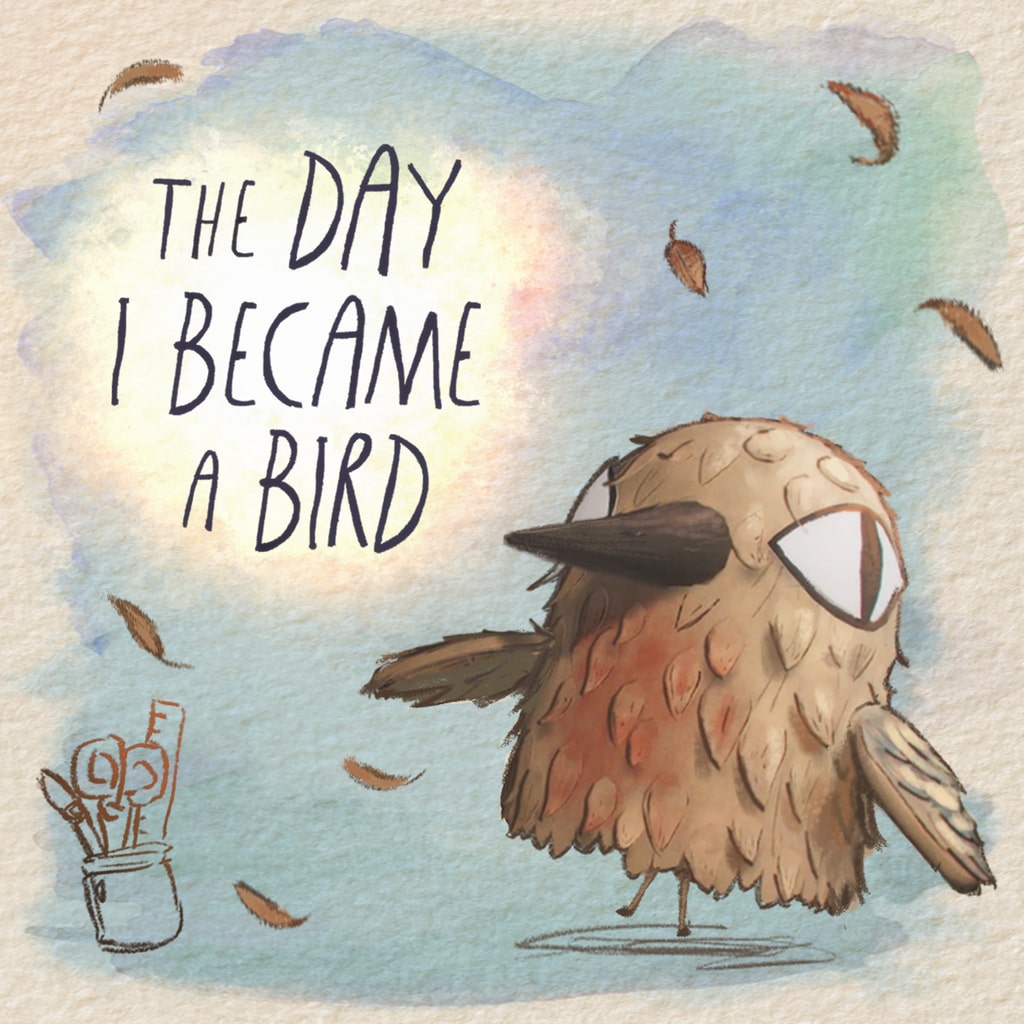
Visually, the game adopts a hand-drawn style that closely mirrors its literary origins. Soft lines, pastel colours, and gently animated environments create a world that feels more like an illustrated memory than a traditional game space.
Characters are expressive without being overly detailed, allowing subtle gestures and movements to convey emotion. Frank’s body language, hesitant, hopeful, occasionally awkward, tells as much of the story as the dialogue.
The environments are equally effective. From schoolyards to parks, each location feels warm and familiar, evoking a nostalgic sense of childhood without becoming overly sentimental.
There’s a deliberate softness to everything. Nothing is harsh or overwhelming. It’s a visual language that invites you to slow down and take things in.
Sound and Silence
The audio design complements the game’s tone perfectly. The music is gentle, often minimal, allowing moments of silence to carry emotional weight.
When melodies do emerge, they are light and melodic, reinforcing the game’s themes without overpowering them. Sound effects such as rustling leaves, distant chatter, and the soft hum of a bicycle add texture without drawing attention away from the experience.
It’s a restrained approach, but an effective one. The game understands that not every moment needs to be filled.
Themes of Identity and Expression
Beneath its simple surface, The Day I Became a Bird explores themes that resonate far beyond childhood.
Frank’s decision to wear a bird costume is both literal and symbolic. It represents the lengths we go to in order to be noticed, understood, or to belong. It also raises questions about authenticity and whether changing ourselves is the right way to connect with others.
The game handles these themes with subtlety. It doesn’t preach or over-explain. Instead, it allows players to interpret Frank’s journey in their own way.
For some, it will be a story about first love. For others, it may feel like a reflection on identity, self-expression, or the vulnerability of putting yourself out there.
That openness is one of its greatest strengths.
Where It Feels Slight
For all its charm, The Day I Became a Bird is undeniably slight in scope.
Its runtime is relatively short, and its mechanics are minimal. Players seeking depth, replayability, or complex gameplay systems may find the experience lacking.
There are also moments when the pacing feels almost too gentle. Without significant mechanical or narrative escalation, the experience can feel flat in places, particularly for those expecting a more dynamic structure.
Additionally, while the story is heartfelt, it rarely surprises. Its beats are predictable, even if well-executed.
A Different Kind of Game
What makes The Day I Became a Bird stand out is not what it does, but how it does it.
It is unapologetically sincere. It does not hide behind irony or subversion. It tells its story with honesty, trusting players to engage with it on its own terms.
In a medium often dominated by spectacle and complexity, that simplicity feels refreshing.
This is not a game you play for challenge or achievement. It’s a game you experience quietly, perhaps even reflectively.
Final Verdict
The Day I Became a Bird is a delicate, heartfelt narrative adventure that captures the awkward beauty of first love with sincerity and care.
It is neither ambitious in scale nor mechanically deep. Yet it succeeds in what it sets out to do: tell a small, meaningful story in a way that feels genuine.
For players willing to embrace its pace and tone, it offers a warm, memorable experience—one that lingers gently rather than loudly.