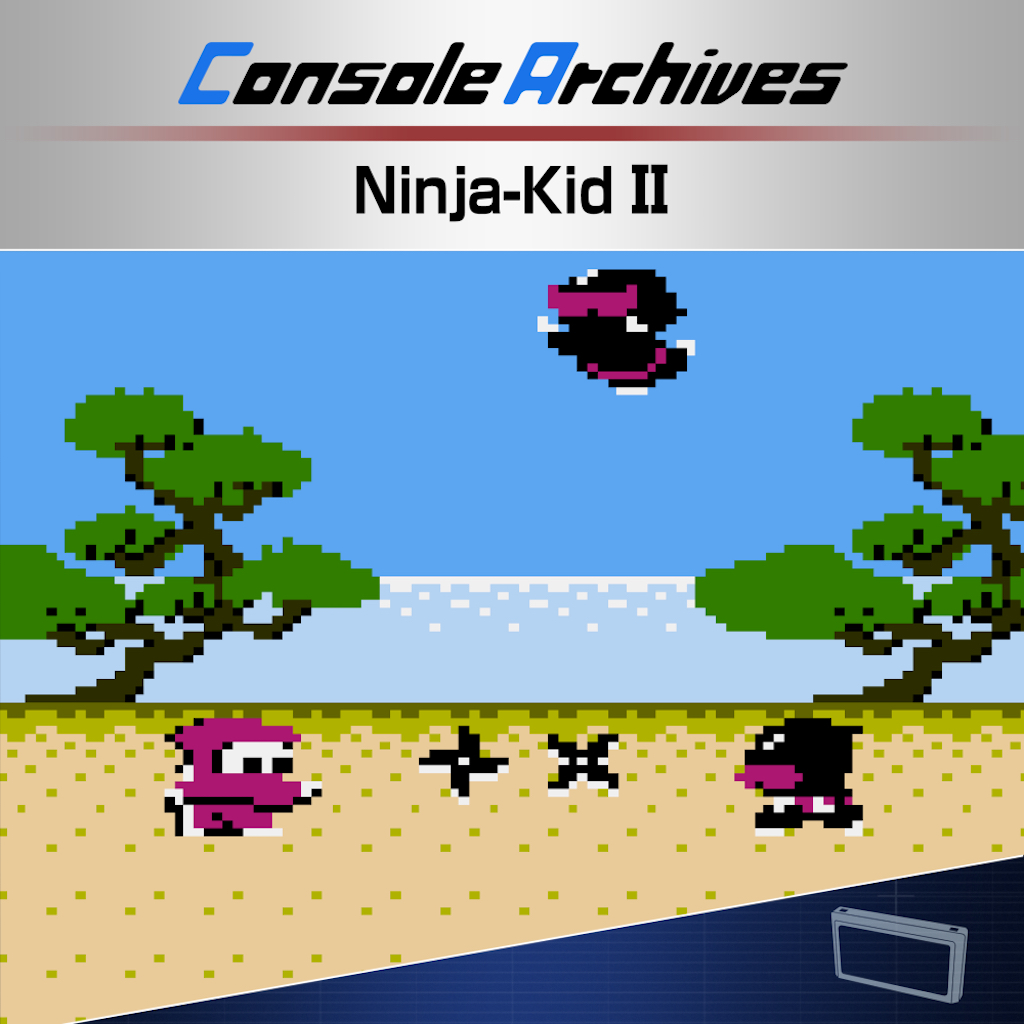
There’s something uniquely captivating about revisiting the 8-bit era—not through nostalgic rose-tinted glasses, but via modern re-releases that preserve the magic alongside its rough edges. Console Archives Ninja-Kid II, Hamster Corporation’s latest retro revival, does precisely that. It doesn’t aim to modernise or reimagine the 1988 classic—it simply presents it, intact with all its quirks, on modern hardware.
And that’s both its greatest strength… and its biggest challenge.
Originally released as Ninja-kun: Ashura no Shou on the Famicom, Ninja-Kid II is a deceptively charming action-platformer that conceals a fiercely demanding core beneath its colourful exterior. This new Console Archives version for PlayStation 5 and Nintendo Switch 2 seeks to preserve that experience faithfully, whilst adding just enough modern convenience to make it playable in 2026.
The result is a time capsule—one that’s equally charming, punishing, and occasionally bewildering.
A Ninja Adventure That Pulls No Punches
At first glance, Ninja-Kid II appears to be a light-hearted adventure. The protagonist is small, expressive, and animated with a simplicity that exudes late-80s charm. The environments—ranging from mountains and oceans to caves—are bright and diverse, with a whimsical tone that feels almost welcoming.
That illusion doesn’t last long.
Within minutes, it becomes evident that this is a classic old-school action game in the truest sense. Enemies swarm aggressively, projectiles come from all directions, and the margin for error is razor-thin. The game calls for precision, patience, and pattern recognition—traits that defined the era but may seem unfamiliar to modern players.
Combat mainly involves throwing weapons—primarily shurikens—while navigating tight platforming sections. It’s a straightforward system, but one that demands mastery. Timing your attacks while dodging incoming threats becomes a constant balancing act, especially as the difficulty escalates.
And it escalates quickly.
Movement: The Art of the Wall Kick
One of the standout mechanics in Ninja-Kid II is its wall-kicking system. This allows you to bounce between vertical surfaces, offering more dynamic movement options than many of its contemporaries.
In theory, it’s a fantastic addition. In practice, it’s a skill you’ll need to learn quickly — or face the consequences.
The controls are precise but unforgiving. Successfully chaining wall jumps feels especially rewarding when manoeuvring through vertical sections under pressure. However, the level of precision required can also cause frustration, particularly when combined with enemy attacks or environmental hazards.
This is a game that doesn’t ease you in. It expects you to adapt.
Level Design: Variety with a Side of Chaos
The game’s stage variety is one of its strengths. Each area introduces new visual themes and enemy types, keeping the experience from feeling repetitive. From underwater sections to cavernous interiors, there’s a sense of progression and escalation as you move towards the final confrontation with Ashura.
However, the design philosophy is very much rooted in the late 80s. Enemy placement can feel overwhelming, and certain sections border on chaos. There are moments when the screen fills with threats, leaving little room to react—especially for newcomers.
This isn’t unfair by the standards of its time, but it can feel that way today.
That said, there’s a certain rhythm to the chaos. With enough practice, patterns emerge, and what once felt impossible becomes manageable. It’s a classic “learn through failure” loop, one that rewards persistence but demands it equally.
The Console Archives Treatment
Where this release truly excels is in its preservation and quality-of-life features.
The Console Archives series is rooted in authenticity, and Ninja-Kid II is no exception. It offers the original 8-bit experience, faithfully reproduced with minimal changes. For purists, that’s exactly what they desire.
However, Hamster Corporation has also added a range of modern conveniences that make the game much more accessible.
Save states are the most notable addition, enabling you to save and load at any moment. This transforms the experience from a potentially demanding challenge into something more manageable. Difficult sections can be completed in smaller sections, making progress feel achievable rather than daunting.
Customisable controls and display filters are also appreciated. The ability to adjust button layouts ensures comfort, while CRT-style filters add a nostalgic visual touch without being intrusive.
These features don’t alter the core game—but they do make it significantly more accessible.
Presentation: Simple, Charming, and Honest
Visually, Ninja-Kid II is exactly what you’d expect from an 8-bit title. Sprite work is clean and expressive, with a surprising amount of personality packed into limited pixels. Animations are basic but effective, conveying action clearly even during hectic moments.
The soundtrack is equally straightforward—catchy, repetitive, and unmistakably retro. It won’t rival modern compositions, but it does its job well, reinforcing the game’s tone and pacing.
Importantly, this release doesn’t attempt to “upgrade” these elements. What you see (and hear) is what players experienced in 1988, for better or worse.
Who Is This For?
That’s the key question with any retro re-release.
If you grew up with 8-bit action games—or have a deep appreciation for their design philosophy—Console Archives Ninja-Kid II is an easy recommendation. It’s a faithful, well-presented version of a classic that captures both the charm and the challenge of its era.
For newer players, the answer is more complex.
This is not a game that meets modern expectations for accessibility or balance. Even with save states, it can feel harsh and unforgiving. There’s little hand-holding, and success often comes through trial and error rather than intuitive design.
But for those willing to engage with it on its own terms, there’s a rewarding experience to be found.
Pros & Cons
Pros
- Faithful preservation of a classic 8-bit action game
- Wall-kicking mechanics add depth to movement
- Varied level design with distinct themes
- Excellent quality-of-life features (save states, control options)
- Charming retro visuals and soundtrack
Cons
- Brutal difficulty that may deter modern players
- Occasionally chaotic enemy design
- Limited depth compared to modern action games
- Repetition in gameplay loop over time
- Minimal guidance or onboarding
Final Verdict
Console Archives Ninja-Kid II is a pure, unfiltered slice of 8-bit action gaming—presented with care, but left intentionally untouched. It’s a game that demands patience, precision, and a willingness to learn through failure.
For retro enthusiasts, it’s a gem worth revisiting. For everyone else, it provides a fascinating glimpse into a different era of game design—one that may not always be comfortable, but is undeniably authentic.