Few strategy franchises have had as long or influential a history as Nobunaga’s Ambition. First introduced by KOEI in the 1980s, the series helped pioneer the idea of historical grand strategy on home computers and consoles. Long before expansive strategy titles became common, Nobunaga’s Ambition challenged players to manage economies, armies, diplomacy, and territorial expansion across feudal Japan.
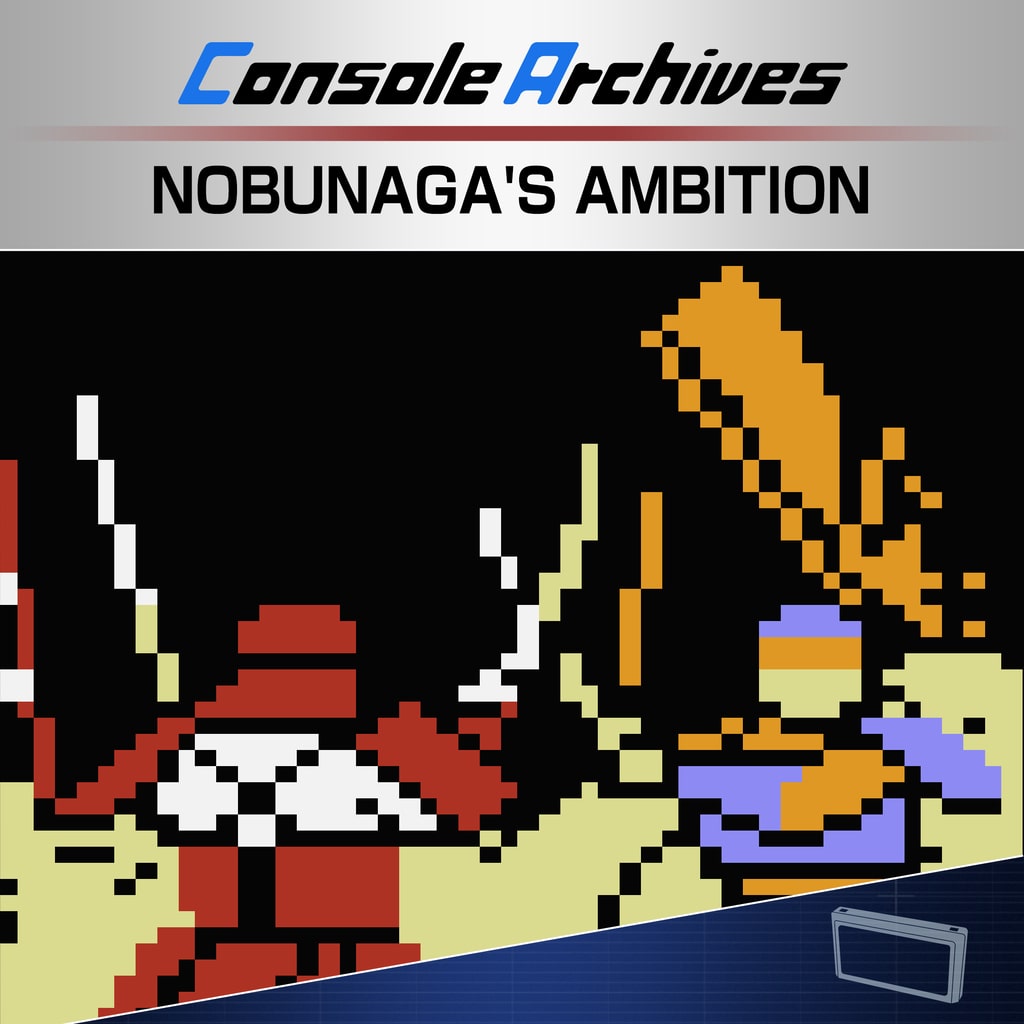
With Console Archives: Nobunaga’s Ambition, released on 5 March 2026, HAMSTER Corporation continues to expand its preservation-focused Console Archives line. Unlike the well-known Arcade Archives series—which focuses on arcade titles—Console Archives is dedicated to restoring classic home console games. This release specifically recreates the 1988 NES/Famicom version of Nobunaga’s Ambition, bringing one of the earliest console strategy games to modern platforms.
While later entries in the franchise grew more complex and visually intricate, this early console version offers a different perspective: a glimpse into the roots of grand strategy design. The question remains whether that 8-bit foundation still resonates with modern players.
Strategy Foundations
At its core, Nobunaga’s Ambition is about unifying Japan during the Sengoku period, one of the most turbulent eras in Japanese history. Players take on the role of a daimyo—often Oda Nobunaga himself—and must steadily expand their territory while maintaining the internal stability of their domain.
The gameplay unfolds through turn-based management, with players issuing orders across several categories each season. These decisions include overseeing agriculture, collecting taxes, raising troops, and invading neighbouring provinces.
Even in this early version, the design demonstrates impressive ambition. Players must balance economic stability with military growth, ensuring their domain produces enough rice to feed the population while keeping a capable army.
Rice production is especially vital, as it serves as both food and currency. Poor harvests or excessive taxation can cause unrest, weakening your position and making your territory vulnerable.
This interaction between economy, military, and diplomacy forms the core of the experience. Success depends on long-term planning rather than quick tactical choices.
Tactical Conquest and Warfare
Military campaigns are central to Nobunaga’s Ambition. Once players have fortified their domain and assembled an army, they can start invading neighbouring provinces to pursue unification.
Battles themselves are relatively straightforward by modern standards. Troops move across small tactical maps, attacking enemy forces and trying to capture strategic territory.
Though the combat system lacks the complexity seen in later strategy games, it still captures the tension of territorial warfare. Each battle has significant consequences—losing troops weakens your domain, while successful conquests expand your power.
More importantly, warfare is never isolated from the game’s broader systems. An army without sufficient resources behind it will struggle to sustain long campaigns. This integration between military and economic management is one of the game’s most forward-thinking aspects.
A Window into Grand Strategy History
Playing the 1988 console version today offers a fascinating perspective on the origins of grand strategy design.
Many systems that would later become staples of the genre—resource management, province-based expansion, seasonal planning—are already present here, albeit in simplified form.
However, the age of the design is also immediately apparent. Information is delivered through basic menus, and the interface can feel unintuitive compared to modern strategy titles.
Players must frequently navigate text-heavy screens and numerical statistics without the visual feedback that contemporary games provide. Understanding the impact of certain decisions may require experimentation or familiarity with older strategy design.
For players accustomed to modern grand strategy games, the learning curve may feel steep.
Yet this simplicity also has its advantages. Once the mechanics become clear, the game reveals a surprisingly deep strategic puzzle hidden beneath its minimalist presentation.
Console Archives Enhancements
HAMSTER’s Console Archives treatment ensures that Nobunaga’s Ambition is preserved accurately while incorporating modern conveniences.
Players can modify display options to imitate classic CRT televisions, reproduce the original console presentation, or apply sharper visual filters suitable for modern screens.
The addition of save states is especially useful. The original NES release required players to commit to lengthy play sessions, but the ability to save and reload at any moment makes the experience much more manageable today.
Customisable button layouts allow players to adjust controls to their preferences, while multilingual menus and manuals enhance accessibility for international audiences.
The game also features online leaderboards linked to specific timed or challenge modes, providing competitive players with a reason to revisit the game and compare their strategic effectiveness with others.
These modern enhancements do not change the core gameplay but make it significantly easier to approach than the original console version.
Presentation and Authenticity
Visually, Nobunaga’s Ambition is clearly an 8-bit strategy game.
Maps are straightforward, menus dominate the screen, and character portraits are shown in limited detail. Although the visuals are basic, they reflect the technological limitations of the era rather than poor design.
The game depends more on imagination and historical context than on graphical spectacle.
Audio design is similarly understated. Simple melodies and minimal sound effects accompany menu navigation and battle actions. The soundtrack creates atmosphere without being intrusive.
HAMSTER’s port does a superb job of maintaining the original look and feel of the game while providing optional visual filters for players seeking a more nostalgic presentation.
Longevity and Replay Value
Despite its age, Nobunaga’s Ambition provides significant replay value.
Each playthrough offers a different strategic challenge based on starting conditions and rival factions. As the game centres on dynamic territorial growth, no two campaigns proceed exactly the same way.
However, the slower pace and menu-heavy interface might test the patience of players unfamiliar with older strategy titles.
Sessions can also become lengthy, especially when aiming to unify Japan through careful expansion rather than aggressive warfare.
For strategy buffs and history enthusiasts, this detailed approach can be satisfying. For others, the experience might feel overly methodical.
Pros & Cons
Pros
- Historically significant strategy game preserved faithfully
- Deep economic and military systems for its era
- Save states and modern display options improve accessibility
- Multiple strategic approaches to unifying Japan
- Strong replay value through dynamic campaigns
Cons
- Interface and menus feel dated
- Limited visual feedback compared to modern strategy games
- Steep learning curve for newcomers
- Battles lack tactical depth
Final Verdict
Console Archives: Nobunaga’s Ambition is less about providing a modern strategy experience and more about safeguarding a key part of gaming history.
As one of the earliest console grand strategy titles, the game introduces many concepts that would later shape the genre. Its mix of economic planning, military conquest, and political management remains quite engaging once players get to grips with its systems.
However, the game’s age cannot be overlooked. The interface feels dated, the visuals are very simple, and the overall presentation reflects the technological limits of the late 1980s.
For modern players expecting a refined strategy experience, the game might seem difficult to approach. But for those interested in the origins of strategy gaming—or fans of the Nobunaga’s Ambition series—it provides a fascinating look at its beginnings.
HAMSTER’s Console Archives release achieves its main goal: preserving an influential console strategy title while making it playable on modern hardware.
It may not be the easiest game to revisit, but it remains a crucial chapter in the history of strategy games.