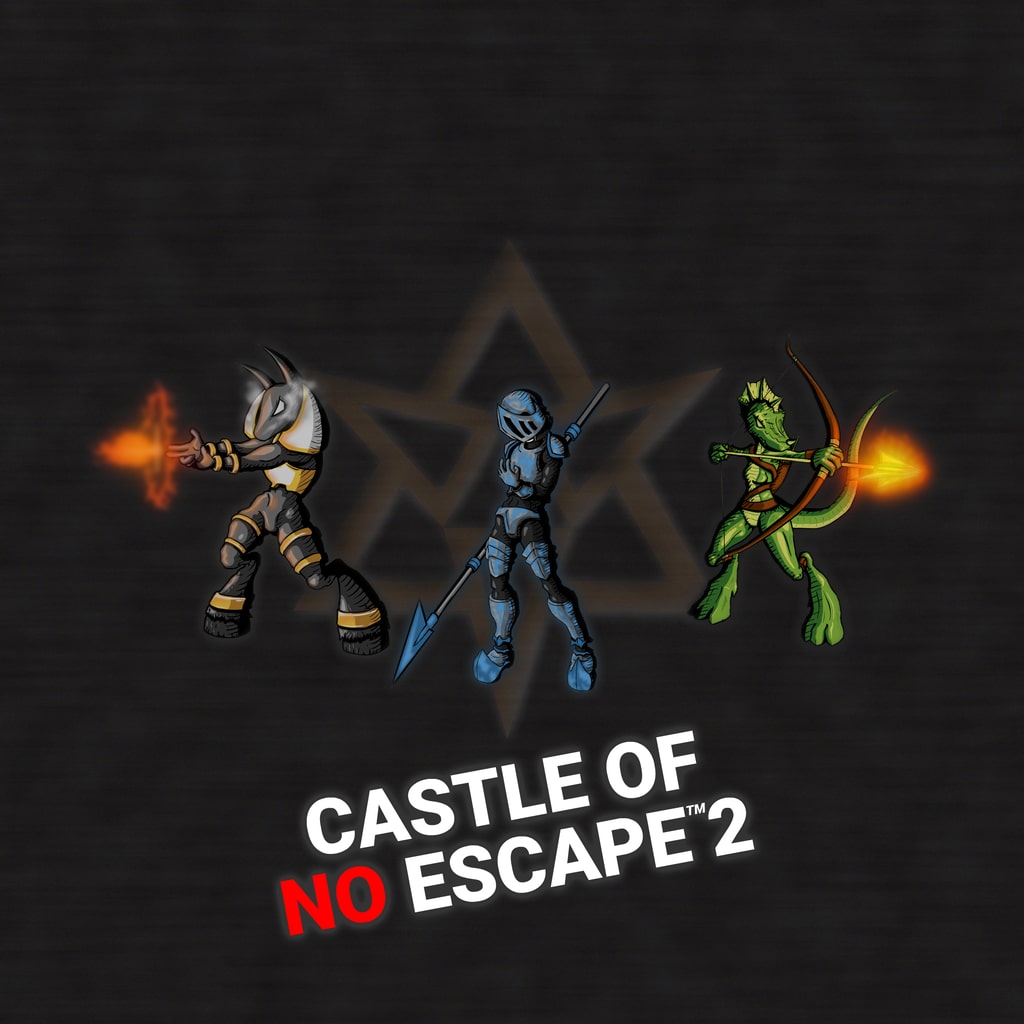
Some games wear their retro inspiration lightly. Others lean into it as an aesthetic choice. Castle of No Escape 2 doesn’t just reference the NES era — it commits to it with almost stubborn devotion.
Originally released on PC in 2016 and gradually spreading across platforms over the years, this cult indie dungeon crawler has finally reached PlayStation 5. Its arrival in 2026 isn’t about graphical upgrades or quality-of-life reinvention. Instead, it serves as a reminder of a very specific design philosophy: minimal hand-holding, high punishment, and discovery through repetition.
If you grew up inputting long passwords on a CRT television, this game feels like a time capsule. If you didn’t — prepare for a crash course in retro resilience.
6 x 6 x 6: A Procedural Labyrinth
At the heart of Castle of no Escape 2 lies its defining structure: a 6 x 6 x 6 grid of rooms — 216 spaces of randomly generated corridors, chambers, hazards, and monsters.
Each run reshuffles the layout, ensuring no two attempts are identical. The castle becomes a living labyrinth, where pathways twist unpredictably and key items may appear in unexpected corners.
Your goal? Collect sword shards capable of destroying the demonic castle owner and breaking the ancient curse that binds the structure.
It sounds simple. It never is.
Combat: Swift, Brutal, Unforgiving
Combat plays out in real time, with fast, agile attacks that vary by character. Unlike modern roguelikes that layer synergies and elaborate build systems, Castle of no Escape 2 keeps its mechanics lean.
Attacks feel snappy but demand precision. Enemy projectiles travel quickly and often fill rooms with chaotic bullet spreads reminiscent of early The Binding of Isaac, albeit rendered in an unmistakable 8-bit style.
Mistakes are punished severely. Health resources are limited. Merchants exist — but their presence is unreliable and often temporary.
This is a game that expects players to memorise patterns, plan movement carefully, and accept that death is part of progress.
Permadeath and the Password System
True to its NES inspirations, the game lacks a traditional save system.
Instead, players rely on a 13-character password system that preserves certain progress elements, primarily the artefacts discovered during runs. It’s an authentic throwback — but one that may divide modern audiences.
Entering passwords manually feels charming to some and archaic to others. On PS5, where seamless save states are standard, the system feels deliberately defiant.
Interestingly, the game includes two difficulty modes, labelled “NTSC” and “PAL.” Lowering the framerate to 50Hz (PAL mode) slightly reduces difficulty — a clever meta nod to how European console versions historically ran slower. Even the music pitch adjusts to match.
It’s an obscure joke that retro enthusiasts will appreciate.
Pixel Art with Purpose
Visually, Castle of no Escape 2 doesn’t attempt modernisation. Sprites are blocky, animations minimal, and colour palettes limited. Rooms feel intentionally cramped, echoing early Zelda dungeons.
This stripped-down aesthetic works in the game’s favour. Visual clarity remains strong even when projectiles flood the screen. The dark fantasy tone — cursed walls, ominous symbols, demonic creatures — emerges through suggestion rather than detail.
On PS5, performance is flawless because the game’s demands are minimal. Load times are virtually non-existent, and responsiveness is crisp.
It’s not visually impressive — but it is visually coherent.
Character Variety and Unlockables
Multiple playable characters offer distinct playstyles, ranging from more balanced fighters to specialised archetypes emphasising speed or strength.
Unlocking additional heroes adds longevity and encourages experimentation. Because the castle resets each run, adapting to character strengths becomes part of strategic planning.
Artifacts collected during runs can slightly tilt future attempts in your favour, introducing subtle roguelite progression without undermining the game’s hardcore roots.
Still, compared with modern roguelikes featuring sprawling upgrade trees, progression here feels modest.
The Merchant’s Gamble
Merchants occasionally appear within the cursed castle, offering items in exchange for currency earned during exploration.
Their presence is deliberately uncertain. They may disappear. Their inventories may be limited. Their prices can feel punishing.
This unpredictability reinforces the game’s central theme: nothing within the castle is stable or guaranteed.
Even help feels temporary.
Difficulty: The Real Boss
Let’s address the obvious — Castle of no Escape 2 is difficult.
Rooms can overwhelm you quickly. Projectile density increases on later floors. Health scarcity forces conservative play. And permadeath ensures each failure resets the journey.
The procedural design means some runs feel fairer than others. Occasionally, item placement leaves you underpowered for mid-game encounters.
This unevenness may frustrate players accustomed to carefully balanced modern roguelikes.
But for those who crave old-school challenge, it’s part of the charm.
Strengths and Shortcomings in 2026
Bringing a 2016 retro roguelike to PS5 in 2026 raises an interesting question: does it still resonate?
In many ways, yes. The gameplay loop remains addictive. The procedural layout ensures replayability. The password system adds a distinct identity.
However, compared with genre giants like Dead Cells or Hades, the game lacks depth in build diversity and long-term progression. Combat, while satisfying, can feel repetitive over extended sessions.
The castle’s 216-room promise sounds expansive, but without varied biomes or dramatic visual shifts, environments sometimes blur together.
The experience is intentionally narrow in scope — and that may not suit everyone.
Who Is This For?
Castle of no Escape 2 is not a mainstream roguelike.
It’s for:
- NES-era veterans who appreciate authenticity
- Players who enjoy punishing dungeon crawlers
- Fans of minimalistic pixel aesthetics
- Roguelike enthusiasts seeking a stripped-down challenge
If you want modern conveniences and cinematic storytelling, this won’t satisfy you. If you want tension, repetition, and incremental mastery, it delivers.
Pros & Cons
Pros
- Authentic NES-inspired design
- Procedural 216-room castle offers replay value
- Tight, responsive combat
- Clever PAL/NTSC difficulty gimmick
- Distinct identity among roguelikes
Cons
- Harsh difficulty curve
- Limited long-term progression depth
- Repetitive room aesthetics
- Password system may frustrate modern players
Final Verdict
Castle of no Escape 2 doesn’t modernise itself for the PS5 era — and that’s both its greatest strength and its biggest limitation.
It’s a love letter to early action-adventure roguelikes, with brutal difficulty, minimal guidance, and charming retro quirks. While it lacks the mechanical complexity of contemporary genre leaders, it offers a pure, uncompromising dungeon crawl that feels refreshingly focused.
It won’t convert sceptics. But for those who long for 8-bit hardship and methodical exploration, the cursed castle still holds power.