Modern indie platformers often fall into one of two camps: nostalgic throwbacks that strictly imitate the past, or experimental titles that reinvent the genre entirely. Fox Legend sits comfortably between those extremes. Developed by Fabrizio Abreu — known for smaller, retro-inspired projects — this 2.5D platformer offers a straightforward, skill-focused adventure that prioritises clean mechanics, visual charm, and classic arcade sensibilities over narrative ambition or mechanical complexity.
Released on 26 February 2026, Fox Legend doesn’t compete with sprawling metroidvanias or cinematic platformers. Instead, it channels the spirit of late-90s and early-2000s side-scrollers: tight levels, escalating difficulty, and a simple goal — survive the stage and reach the end.
The result is a modest but enjoyable platformer that succeeds largely because it knows exactly what it wants to be.
A Classic Structure Done Right
At its core, Fox Legend is refreshingly simple.
You play as a heroic fox navigating 20 handcrafted levels filled with hazards, enemies, and environmental challenges. Movement is strictly side-scrolling, despite fully rendered 3D environments, keeping gameplay focused on precision rather than exploration.
Your abilities are intentionally limited:
- Jump
- Move
- Defeat enemies by stomping them
- Avoid traps
There are no sprawling skill trees, no crafting systems, and no complex upgrades. Every challenge comes down to timing and player skill.
This design philosophy gives the game immediate pick-up-and-play appeal. Within minutes, players understand the rules — but mastering them takes considerably longer.
Precision Platforming Takes Centre Stage
The true identity of Fox Legend lies in its platforming design. Early levels offer gentle introductions, but the difficulty ramps steadily as new hazards appear.
Common threats include:
- Spike pits demanding pixel-perfect jumps
- Moving platforms with tight timing windows
- Fake floors that collapse beneath you
- Enemy placements designed to disrupt momentum
Later stages become surprisingly demanding, requiring memorisation and quick reflexes. While never punishing to the level of hardcore precision platformers, the challenge is enough to keep experienced players engaged.
Deaths come quickly, but respawns are fast — a crucial decision that keeps frustration low and encourages experimentation.
The game’s pacing benefits greatly from this arcade-style loop: fail, retry, improve.
The 2.5D Visual Identity
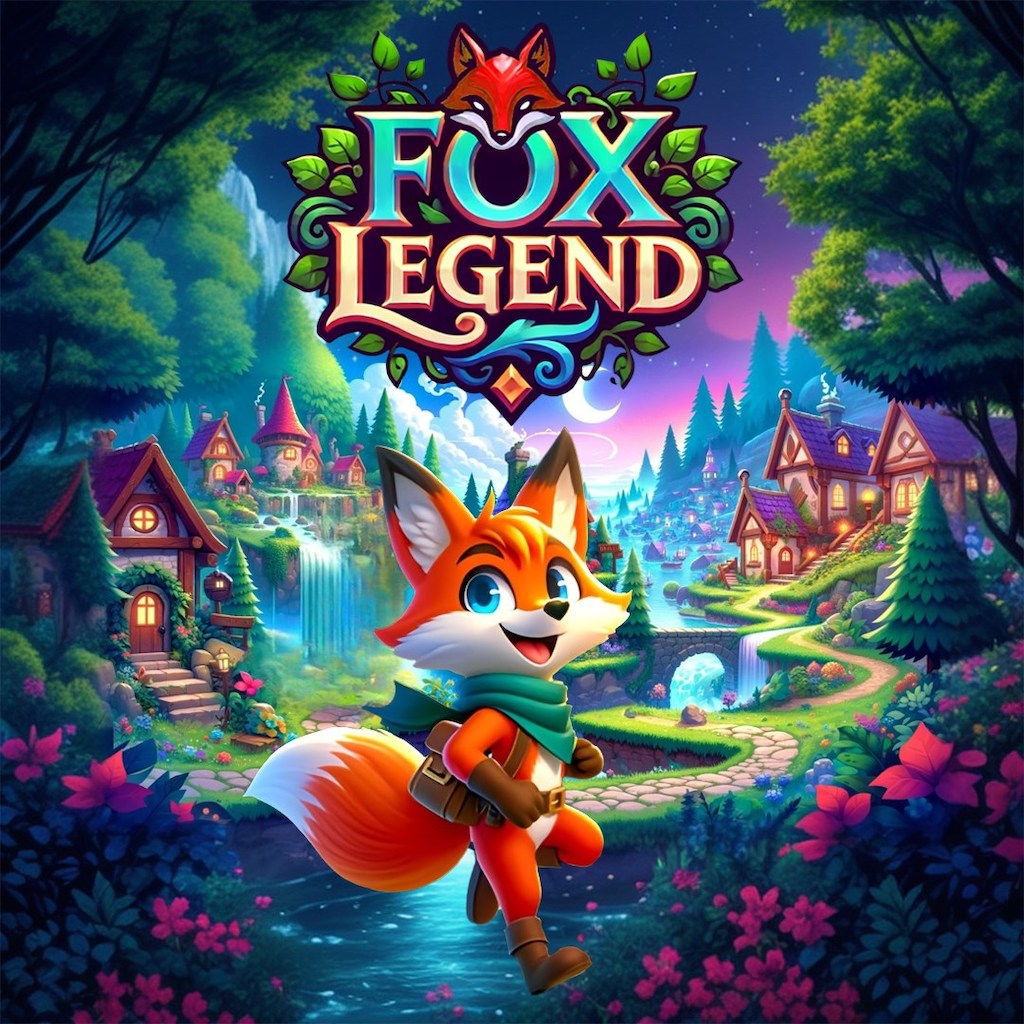
What truly separates Fox Legend from countless indie platformers is its visual presentation.
Characters and enemies are rendered in nostalgic pixel art reminiscent of 16-bit classics, while environments are fully 3D, with vibrant lighting and depth effects. Forests stretch into the distance, cliffs feel layered, and dynamic perspectives give levels a sense of scale rarely seen in small-budget platformers.
This contrast works surprisingly well. The pixel sprites remain readable during fast movement, while the 3D scenery adds modern flair without compromising gameplay clarity.
It’s not technically groundbreaking, but it’s stylish — and importantly, cohesive.
The aesthetic evokes the feeling of playing a lost retro title remade with modern tools.
Level Variety and Progression
Across its 20 stages, Fox Legend offers enough variety to avoid repetition.
New enemy types appear regularly, forcing players to adjust their timing. Environmental mechanics evolve gradually, ensuring each level adds at least one new wrinkle to the formula.
The structure remains linear, however. There are no branching paths or hidden worlds — a deliberate choice that reinforces the game’s arcade DNA.
While some players may wish for exploration elements or collectibles beyond completion, the focused design keeps the pacing tight. Most levels can be completed in a few minutes, making the game ideal for short sessions.
This “one more try” structure feels especially suited to handheld-style play, even though the game currently runs on Xbox and PC platforms.
Controls and Responsiveness
Platformers live or die by their controls, and thankfully, Fox Legend performs well here.
Movement feels responsive and predictable. Jump arcs are consistent, allowing players to learn timing through repetition rather than guesswork.
There are occasional moments when depth perception in the 3D backgrounds can slightly obscure platform edges, but these instances are rare and rarely lead to unfair deaths.
For the most part, success or failure feels earned — a critical achievement for a precision-focused game.
Sound Design and Atmosphere
The soundtrack leans into upbeat retro inspiration, featuring energetic melodies that match the arcade pace. Tracks are catchy without becoming distracting, supporting extended play sessions comfortably.
Sound effects are simple yet effective: enemy stomps feel punchy, hazards are clearly telegraphed, and environmental cues help players anticipate danger.
The overall presentation reinforces the game’s nostalgic tone without overindulging in retro imitation.
Where Fox Legend Falls Short
While Fox Legend is polished within its scope, limitations become apparent over longer sessions.
The biggest issue is longevity. With only 20 levels and minimal replay incentives beyond personal mastery, experienced players may complete the game relatively quickly.
There are also no additional modes, time trials, or leaderboards — features that could have greatly extended replay value for an arcade-style platformer.
Narrative elements are almost nonexistent. While this aligns with the game’s minimalist design, some players may crave stronger world-building or character motivation.
Finally, enemy variety, though adequate, begins to plateau towards the final stages, slightly reducing the sense of escalation.
A Focused Indie Platformer
What makes Fox Legend work is its clarity of purpose. It doesn’t chase trends or overextend its mechanics. Instead, it delivers a compact, skill-based platformer that prioritises tight design over excess content.
In a genre increasingly dominated by sprawling metroidvanias, its straightforward structure feels refreshingly direct.
It’s the kind of game you boot up for a quick session and end up replaying levels simply to perfect your timing.
Pros & Cons
Pros
- Charming 2.5D visual style blending pixel art and 3D environments
- Tight, responsive platforming controls
- Well-paced difficulty progression
- Fast retries keep gameplay addictive
- Clean, accessible arcade design
Cons
- Short overall runtime
- Limited replay modes or extras
- Minimal story or world-building
- Enemy variety tapers off late-game
Final Verdict
Fox Legend may not reinvent platforming, but it doesn’t need to. By focusing on responsive controls, thoughtful level design, and a distinctive visual identity, it delivers a polished indie experience that honours classic arcade roots.
Its modest scope is both its greatest strength and its greatest weakness — a tightly crafted adventure that ends just as players may wish for more.
For fans of retro-inspired platformers seeking a focused, skill-driven challenge, Fox Legend is a charming and worthwhile journey, even if it’s brief.