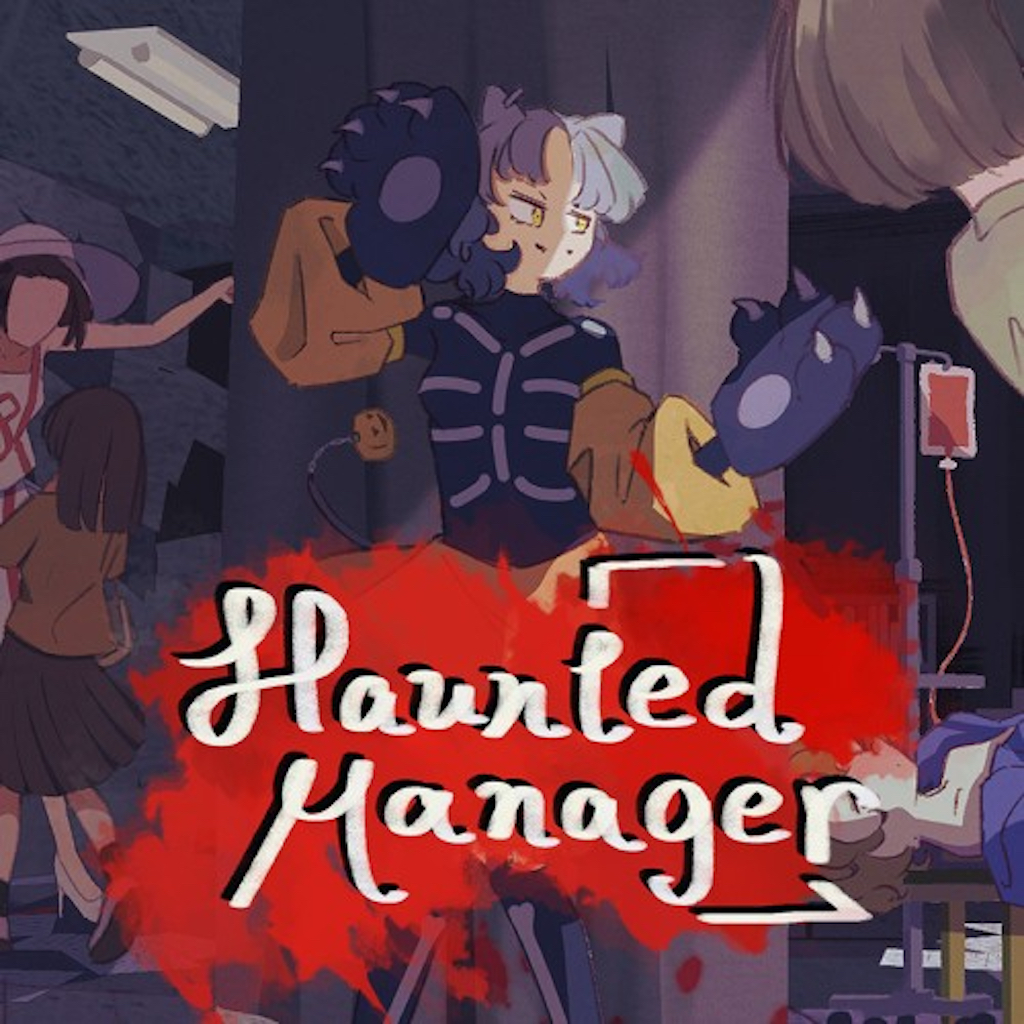
Horror games traditionally put players in the role of survivor — hiding from monsters, conserving resources, and praying the next corner isn’t their last. HauntedManager, however, gleefully flips that formula on its head. Instead of running from ghosts, you hire them. Instead of escaping haunted halls, you design them. And instead of fearing the supernatural, you worry about customer satisfaction metrics.
Originally released on PC in August 2025 and arriving today on Nintendo Switch via publisher Waku Waku Games, developer Majo-no-nou’s quirky strategy title is a compact but inventive blend of management sim, tower defense, and offbeat comedy. It’s small in scale and deliberately simple in presentation, but beneath its playful exterior lies a surprisingly clever systems-driven game about balancing fear, flow, and finances.
It may only last a few hours, but HauntedManager proves that a strong concept — executed confidently — can leave a lasting impression.
Welcome to the Business of Fear
The premise wastes no time: you’ve just become the manager of a haunted house attraction. Your job isn’t to survive the supernatural; it’s to run a profitable scare business staffed entirely by ghosts, urban legends, and mischievous entities.
Guests enter your attraction expecting thrills. Your responsibility is to frighten them enough to send them fleeing before they reach the exit unscathed — because if visitors leave without being scared, your haunted house loses reputation and revenue.
It’s essentially tower defense viewed through a comedic horror lens.
Guests travel along predetermined paths while you strategically place “Ghost Staff” to frighten, delay, or redirect them. Success depends on managing both psychological pressure and crowd flow, creating an unusual hybrid of strategy and hospitality management.
And yes — terrifying people efficiently is considered good customer service.
Reverse Horror Done Right
The most immediately appealing aspect of HauntedManager is its reversal of genre expectations. Rather than escalating dread, the game leans into playful absurdity.
Ghosts aren’t terrifying monsters — they’re employees.
Each staff member has unique abilities tied to folklore tropes but filtered through humor:
- Doppelgänger units are cheap and weak but excellent for slowing crowds.
- Crasher, once a legendary entity, struggles because modern audiences are too familiar with her myth.
- Hasshaku, inspired by Japanese urban legend, compensates for reduced fear factor with physical strength — and inexplicably strong basketball skills.
This comedic reinterpretation gives the game personality without undermining strategy. Every unit has a clear mechanical purpose, encouraging experimentation rather than novelty-for-novelty’s sake.
Strategy Through Crowd Psychology
Unlike traditional tower defense games focused purely on damage output, HauntedManager revolves around emotional management.
Guests come in different types:
- easily frightened visitors who panic quickly
- brave thrill-seekers who require stronger scares
- premium guests who expect a “quality experience”
- disruptive visitors who clog pathways
Your goal isn’t simply to scare everyone instantly — doing so can actually create problems. Terrified guests may block hallways or interfere with pacing, reducing overall efficiency.
This introduces a fascinating layer of strategy: managing fear levels across the entire attraction.
You’re constantly asking:
- Should I scare early or build tension?
- Do I redirect crowds or overwhelm them?
- Is profit better than perfection?
It turns what could have been a gimmick into a genuinely thoughtful design system.
Recruitment and Progression
One of the game’s most satisfying mechanics involves Elite Guests.
These powerful visitors arrive from the Main Shrine to challenge your haunted house. Successfully scaring them allows you to recruit them as permanent staff members, unlocking stronger abilities and new tactical options.
This creates natural progression without traditional grinding. Improvement comes from mastering systems rather than simply accumulating currency.
The recruitment mechanic also reinforces the game’s theme: even skeptics can become believers — or employees.
Management Beyond Scares
While the ghost placement forms the core gameplay, HauntedManager layers in light business management elements.
You must monitor:
- operating budgets
- admission restrictions
- staffing costs
- guest throughput
Let too many visitors enter and chaos erupts. Limit entry too strictly and profits stagnate.
The game cleverly frames this balancing act as maintaining the haunted house’s “immersion.” Guests should feel scared — but not inconvenienced.
It’s a small detail that adds charm while justifying mechanical decisions.
Switch Performance and Controls
The Nintendo Switch version feels well suited to the game’s design philosophy.
Controls are simple and intuitive, using straightforward menus for placement and upgrades. The top-down perspective translates cleanly to handheld play, making it ideal for short sessions.
Performance remains stable even when crowds grow dense, which is important given the game’s reliance on flow management.
Its compact structure also makes it a perfect “pick-up-and-play” title — something you can complete across a few evenings without commitment fatigue.
Visual Style and Presentation
Visually, HauntedManager embraces a retro-inspired anime aesthetic. Characters are expressive despite minimal animation, and environments communicate information clearly without visual clutter.
The simplicity works in the game’s favor. Readability is crucial for strategic placement, and the clean design ensures players always understand what’s happening.
Sound design leans into playful spookiness rather than horror. Lighthearted effects and upbeat music reinforce the comedic tone, preventing frustration even during failed attempts.
The overall vibe feels closer to a supernatural sitcom than a haunted nightmare — and that’s exactly the point.
Short but Focused
At roughly 2–3 hours for a single playthrough, HauntedManager is undeniably brief.
Some players may find this disappointing, especially compared to deeper management simulators. Once mechanics are mastered, replay motivation depends largely on self-imposed optimization challenges rather than new content.
There’s also limited environmental variety, and advanced strategies emerge quickly, meaning veteran strategy players may wish for additional complexity or late-game systems.
However, the game rarely overstays its welcome. Its concise length keeps pacing tight and experimentation enjoyable rather than exhausting.
Accessibility and Approachability
One of the game’s biggest strengths is accessibility. Its rules are easy to grasp, and the interface avoids overwhelming players with dense menus.
Yet beneath that simplicity lies enough tactical nuance to reward thoughtful planning.
It occupies a rare middle ground: approachable for casual players while still satisfying for strategy fans looking for something refreshingly different.
Final Verdict
HauntedManager is a wonderfully odd little game — part tower defense, part business sim, and entirely committed to its playful reversal of horror conventions.
By transforming fear into a resource and ghosts into coworkers, it creates a management experience that feels genuinely original. Its systems are simple but cleverly interconnected, encouraging experimentation and rewarding efficient planning.
Yes, it’s short. Yes, its scope is modest. But within those limits, it delivers a polished, charming, and consistently engaging experience that understands exactly what it wants to be.
Sometimes the best indie games aren’t the biggest or deepest — they’re the ones built around a single clever idea executed well.
And managing a haunted house staffed by dysfunctional ghosts turns out to be a very good idea indeed.