Sometimes a game arrives with deep lore, cinematic storytelling, and carefully explained world-building. Rolling Macho: Tumbling to Earth is not one of those games.
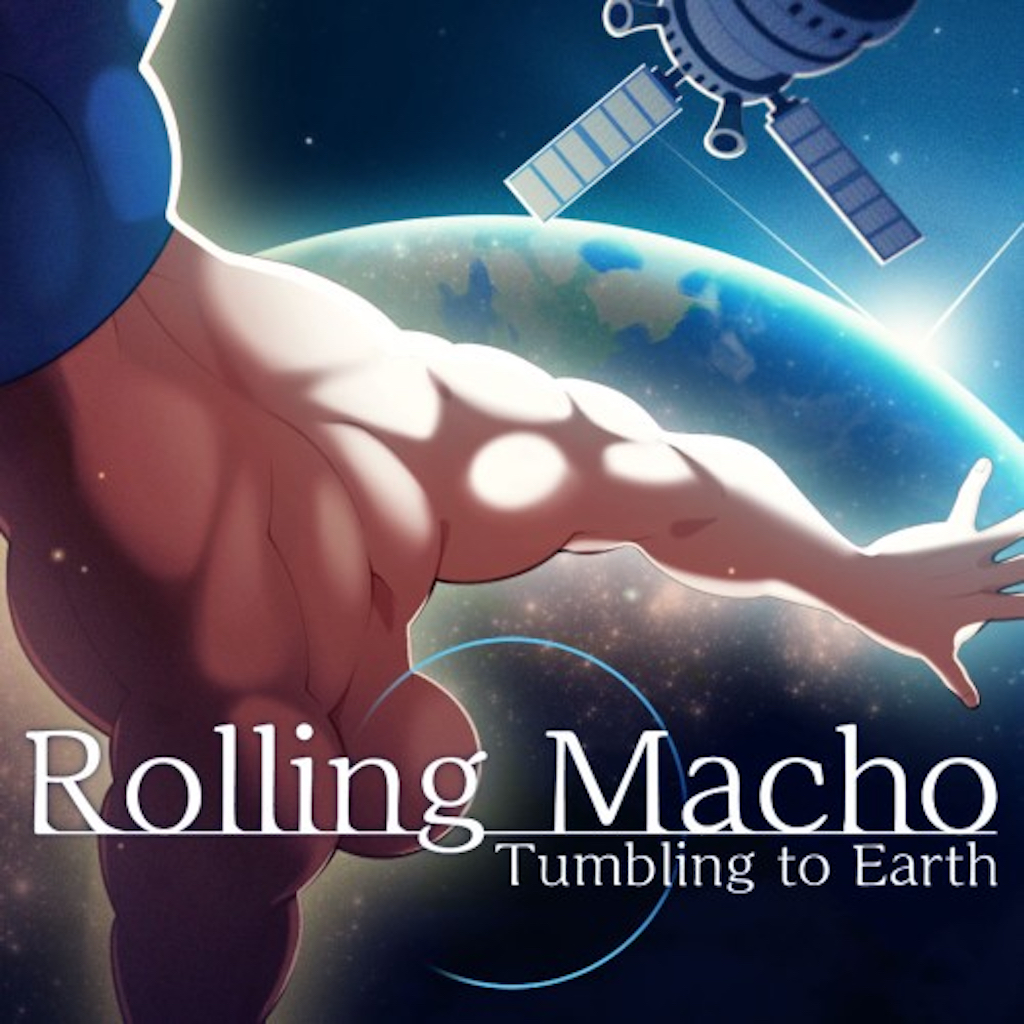
Instead, SERIALGAMES Inc.’s bizarre physics-platformer opens with a simple, almost defiant premise: a hyper-muscular man is stranded in space, and the only way home is to roll, tumble, squat, and somehow reach Earth using sheer determination and questionable physics.
Released today on Nintendo Switch following its 2025 PC debut, Rolling Macho: Tumbling to Earth embraces absurdity wholeheartedly. What initially looks like a throwaway novelty quickly reveals itself as a surprisingly demanding — and often hilarious — test of patience, coordination, and resilience.
It’s weird. It’s frustrating. It’s strangely compelling.
And, much like the games that inspired it, success feels earned one painful roll at a time.
The Only Way Is Up
At its core, Rolling Macho belongs to the growing “Foddian” genre — games inspired by Getting Over It with Bennett Foddy and similar physics-based climbing experiences. Progress is fragile, failure is frequent, and mastery comes only through persistence.
Your objective never changes: ascend through a series of floating cosmic environments without falling.
There are no enemies, no combat systems, and no narrative checkpoints to soften the experience. The challenge comes entirely from movement mechanics and environmental hazards.
One bad angle. One overcorrection. One moment of panic.
And you may find yourself tumbling back toward the beginning.
What separates Rolling Macho from its peers is how movement works. Instead of controlling jumps or directional movement directly, you guide the character’s rotation — essentially steering momentum rather than commanding motion outright.
The result is equal parts skill-based platforming and chaotic physics experiment.
Rotation Control: Brilliant or Brutal?
The defining feature of the game is its Rotation Control Mode, which fundamentally changes how you interact with the world.
Rather than pressing a jump button, you rotate the analog stick to spin the character’s body. Momentum builds naturally, translating rotation into forward movement. Maintaining balance becomes a delicate dance between acceleration and restraint.
Early on, the game offers a standard control scheme to ease players into the concept. But the true experience emerges once Rotation Control Mode takes center stage.
And it is not easy.
Precision matters immensely. Small stick movements produce subtle adjustments, while aggressive rotations can send your macho astronaut flying uncontrollably across platforms.
Learning to manage momentum becomes the entire game:
- roll too slowly and you stall mid-climb
- roll too fast and you overshoot platforms
- panic-adjust and physics punishes you immediately
It’s intentionally awkward at first, but gradually reveals surprising depth. After enough failures, muscle memory kicks in, and movements begin to feel deliberate rather than chaotic.
That moment — when control finally clicks — is immensely satisfying.
Squatting: The Unsung Hero Mechanic
One of the smartest additions is the squat mechanic, which functions as both a brake and stabilizer.
In a game built around momentum, the ability to suddenly reduce speed becomes essential. Skilled players learn to squat mid-roll to regain control before dangerous edges or narrow platforms.
It sounds simple, but mastering when to squat versus when to commit to movement becomes a high-level skill.
Many of the game’s toughest sections demand precise momentum management rather than raw speed — a design choice that rewards patience over reckless play.
It’s also where the humor shines: watching a space-bound bodybuilder desperately squat to avoid drifting into the void never stops being funny.
Cosmic Obstacle Course Design
The journey toward Earth unfolds across increasingly surreal environments.
Each new area introduces variations that force players to rethink movement strategies:
- shifting gravity zones
- slippery surfaces
- moving platforms
- gravitational pulls altering trajectory
- narrow precision pathways
Despite minimalist visuals, level design remains inventive. Hazards rarely feel unfair; instead, they expose weaknesses in your understanding of the physics system.
Importantly, progression feels handcrafted rather than random. Every obstacle teaches a lesson that prepares you for the next challenge.
Of course, that doesn’t stop the occasional rage-inducing fall — sometimes undoing ten minutes of progress in seconds.
But that emotional rollercoaster is exactly the point.
Comedy Through Commitment
What elevates Rolling Macho beyond a standard physics platformer is its unwavering commitment to absurd humor.
The game never explains why a muscular man is rolling through space. It doesn’t need to.
The exaggerated animations, exaggerated physique, and triumphant posing create constant visual comedy. Even failure becomes entertaining, especially when dramatic music continues playing as you helplessly tumble into space.
The humor works because the game plays everything completely straight. There are no wink-to-camera jokes — just pure, unapologetic weirdness.
It’s the kind of premise that sounds like a meme but plays like a legitimate skill challenge.
Music That Keeps You Going
The energetic soundtrack deserves special recognition.
Each “macho zone” introduces new tracks that maintain a high-energy rhythm, encouraging players to keep pushing forward even after repeated failures.
Music shifts subtly between areas, helping progression feel meaningful despite minimal storytelling.
In difficult games, sound design often determines whether frustration becomes exhaustion. Here, upbeat audio keeps momentum — emotionally as well as mechanically — alive.
Switch Performance and Pick-Up Appeal
On Nintendo Switch, the game performs smoothly, maintaining responsive controls essential for precision gameplay.
Its small download size and budget price make it an ideal “one-more-try” experience suited to handheld sessions. Short bursts of play work well, though longer sessions can become surprisingly intense.
The analog stick sensitivity feels well-tuned for Joy-Con and Pro Controller alike, though players should expect a learning curve regardless of setup.
This is not a casual platformer despite its price point — it demands focus and patience.
Where It Falls Short
The game’s strengths are also its limitations.
There’s minimal variety outside the central mechanic. Players uninterested in mastering physics-based movement may quickly bounce off the experience.
Visual presentation, while charmingly simple, lacks environmental storytelling or progression flair beyond new hazards.
Additionally, the absence of checkpoints will be divisive. Some players will celebrate the purity of the challenge; others may find repeated setbacks discouraging.
This is very much a niche experience designed for a specific mindset.
Final Verdict
Rolling Macho: Tumbling to Earth is ridiculous in concept but surprisingly serious in execution. Beneath its absurd humor lies a tightly designed physics platformer that rewards patience, mastery, and persistence.
It won’t appeal to everyone — nor does it try to. But for players who enjoy skill-driven challenges, Foddian-style frustration, and games that turn failure into comedy, it offers a uniquely memorable climb.
It’s proof that sometimes the strangest ideas produce the most engaging challenges.
Just remember: the only way home is up.