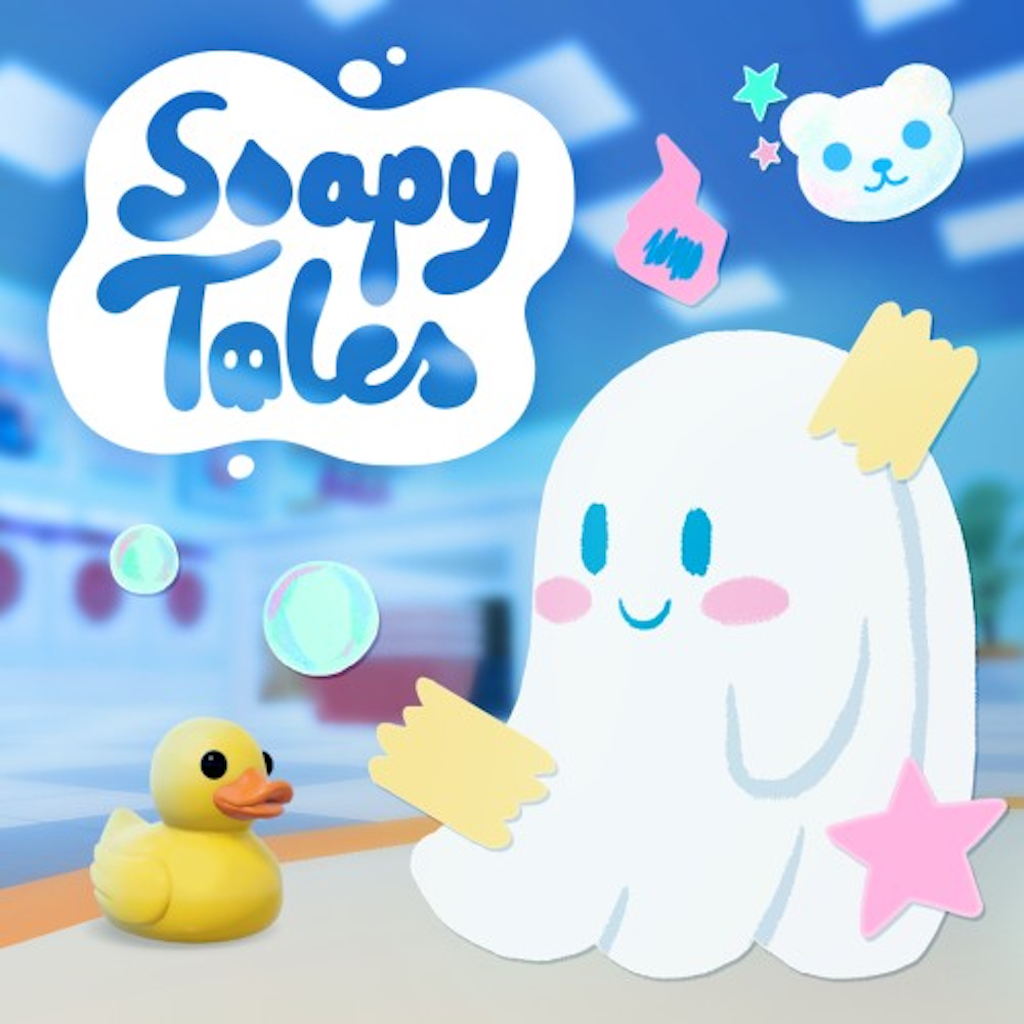
In recent years, “comfort games” have quietly carved out a significant space in the gaming landscape. Titles focused on relaxation, repetition, and gentle satisfaction have found audiences looking for something calmer than competitive shooters or sprawling RPGs. Soapy Tales, released February 24, 2026 for Nintendo Switch by RedDeerGames, leans fully into that philosophy — offering a cozy, soap-covered simulation about cleaning, memory, and redemption.
At first glance, Soapy Tales looks like a simplified cousin of power-washing simulators that have become unexpectedly popular. But beneath the bubbles lies something slightly more personal: a narrative-driven cleaning experience wrapped in pastel visuals, ASMR-inspired feedback, and short, digestible gameplay sessions designed primarily for handheld play.
The result is a relaxing, occasionally charming experience that succeeds at delivering satisfaction — even if it sometimes struggles to deepen its mechanics beyond the surface shine.
Cleaning With Purpose
The premise immediately separates Soapy Tales from purely mechanical cleaning games. You awaken as a ghost with no memories, told that your good and bad deeds are perfectly balanced. To earn redemption, you must return to Earth and revisit fragments of your past life through acts of restoration.
Cleaning becomes metaphorical rather than purely practical.
Each level represents a small story — a forgotten object, a neglected environment, or a sentimental space tied to someone’s memories. You might polish an old motorbike, scrub a childhood toy, or restore a garden after a celebration gone wrong.
These “tales” give context to otherwise repetitive tasks. While the storytelling remains light and mostly environmental, it adds emotional framing that helps elevate the experience beyond simple chore simulation.
It’s not deeply narrative-driven, but it’s sincere enough to give purpose to the cleaning loop.
The Joy of Suds
The core gameplay is straightforward:
- Apply soap
- Scrub dirt away
- Rinse to reveal the clean surface
And honestly? It works.
The visual transformation is the game’s greatest strength. Layers of grime peel away gradually, revealing vibrant colors underneath. Watching a muddy object slowly regain its original appearance taps into the same psychological reward system that makes restoration videos so addictive online.
Every successful rinse delivers a small burst of satisfaction.
Sound design enhances this effect beautifully. Gentle scrubbing noises, water sprays, and soft ambient music combine to create a subtle ASMR atmosphere. The game understands that relaxation comes from rhythm — repeating actions without pressure.
Unlike more simulation-heavy cleaning games, Soapy Tales intentionally avoids realism. Dirt behaves predictably, tools are easy to manage, and progress feels steady rather than laborious.
This makes it ideal for casual sessions.
Switch Handheld Play: A Perfect Fit
The Nintendo Switch version feels like the intended way to experience the game.
Touchscreen controls allow players to scrub directly using their fingers, transforming cleaning into something tactile and surprisingly engaging. Sliding across the screen to remove dirt feels intuitive and playful — almost like interacting with a digital toy.
This physical interaction gives Soapy Tales a distinct identity compared to controller-only simulators.
Short level lengths (typically 10–20 minutes) also make it perfect for portable play. It’s easy to complete a job during a commute, while relaxing on the sofa, or before bed.
Few games embrace the “pick up and unwind” philosophy this cleanly.
Tools, Upgrades, and Bubble Points
Progression comes through earning Bubble Points, which unlock upgrades and new tools.
These include:
- Softer brushes for delicate surfaces
- High-pressure nozzles for stubborn grime
- Specialized soaps with unique bubble effects
- Efficiency improvements for faster cleaning
While upgrades do meaningfully improve workflow, the system remains intentionally simple. There’s no complex resource management or skill optimization — just gradual improvements that make future levels smoother.
The scented soaps are a particularly charming touch. Though mostly cosmetic, they alter bubble colors and particle effects, adding personality to your cleaning sessions.
It’s progression designed for comfort rather than challenge.
The Medal System: Calm Meets Completionism
Despite its relaxing nature, Soapy Tales includes optional goals for perfectionists.
Each level awards medals based on:
- Cleanliness percentage
- Completion time
- Efficiency
Achieving the coveted “Gold Suds” ranking requires meticulous attention to detail. Tiny dirt specks can hide in awkward corners, encouraging players to use Scanner Mode — a helpful feature that highlights missed grime in bright colors.
This system creates a gentle secondary layer of challenge without undermining the game’s low-stress design.
Players can choose whether to chase perfection or simply enjoy the process.
Atmosphere and Presentation
Visually, Soapy Tales embraces soft pastels and warm lighting. Objects feel slightly toy-like, reinforcing the comforting tone. Environments avoid realism in favor of approachable charm.
Performance on Switch remains stable throughout, with smooth camera movement and quick loading between levels.
The soundtrack deserves praise for restraint. Instead of dominating attention, it quietly supports the experience with mellow melodies that fade naturally into background ambience.
Everything works toward relaxation.
Where the Bubbles Thin
While enjoyable, Soapy Tales does encounter limitations after extended play.
Limited Mechanical Depth
The cleaning loop rarely evolves beyond its initial mechanics. New tools change efficiency but not fundamentally how you play.
Repetition Over Time
Without major gameplay twists, later levels can blur together, especially during longer sessions.
Narrative Underdevelopment
The ghost storyline is intriguing but underexplored. Players expecting emotional storytelling may find it too subtle.
Visual Variety Constraints
Although scenarios differ conceptually, environmental interaction remains largely identical.
None of these issues ruin the experience, but they prevent the game from reaching the emotional or mechanical depth seen in standout cozy titles.
Accessibility and Audience
Where Soapy Tales excels most is accessibility.
There are:
- No fail states
- No penalties
- No stressful timers (outside optional medals)
- Simple controls suitable for all ages
It’s genuinely family-friendly and welcoming to players unfamiliar with games altogether.
This makes it ideal for:
- Younger players
- Casual gamers
- Stress relief sessions
- Fans of relaxing simulations
It’s less suited for players seeking challenge or long-term progression systems.
Pros & Cons
Pros
- ✔ Extremely relaxing gameplay loop
- ✔ Satisfying visual cleaning feedback
- ✔ Excellent handheld touchscreen integration
- ✔ Cozy presentation and calming soundtrack
- ✔ Accessible and stress-free design
- ✔ Short, digestible play sessions
Cons
- ✘ Limited gameplay depth
- ✘ Repetitive mechanics over time
- ✘ Narrative feels underdeveloped
- ✘ Minimal long-term progression variety
Final Verdict
Soapy Tales understands exactly what it wants to be — a gentle, comforting experience built around satisfaction rather than challenge.
Its tactile touchscreen controls, soothing presentation, and rewarding cleaning loop make it an excellent “wind-down” game, especially on Nintendo Switch. While it lacks mechanical complexity and deeper storytelling ambition, it succeeds at delivering calm in a way many games forget to prioritize.
Sometimes, games don’t need to thrill or overwhelm. Sometimes they just need to let you breathe, scrub away digital dirt, and enjoy small moments of progress.
And in that regard, Soapy Tales feels wonderfully clean.