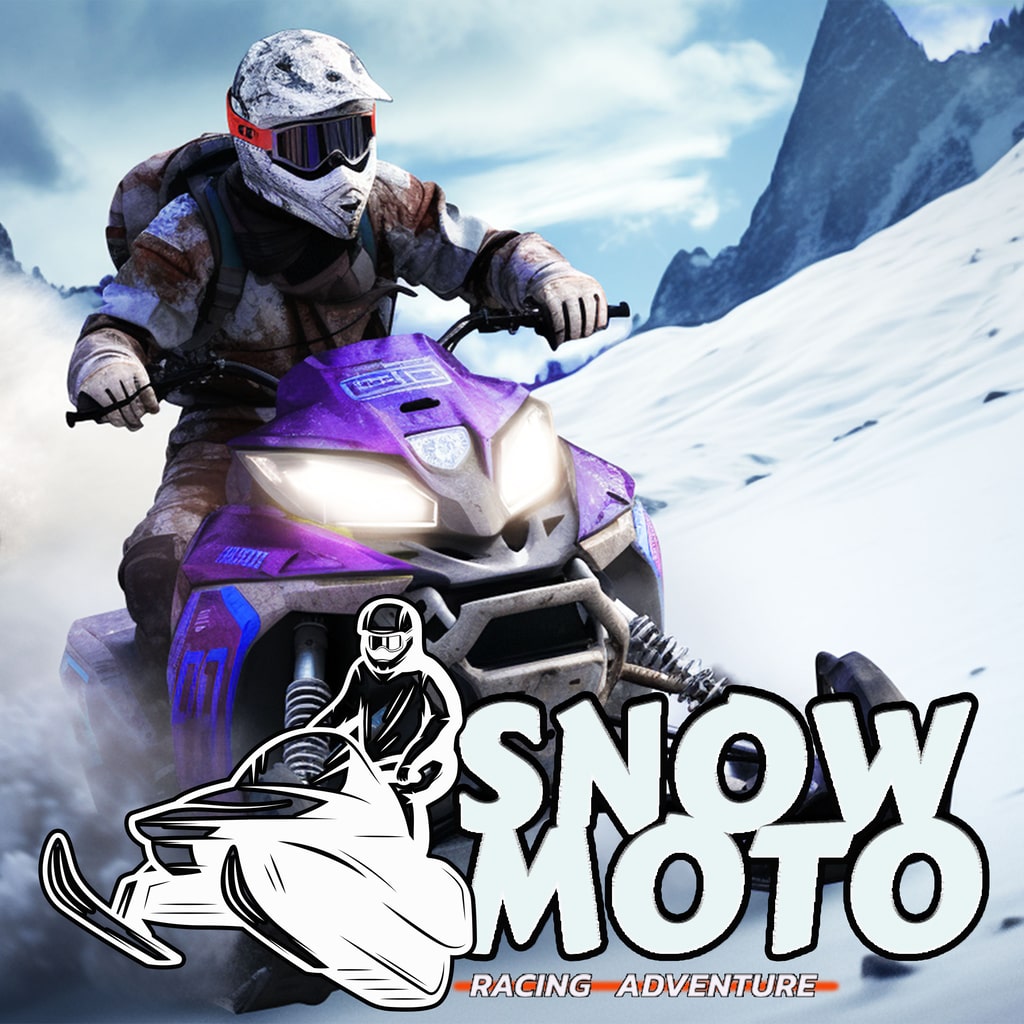
Snow Moto – Racing Adventure aims to carve out its own slope in the snow racing genre, blending casual accessibility with moments of technical challenge and an emphasis on environmental variety. On the surface, the promise is appealing: race across snowy expanses, canyon trails, frozen lakes, and mountainous terrain while controlling agile snowmobiles capable of leaps, drifts, and high-speed bursts.
What the title delivers is a solid but uneven experience — one that excels in creating a winter racing ambience yet stops short of breaking new ground in gameplay momentum and long-lasting competitive thrill. Whether you approach it as a casual racer, a scenic ride through wintry tracks, or a modest alternative to high-end racing franchises, Snow Moto offers satisfying moments alongside areas that could benefit from refinement.
First Impressions: Frosty Aesthetics and Accessible Controls
Right from the opening moments, Snow Moto – Racing Adventure makes a strong aesthetic impression. Tracks are framed by breathtaking winter panoramas: snow-capped ridges, frosted forests that stretch to the horizon, and icy plateaus that glint under shifting skies. The sense of place is palpable, anchored by crisp visual design that evokes cold without sacrificing clarity or readability.
Controls are similarly approachable. Accelerate, brake, lean, and drift — the basics are easy to grasp, and even players new to racing titles will find the initial learning curve friendly. Snowmobiles respond with predictable physics, allowing for an immediate sense of progress as you master timing and terrain interaction. For players seeking a more casual ride, this accessibility is a clear strength.
Yet accessible does not always mean shallow. Once you settle into the rhythm of racing, the game’s physics begin to show subtle nuance. Snow traction varies by surface, drifts require careful throttle modulation, and fine adjustments can shave precious seconds from lap times. This balance between ease of entry and mechanical depth becomes more apparent as you tackle more demanding events.
Race Modes and Progression: A Gentle Climb, Not a Steep Ascent
Snow Moto offers a mix of race types and objectives designed to keep players engaged as they progress. Standard circuit races, time trials, and checkpoint challenges form the backbone of the experience, with each mode testing slightly different skills. Circuit races emphasise consistency and corner discipline; time trials focus on precision and optimal routing; checkpoint runs require swift navigation between distant markers.
Progression is tied to performance — placing well unlocks new tracks, additional snowmobile models, and cosmetic upgrades. There is a satisfying sense of reward in this structure, particularly early on when each unlock feels meaningful. However, the pacing of progression slows at higher tiers, and later unlocks can feel incremental rather than transformative. This plateau can blunt motivation for players driven by constant escalation or dramatic mechanical variation.
One notable omission is a deeper competitive framework. The absence of robust online leaderboards or ranked matchmaking limits the long-term appeal for competitive racers. While local AI challenges are serviceable, the thrill of climbing against human rivals is missing, reducing longevity for players who thrive on persistent competition.
Track Design: Varied Terrain With Familiar Rhythms
One of the strongest elements in Snow Moto is track variety. Environments feel thoughtfully composed, with each setting offering distinct characteristics. Narrow canyon runs demand precision and patience, frozen lake sprints reward commitment to speed, and forest trails challenge players to stay alert and adaptive.
Visual theming of tracks is consistently compelling. Snow drifts buildup at track edges, wind sweeps fine powder across surfaces, and lighting — whether low sun or overcast skies — impacts visibility in subtle but effective ways. These elements contribute to a sense of immersion that elevates simple races into scenic adventures.
Despite this visual richness, track layouts rarely surprise. While each environment looks beautiful, most tracks follow predictable racing rhythms: sequence of straights, followed by familiar curve patterns, followed by small elevation changes. None are poorly designed, but few deliver the “a ha” moment of a particularly clever turn sequence or a feature that fundamentally reshapes how you approach a race.
Snowmobile Customisation and Feels
Snowmobile selection and customisation offer modest variety. Different models boast statistical distinctions in speed, acceleration, handling, and stability, encouraging experimentation to match riding style or track demands. Cosmetic options, while not groundbreaking, allow for a degree of personal expression.
However, mechanical customisation lacks depth. There are no deep tuning options (such as suspension adjustment, gear ratios, or traction tuning) that might appeal to players who enjoy fine-tuning performance. This simpler approach keeps the game accessible but also limits mechanical engagement for those seeking layered complexity.
Audio and Sensory Feedback: A Chill Soundtrack With Room to Grow
Audio design contributes positively to immersion. Engine sounds are satisfying, with distinct timbres that reflect throttle application and surface contact. Ambient sound — wind rushing past, the crunch of snow under track — supports a convincing winter environment.
The soundtrack, composed of chilled electronic and instrumental themes, fits the game’s vibe competently without overshadowing gameplay. However, like other facets of the audio experience, it lacks moments that truly excite or punctuate intensity. Climactic races could benefit from more dynamic scoring or audio cues that heighten tension and reward peak performance.
Difficulty and Accessibility: Friendly Door, Tough Room
One of Snow Moto’s defining traits is its approach to difficulty. The game welcomes beginners with forgiving early races and tight controls that feel intuitive. Yet as track complexity and AI performance ramp up, the challenge becomes more formidable. Players find themselves refining throttle control, drift timing, and line discipline — skills that feel rewarding to master.
Still, the difficulty curve is not perfectly calibrated. Certain events spike abruptly, demanding a level of mastery that is sometimes disproportionate to the mechanical progression at that point. Such moments can lead to frustration rather than a sense of earned victory. A more graduated difficulty curve or better tuning options might have smoothed this transition.
Where It Stumbles
Despite its many strengths, Snow Moto – Racing Adventure is not without limitations:
Lack of Competitive Infrastructure: Without robust online leaderboards or multiplayer modes, long-term engagement is curtailed for competitive players.
Mechanical Depth: Customisation is serviceable but shallow, particularly for racers who enjoy mechanical tuning.
Pacing Fluctuations: Progression and difficulty spikes occasionally undermine the otherwise steady experience.
Predictable Track Patterns: While visually compelling, track layouts stop short of surprising or redefining racing conventions.
Final Verdict
Snow Moto – Racing Adventure is a solid and scenic racing experience that excels at capturing the feeling of winter racing and delivering accessible yet engaging gameplay. Its strength is in the balance between friendly entry-level racing and deeper mastery, supported by varied environments and a convincing snow-bound atmosphere. However, a lack of competitive depth, occasional pacing issues, and limited mechanical customisation hold it back from reaching greater heights.
For players seeking relaxing racing with moments of technical satisfaction, this game offers considerable appeal. For those craving fierce competition and layered mechanical engagement, it may feel like a promising start rather than a refined destination.