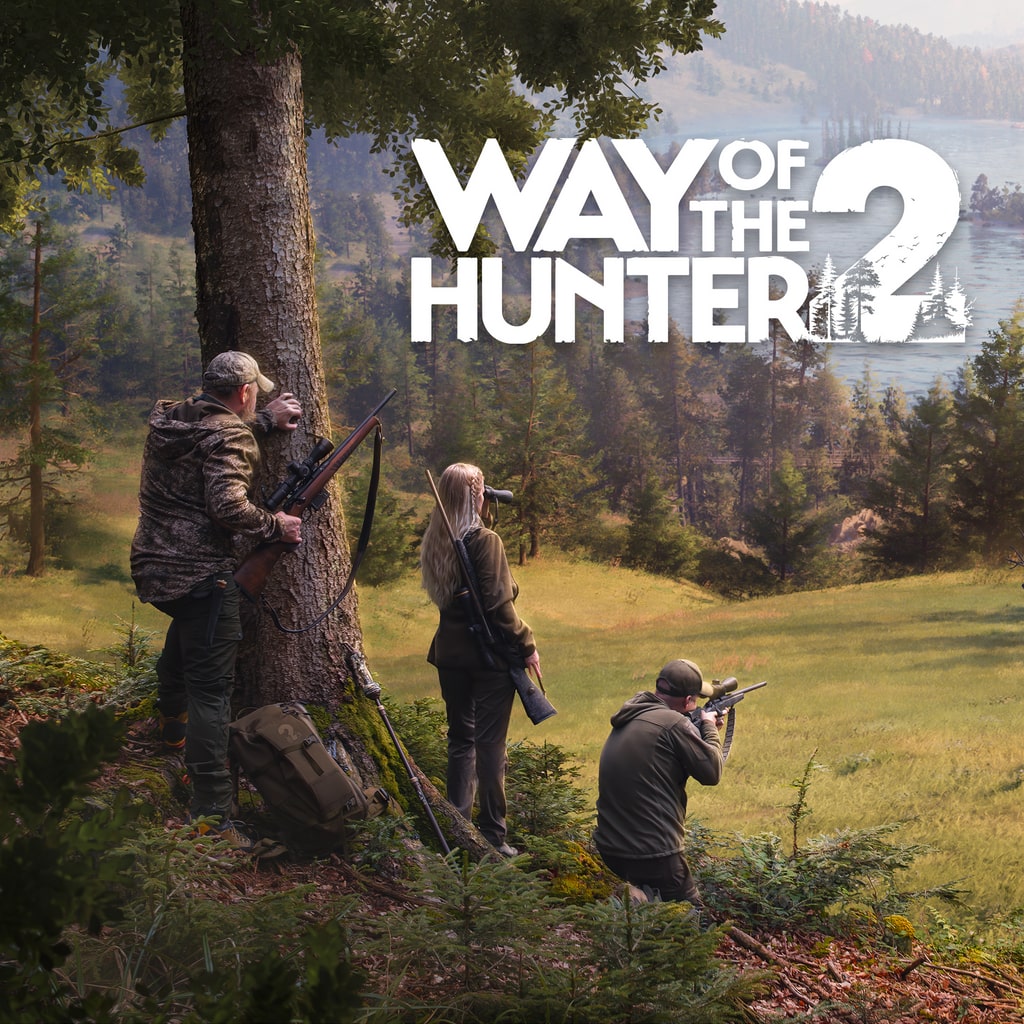
There is a particular kind of satisfaction in spending twenty minutes following a trail through the wilderness, carefully watching the landscape, listening for movement and gradually closing the distance on an animal that has no idea you are there. It is a feeling that few games attempt to recreate, and even fewer manage to make genuinely engaging. Way of the Hunter 2 understands that hunting is not simply about pulling a trigger. It is about patience, observation, preparation and knowing when the moment is right. Developed by Nine Rocks Games and published by THQ Nordic, this sequel builds on the foundations of its predecessor to deliver a more detailed and dynamic hunting simulation, with living ecosystems, improved animal behaviour and an impressive range of wilderness environments to explore.
Rather than chasing the fast-paced action of an arcade shooter, Way of the Hunter 2 invites players to slow down and appreciate the world around them. Its expansive hunting regions across North America and Africa offer very different environments, each with its own wildlife, challenges and opportunities. There is also a central lodge in the Rocky Mountains, which gradually becomes a personal home for your hunting adventures as you expand its facilities and display your trophies. Whether you are an experienced player of hunting simulations or someone curious about the genre, there is plenty here to discover, although the deliberate pace demands a certain level of commitment.
A Wilderness Worth Exploring
The first thing that stands out in Way of the Hunter 2 is the scale and atmosphere of its wilderness. The environments are designed to feel like places that exist independently of the player, rather than simply serving as large shooting galleries filled with targets. North America’s forests, open terrain and mountainous landscapes offer a variety of habitats to explore, while the African hunting grounds introduce a different sense of scale and danger. From moose, elk, bears and bison to hippos, buffalo, lions and Nile crocodiles, the wildlife provides a broad range of encounters that require different approaches.
Visual fidelity plays an important role in making these environments convincing. The changing landscapes, vegetation and natural surroundings encourage you to pay attention to the world rather than rushing from one objective to the next. A distant movement between the trees or a faint indication of an animal’s presence can become an invitation to investigate, and that sense of discovery is central to the experience. The wilderness feels most compelling when you are not actively hunting, but simply taking the time to explore and appreciate the details that make each region distinct.
The three hunting regions also provide a welcome sense of variety. New Laurentia in North America introduces a mystery surrounding unusual behaviour in the local moose population, while Kilimaya Reserve brings the player into an African ecosystem with formidable wildlife. The Rocky Mountain headquarters, meanwhile, offers a smaller area in which to explore, relax and develop your lodge. These different locations help give the game a stronger identity, making each expedition feel like a distinct experience rather than another trip through an interchangeable landscape.
The Art of the Hunt
At its heart, Way of the Hunter 2 is a game about observation and preparation. Animals react to their surroundings, and players are encouraged to study tracks, movement patterns and habitat conditions before deciding how to approach a potential target. Simply spotting an animal does not mean you are in a position to take a successful shot. Wind, distance, positioning and the animal’s behaviour all influence the outcome, making careful planning an essential part of every expedition.
This deliberate approach will not appeal to everyone, but it is precisely what gives the game its character. There is a genuine sense of achievement in tracking an animal across a large area, interpreting the signs it leaves behind and gradually working out where it might be heading. The experience rewards players who take their time, rather than those who treat every encounter as an opportunity to fire immediately. When everything comes together, a successful hunt feels earned rather than handed to you.
The sequel’s emphasis on realistic ballistics adds another layer of consideration. Understanding a shot’s trajectory and placement is important, particularly when hunting larger animals at greater distances. The improved bullet camera provides a useful way to review your performance, showing details such as trajectory, speed, angle and placement. Rather than leaving you to guess why a shot did not go as planned, the system offers information that can help you learn and improve with each outing.
A Dog That Makes a Difference
One of the most welcome additions is the hunting dog companion, which brings both practical value and a little extra personality to the wilderness. Your dog can detect animal signs, follow blood trails and help track wounded game, providing assistance that can be particularly valuable when an animal moves into dense vegetation or across difficult terrain. It fits naturally into the game’s focus on realistic hunting practices, while also making the player feel less alone during lengthy expeditions.
The companion is not simply a convenient tool that performs its role without any investment. Regular exercise and training allow the dog to develop its skills over time, creating a sense of progression that feels more personal than simply unlocking another piece of equipment. Having a loyal animal alongside you also changes the atmosphere of exploration. The wilderness can feel vast and quiet when travelling alone, so the presence of a companion provides a welcome connection throughout those longer stretches between encounters.
The tracking assistance is particularly valuable when a shot does not result in an immediate clean recovery. Following a blood trail can be a tense process, and the dog helps turn that uncertainty into a more engaging part of the hunt. It also reinforces the importance of responsible hunting, where recovering an animal is just as significant as making the initial shot.
Learning From Every Shot
The revamped shot review system is another feature that strengthens the simulation. Hunting games can sometimes leave players unsure what went wrong, especially when a target is moving or the distance makes judging a shot difficult. The bullet camera provides a more detailed breakdown of each shot, allowing you to examine factors such as angle, speed, trajectory and impact placement. This creates a useful learning tool that encourages players to improve their technique rather than relying solely on trial and error.
The available equipment also adds to the sense of authenticity. With gear from more than ten real-world brand partners, players can select from a range of hunting rifles and specialist equipment suited to different situations. Thermal night vision and enhanced reserve monitoring introduce additional ways to observe wildlife and understand the condition of the habitats you are exploring. These tools can make hunting more accessible, but they do not completely remove the need for careful planning and sound judgement.
There is a balance to be struck between providing realistic equipment and allowing players to enjoy the experience without becoming overwhelmed by technical detail. Way of the Hunter 2 makes a concerted effort to accommodate both, although some players may find that its systems require a fair amount of patience to understand. Early community feedback has also raised questions about the tuning of certain mid-calibre rifles, suggesting that the ballistics may not always feel as consistent as intended. These issues do not undermine the overall concept, but they are worth considering for players who value precision above all else.
A Home Among the Mountains
The Hearth & Hunt headquarters offers a welcome change of pace from the vast hunting regions. Set in the Rocky Mountains, this central hub can be expanded with additional rooms, trophy displays, and space to showcase the animals you have hunted across different regions. The lodge gradually becomes a personal record of your progress, giving your achievements a physical presence beyond statistics or completed objectives.
There is a certain satisfaction in returning from an expedition to see your trophies displayed in a place that grows alongside your experience. The eccentric elderly Irish carpenter responsible for the renovations adds a touch of humour and warmth to the proceedings, with his stories about mushrooms and local folklore giving the headquarters a personality of its own. It is a small detail, but one that helps prevent the broader simulation from feeling too clinical.
The lodge also gives players a reason to think beyond individual hunts. Expanding its facilities and improving its displays provides a longer-term objective that complements the more immediate rewards of tracking and harvesting wildlife. It is not the most elaborate base-building system, but it adds a personal dimension to the experience and helps tie the different regions together.
Stories in the Wild
Although the hunting itself is the main attraction, Way of the Hunter 2 introduces a narrative framework through Hearth & Hunt and the people you meet along the way. As an adaptable hunter building a reputation, you take on challenges for local residents, work alongside colleagues and help preserve regional ecosystems. In New Laurentia, the unusual behaviour of the moose population prompts a closer investigation, with assistance from a skilled dog trainer and a former warden.
Kilimaya Reserve offers a different set of characters and challenges, including a renowned safari guide, an eccentric archery expert and a legendary retired huntress. These interactions give each region a sense of identity and help structure an experience that could otherwise feel like a series of unrelated hunting trips. The stories are not necessarily the main reason to play, but they give the player a sense of purpose and encourage exploration beyond simply seeking the next trophy.
The ecological element is particularly relevant because it connects the player’s activities to the wider world. Hunting is not presented purely as an individual pursuit of rewards, but as something that takes place within a living environment that requires observation and management. The concept of preserving regional ecosystems adds an interesting dimension, even if players who primarily want a freeform hunting experience may prefer to spend their time exploring without following a particular storyline.
The Patience of Multiplayer
Online co op offers a chance to share the wilderness with other players, adding a social dimension to a genre often defined by solitude. Hunting alongside friends can make long tracking sessions more enjoyable, while exploring the regions together creates opportunities for spontaneous encounters and shared discoveries. There is something appealing about setting out with a plan and seeing how events unfold when several people work together.
Co op also gives players the freedom to approach the experience at their own pace. One player might prefer to study animal behaviour carefully, while another is more interested in exploring the landscape or testing equipment. That flexibility suits a game that places so much emphasis on personal freedom. The wilderness can be an absorbing place to explore alone, but having friends alongside you offers a different kind of enjoyment and helps extend the game’s appeal.
Of course, the deliberate pace will remain a consideration in multiplayer, just as it does in solo play. This is not a game built around constant action, and players looking for quick firefights or immediate rewards may find the time spent tracking and waiting difficult to embrace. For those who enjoy the process, however, co op has the potential to create genuinely memorable moments.
When Realism Tests Your Patience
For all its improvements, Way of the Hunter 2 remains a hunting simulation, and its commitment to realism can occasionally undermine accessibility. Tracking animals, managing distance and waiting for the right opportunity can be deeply rewarding, but these systems also mean progress is not always immediate. Players accustomed to more action-focused hunting games may find the slower movement and careful preparation frustrating, particularly when a promising encounter ends without a successful shot.
Balancing realism and accessibility is an ongoing challenge for the genre. Making every aspect of hunting authentic risks making the experience cumbersome, while simplifying too much would remove the qualities that make the simulation distinctive. Way of the Hunter 2 largely understands this tension, using its equipment, dog companion and shot review systems to help players learn without removing the need for skill. Nevertheless, some mechanics may still feel demanding, and the occasional inconsistency in ballistics can be particularly noticeable in a game that asks players to pay such close attention to detail.
There is also the possibility that the central gameplay loop may become repetitive over extended sessions. The core activities of tracking, observing, approaching and shooting remain consistent, even when the environments and animals change. For players who enjoy mastering a system and gradually improving their performance, that repetition is part of the appeal. For others, the lack of constant mechanical variety may eventually limit the experience.
Verdict
Way of the Hunter 2 is a thoughtful and ambitious sequel that builds on its predecessor’s strengths while introducing meaningful improvements to the hunting experience. Its expansive wilderness regions, detailed animal behaviour, realistic ballistics and trainable dog companion all contribute to a simulation that rewards patience and careful observation. The Hearth & Hunt lodge serves as a satisfying personal hub, while regional stories and online co-op offer further reasons to keep exploring.
It is not without its limitations. The deliberate pace will not suit everyone, and the balance between realism and accessibility remains a challenge. Some players may also find the core hunting loop repetitive over time, while ballistics tuning and the occasional awkward encounter can disrupt immersion. Yet these issues are offset by a world that feels rewarding to explore and a hunting system that places genuine value on learning and preparation.
Ultimately, Way of the Hunter 2 is at its best when you stop thinking about the next objective and simply immerse yourself in the wilderness. It is about the quiet moments, the tracks that lead somewhere unexpected, the companionship of a loyal dog and the satisfaction of a carefully planned hunt coming together. For players who appreciate the slower, more considered side of outdoor simulation, this is a compelling adventure that offers plenty of reasons to return to the wild.