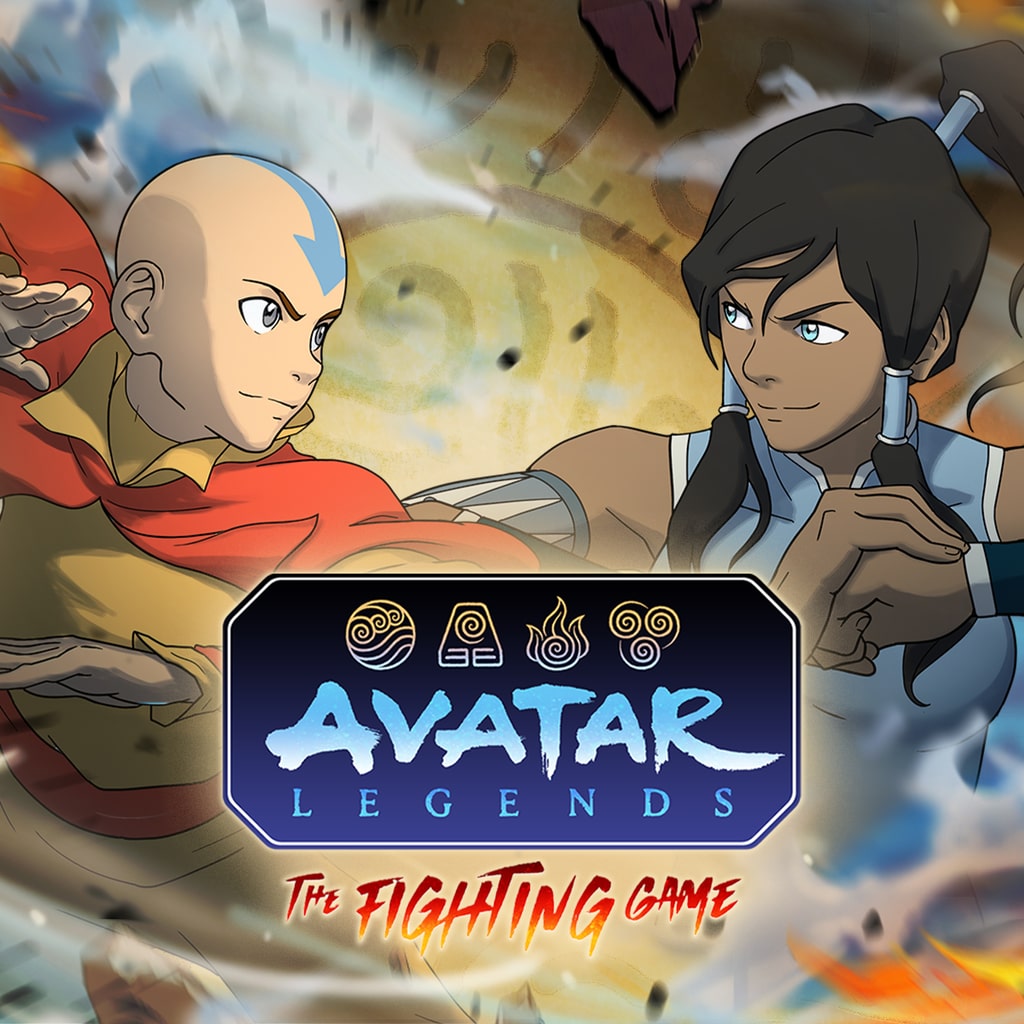
For years, fans of Avatar: The Last Airbender and The Legend of Korra have dreamed of a game that truly captures the beauty, speed and creativity of elemental bending. While there have been several attempts over the years, few have managed to live up to the incredible martial arts choreography and emotional storytelling that made the animated series so beloved. More often than not, licensed games settled for competent action rather than something genuinely memorable.
That is precisely why Avatar Legends: The Fighting Game feels so exciting. Instead of chasing open worlds or cinematic adventures, developer Gameplay Group International has taken an unexpected direction by creating a dedicated 2D fighting game. On paper, it might sound like a niche choice, but after seeing what the game has to offer, it may actually be the perfect fit. The fast-flowing martial arts, unique bending disciplines and larger-than-life personalities naturally lend themselves to one-on-one competition.
While we will need to wait for the final release before delivering a definitive verdict, everything shown so far suggests this could finally be the Avatar game fans have been waiting for.
Bending That Looks Alive
The first thing that grabs your attention is the presentation. Every character has been brought to life with beautifully hand-drawn animation that is remarkably faithful to the television series. Rather than simply recreating familiar faces, the developers appear determined to preserve the movement that defined each fighter’s personality. Every punch, kick and bending technique carries the same fluid energy that made the original animation so captivating.
Watching Aang glide effortlessly across the battlefield feels entirely different from seeing Toph plant herself firmly in the ground before unleashing devastating earth attacks. Korra’s aggressive style reflects her confidence, while Zuko’s measured swordplay and firebending appear far more disciplined than the reckless power displayed by Azula.
The sheer amount of animation on display is impressive. Characters move with remarkable smoothness, making each fight feel like an interactive episode rather than a traditional fighting game. If the final release maintains this level of consistency across the full roster, Avatar fans are in for a visual treat.
Easy to Learn, Difficult to Master
Many licensed fighting games prioritise accessibility at the expense of mechanical depth. Thankfully, Avatar Legends: The Fighting Game appears to avoid that trap.
The basic control scheme is designed so newcomers can start enjoying matches almost immediately. Simple attacks and intuitive special moves mean even players unfamiliar with fighting games should be able to land satisfying combos without spending hours memorising complex inputs.
Beneath that approachable surface, however, lies a far deeper system. The introduction of the Flow mechanic could become the defining feature of the entire game. Rather than relying solely on traditional blocking, players spend resources to evade, parry or counter incoming attacks with precise timing. Success rewards quick reflexes, while failed attempts leave players dangerously exposed.
That single mechanic immediately creates a faster, more aggressive pace than many traditional fighters. Every exchange feels like a battle of confidence as players constantly weigh the risks of committing to offence against the possibility of being brilliantly outplayed. If balanced correctly, Flow has the potential to become one of the game’s most rewarding systems.
Support That Changes Everything
Perhaps the most intriguing mechanic revealed so far is the support character system. Rather than functioning as traditional assist fighters who briefly appear on screen to extend combos, support characters fundamentally alter your chosen fighter’s abilities. This subtle design choice enables extensive experimentation without cluttering the action.
Imagine selecting Aang as your primary fighter, then pairing him with Monk Gyatso to enhance his aerial movement. Suddenly, familiar attacks take on entirely new applications, encouraging creative movement and fresh strategies. Other combinations are equally flexible, allowing players to customise their favourite characters without compromising their core identity.
That level of variety could dramatically increase the game’s longevity. Fighting games thrive when players continually discover new techniques months after release. Support combinations have the potential to create exactly that sort of evolving competitive landscape, where no single strategy dominates for long.
A Roster Built Around Personality
Launching with twelve playable fighters may initially seem modest compared with some established fighting games, but quality matters far more than quantity.
Everything shown so far suggests each character has been carefully designed around their individual bending style and personality, rather than simply sharing similar attacks with different visual effects. Aang focuses on agility and constant movement. Toph favours devastating power and defensive resilience. Korra appears to thrive on relentless offensive pressure, while Azula embraces technical precision and explosive damage.
Perhaps the most exciting detail is how faithfully the mechanics appear to reflect the source material. One example already demonstrated allows Aang and Zuko to redirect Azula’s lightning attacks with precise timing. It is a brilliant piece of fan service, but more importantly, it creates meaningful gameplay that rewards knowledge, execution and clever anticipation. Moments like these show genuine respect for the world that inspired the game. If every matchup features similar interactions, competitive play could become wonderfully layered while remaining deeply connected to Avatar lore.
More Than Just Competitive Play
Although online competition will undoubtedly be the heart of the experience, Avatar Legends: The Fighting Game appears determined to satisfy solo players as well.
Story Mode promises an original narrative developed alongside creators closely connected to the franchise, offering players an entirely new adventure rather than simply rehashing familiar episodes. Arcade modes dedicated to each fighter should also provide additional insight into individual characters while encouraging players to experiment across the full roster. Training mode looks equally comprehensive.
Frame data, hitboxes, save states and advanced practice tools demonstrate a welcome commitment to competitive players seeking genuine improvement. At the same time, casual fans can simply enjoy local matches or explore the extensive art gallery filled with previously unseen concept artwork celebrating the history of the Avatar universe. This balance between accessibility and depth could prove to be one of the game’s greatest strengths.
Built for Modern Competition
Competitive fighting games live or die by their online performance, and the developers appear to understand this fully. Rollback netcode has become an essential feature for modern fighters, keeping matches responsive even over longer distances. Crossplay also ensures players are not divided by platform choice, fostering a healthier online community from day one.
Ranked modes, casual matches, spectator functionality and replay systems round out an impressive online package. These features may not be particularly glamorous, but they show the developers are thinking beyond launch week. A strong online infrastructure is essential if the game hopes to build a lasting competitive scene.
The inclusion of a Closed Beta as part of the pre-order package is also encouraging. Allowing players to stress-test online systems before release should help identify balance concerns and refine matchmaking and server stability.
Reasons for Cautious Optimism
Despite everything looking remarkably promising, there are still unanswered questions. Balance remains the biggest unknown. Fighting games It often takes months of community testing to reveal which characters dominate competitive play. A strong beta is encouraging, but it offers only a snapshot of the final product, not the complete picture.
The relatively small launch roster may also disappoint players hoping for a broader selection of heroes and villains from across the Avatar universe. While twelve carefully crafted fighters are preferable to twenty shallow ones, fans will inevitably start compiling wish lists for future downloadable characters almost immediately.
Story Mode also carries significant expectations. Original narratives can be wonderful additions when handled well, but they must justify their place alongside such beloved source material. Fortunately, the creative team attached to the project inspires confidence. None of these concerns overshadow the excitement surrounding the game, but they do remind us that this remains a preview rather than a final review.
Early Verdict
Everything about Avatar Legends: The Fighting Game suggests the developers understand exactly why people love this universe. They have not simply recreated familiar characters. They appear to have studied how those characters move, fight and think, translating those qualities into mechanics that feel authentic rather than superficial.
The gorgeous animation, inventive Flow system and clever support mechanics already set it apart from many licensed fighting games. Add comprehensive training tools, robust online features and an original story campaign, and this begins to look like a fighting game with genuine competitive ambitions rather than a short-lived tie-in.
There is still plenty to prove before launch. Balance, roster depth and long-term support will ultimately determine whether this becomes a tournament favourite or simply another enjoyable adaptation. Even so, first impressions are overwhelmingly positive.
If the final game delivers on the promise shown so far, Avatar Legends: The Fighting Game may finally give fans the elemental showdown they have long wanted. More importantly, it has every chance of standing proudly alongside the genre’s established heavyweights rather than merely borrowing the Avatar name.