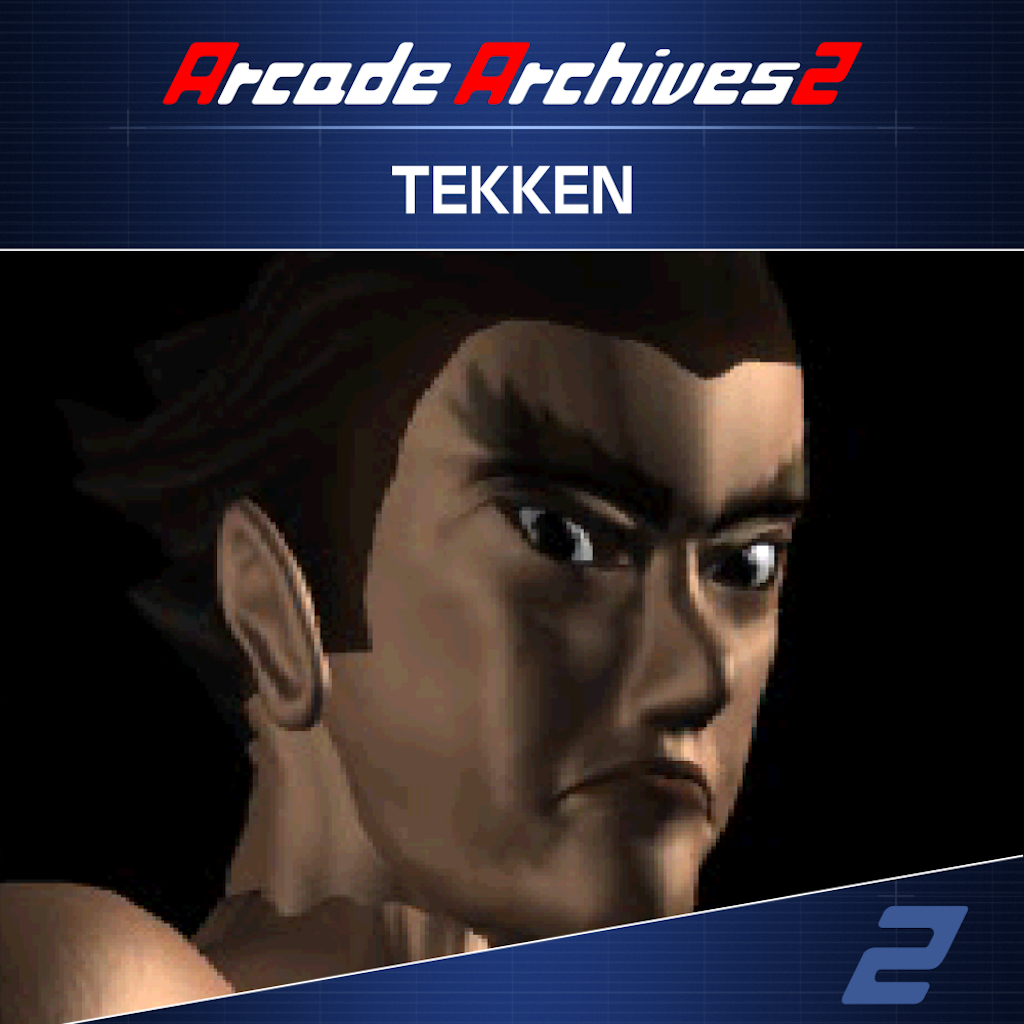
The history of fighting games is filled with titles that changed the industry forever, yet few have left a legacy quite like TEKKEN. Before sprawling story modes, cinematic cutscenes, online tournaments, and massive esports stages, there was a humble arcade cabinet that introduced players to a new vision of 3D combat. Arcade Archives 2 TEKKEN brings the original 1994 release back to modern platforms, offering players the chance to experience the game exactly as it was during its arcade heyday. More importantly, it offers an opportunity to appreciate how revolutionary this title was at the time.
Hamster Corporation has built a reputation for treating gaming history with care, and that philosophy is evident throughout this release. Rather than modernising or reinventing the experience, Arcade Archives 2 TEKKEN focuses on preservation. The result is a package that feels less like a remaster and more like a carefully maintained museum exhibit. That approach has both strengths and limitations, but for anyone interested in fighting game history, this release offers a fascinating look at where one of gaming’s most successful franchises began.
Before the Mishima Saga Became Legendary
Returning to the original TEKKEN is a reminder of how far the series has evolved over the past three decades. The story itself is relatively straightforward compared with the complex family drama the franchise would later become known for. The King of Iron Fist Tournament serves as the backdrop for a roster of fighters seeking glory, revenge, power, or personal redemption. At the centre of it all sits Heihachi Mishima, whose influence over the tournament would shape the series for years to come.
While the narrative remains fairly minimal, the foundations of future storylines are already in place. Kazuya Mishima’s conflict with his father immediately establishes an emotional core that would become central to the franchise’s identity. Characters such as Nina Williams, Paul Phoenix, King, Yoshimitsu, and Marshall Law also make their debuts, each bringing distinct personalities despite the era’s technical limitations.
There is something genuinely enjoyable about seeing these iconic characters in their earliest form. Their designs may lack the visual complexity of modern entries, but their identities are already clearly defined. Even with simple animations and limited storytelling, the roster feels memorable. It is easy to understand why so many of these fighters have remained fan favourites for decades.
A Control System That Changed Everything
The defining feature of TEKKEN has always been its control scheme, and even today it remains one of the most intuitive systems in fighting game history. Rather than assigning attacks to strength levels, the game maps four buttons directly to a fighter’s limbs. Left punch, right punch, left kick, and right kick create a system that feels surprisingly natural even by modern standards.
This approach gives combat a physical quality that many other fighters struggle to replicate. Stringing together attacks feels less like entering commands and more like directing an actual martial artist. Simple combinations flow naturally into more advanced techniques, creating a learning curve that remains approachable while still offering considerable depth.
Of course, this first entry lacks many of the refinements introduced by later games. Movement feels noticeably heavier, defensive options are more limited, and certain character matchups reveal balance issues that would eventually be addressed in sequels. Yet despite these shortcomings, the core combat remains remarkably entertaining. Every strike lands with satisfying impact, and every victory feels earned through careful positioning and timing.
What stands out most is how clearly the foundations of the series are already in place. Even in this early form, TEKKEN possesses an identity that separates it from its competitors. The seeds of what would become one of the greatest fighting franchises ever created are visible in almost every match.
A Time Capsule from the Dawn of 3D Gaming
One of the greatest pleasures of Arcade Archives 2 TEKKEN lies in simply appreciating it as a historical artefact. Modern players accustomed to photorealistic character models and cinematic presentation may initially be surprised by the game’s visual simplicity. Character models are angular, animations occasionally appear stiff, and environments are relatively basic by contemporary standards.
Yet there is a charm to these early polygons that remains difficult to resist. The visuals capture a moment when developers were experimenting with entirely new technology, discovering what 3D gaming could become. Rather than feeling outdated, the presentation feels important. Every rough edge tells part of the story of an industry learning to evolve beyond sprites and flat backgrounds.
The soundtrack also deserves recognition. The energetic electronic music perfectly complements the arcade atmosphere, helping each fight feel larger than life. Combined with the distinctive sound effects and exaggerated impact noises, the audio design contributes significantly to the game’s enduring personality.
While later entries would dramatically expand the visual spectacle, there is something refreshing about the original’s purity. The focus remains firmly on the fighting itself, and that simplicity gives the experience a timeless quality.
A Strong Preservation Package
Hamster Corporation once again proves why it has become one of the industry’s most respected preservation specialists. Arcade Archives 2 TEKKEN includes a range of modern features designed to make the experience more accessible without compromising authenticity.
Players can customise screen settings, adjust controls, create save states, and use rewind. These additions are particularly valuable because arcade games were originally designed around repeated coin insertion. Difficult sections that might have frustrated players in 1994 are far more manageable thanks to these modern conveniences.
The newly introduced Time Attack Mode also offers an enjoyable alternative way to experience the game. Rather than focusing solely on score chasing, players can compete to complete the arcade ladder as quickly as possible. It is a simple addition, but it encourages mastery and experimentation while giving veterans another reason to revisit the game.
Variable Refresh Rate support further enhances the package by helping the game run as smoothly as possible on modern displays. While some players may never consciously notice the improvement, it contributes to an overall presentation that feels polished and carefully considered. The result is an emulation package that respects the original work while making sensible adjustments for modern audiences.
The One Major Disappointment
Despite the strength of the preservation effort, one omission casts a noticeable shadow over the package. Arcade Archives 2 TEKKEN does not include online multiplayer. That absence feels particularly significant given the importance of competition in the fighting game genre. Fighting games thrive when players can challenge one another, learn new strategies, and test their skills against a variety of opponents. Restricting multiplayer to local play considerably limits the game’s long-term appeal.
Local matches remain great fun, especially for players able to gather friends around a single screen. There is still a unique joy in sitting beside an opponent and engaging in classic arcade rivalries. Unfortunately, gaming habits have changed dramatically since the 1990s, and many players simply do not have regular opportunities for local multiplayer sessions.
An online mode would have transformed this release from a historical curiosity into a thriving competitive platform. Its absence does not ruin the package, but it undeniably feels like a missed opportunity.
Final Verdict
Arcade Archives 2 TEKKEN succeeds because it knows exactly what it wants to be. This is not a modern fighting game designed to compete with contemporary releases. It is a celebration of a landmark arcade title that helped lay the blueprint for 3D fighters as we know them today.
The original game certainly shows its age in places. Character balance is inconsistent, movement can feel stiff, and the lack of online multiplayer prevents the package from reaching its full potential. Yet these issues are easier to accept when viewed through the lens of preservation. Hamster Corporation is presenting a piece of gaming history, not attempting to rewrite it.
What remains most impressive is how enjoyable the core experience still feels after all these years. The limb-based combat system remains intuitive, the roster remains memorable, and the sense of impact behind every punch and kick continues to satisfy. More than thirty years later, the original TEKKEN still possesses an undeniable energy that shines through its dated presentation.
For fighting game enthusiasts, retro gaming fans, and anyone curious about the origins of one of gaming’s most influential franchises, Arcade Archives 2 TEKKEN is an essential piece of interactive history. It may not have every feature modern players expect, but it delivers exactly what it promises: a faithful, polished, and highly respectful preservation of a genuine arcade classic.