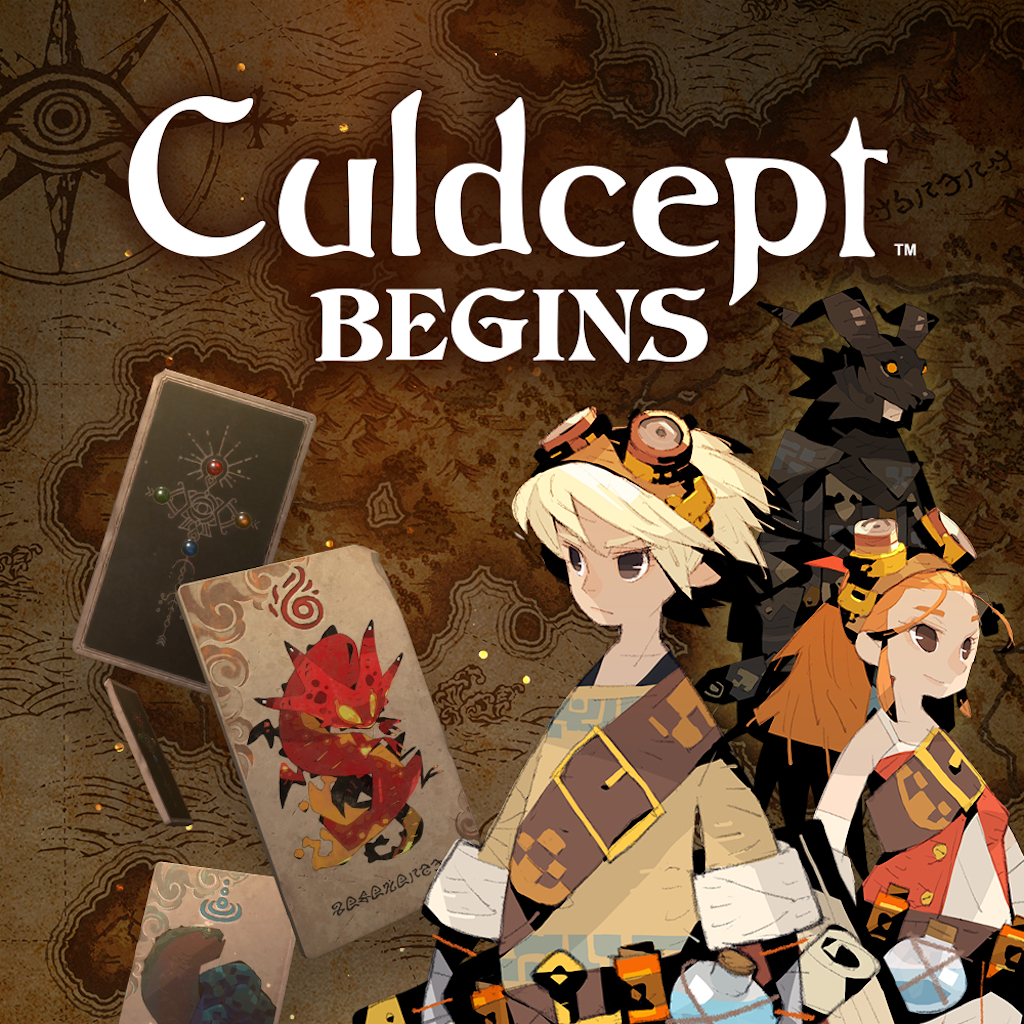
Few games can genuinely claim to occupy a space entirely of their own. Over the years, countless titles have borrowed ideas from trading card games, board games, strategy games, and RPGs, yet very few have blended them as seamlessly as Culdcept. Since its debut in the late 1990s, the series has cultivated a devoted following thanks to its unusual mix of dice rolls, territory control, deck construction, and tactical battles.
Now, after ten years away, Culdcept BEGINS arrives not only as a revival of the franchise but also as an opportunity to introduce a new generation of players to one of gaming’s most fascinating strategic hybrids. Built as a fresh starting point for newcomers while still retaining the complexity that veterans crave, it succeeds in almost every area that matters.
What emerges is a strategy game that consistently surprises, challenges, and rewards creative thinking. It may not be the easiest game to learn, but few modern strategy titles feel this satisfying once everything clicks into place.
A Brilliant Blend of Board Game and Card Battle
Explaining Culdcept to someone who has never played it can be surprisingly difficult. At first glance, it looks like a fantasy version of Monopoly. Players move around a board with dice, claim territories, collect resources, and try to reach a target amount of wealth before their opponents. That comparison only scratches the surface.
Every space on the board can become a battleground. Rather than simply owning properties, players summon creatures to territories by playing cards from custom-built decks called Books. If another player lands on one of your occupied spaces, they must either pay a toll or attempt to seize the territory in combat. This is where the game transforms into something entirely different.
Battles are shaped by creature and item cards, elemental affinities, spell effects, and a seemingly endless array of tactical interactions. A territory that appears vulnerable one turn can suddenly become an impenetrable fortress the next. Likewise, a player who seems comfortably ahead can find their carefully constructed empire collapsing after a perfectly timed spell.
The result is a game in which luck and strategy constantly wrestle for control. Dice rolls matter, but intelligent deck construction and tactical decision-making matter far more. Every match becomes a fascinating contest of adaptation rather than a simple matter of chance.
A Learning Curve Worth Climbing
One of the most impressive achievements of Culdcept BEGINS is how effectively it introduces newcomers to a notoriously complex series. Previous entries could feel overwhelming. Newcomers were often bombarded with terminology, card effects, and systems before fully grasping how everything connected. BEGINS takes a much more measured approach.
The story campaign gradually introduces mechanics in its early chapters, allowing players to build confidence before more advanced concepts appear. Helpful interface improvements clearly explain card interactions, while visual indicators make territory control and strategic advantages easier to grasp at a glance. That does not mean the game becomes simple.
Several hours into the campaign, deck-building becomes a deeply rewarding exercise in experimentation. Every new card unlocks fresh possibilities. Some decks focus on aggressive territorial expansion, while others specialise in disruption, defence, economic growth, or elemental synergy.
The sheer variety within the card pool is remarkable. With more than 400 cards, there is always another strategy to explore or another combination to discover.
A Strong New Beginning
The story follows Kamur, a transfer student at the prestigious Royal Cept Academy on the continent of Bavrashka. As his Cepter abilities begin to manifest, he becomes entangled in wider conflicts that threaten the continent’s stability.
Narratively, Culdcept BEGINS never reaches the emotional heights of the best modern RPGs, but that was never the series’ strength. The story primarily serves as a framework for introducing new maps, opponents, and mechanics. Even so, there is plenty to enjoy.
The academy setting offers a welcoming introduction to the world, while the colourful cast of rivals, mentors, and allies keeps proceedings engaging. The writing has a classic fantasy-adventure charm that feels refreshingly sincere rather than overly dramatic. Most importantly, the campaign gives the strategic battles context and personality, making progression feel meaningful beyond simply unlocking more cards.
The Joy of Strategic Chaos
What makes Culdcept so compelling is the constant unpredictability of its systems. A single turn can completely transform the board. An opponent might draw the perfect card. A risky attack might succeed against the odds. A carefully positioned spell might trigger a devastating chain reaction that alters the entire match. Yet these moments rarely feel unfair.
The game consistently rewards preparation and flexibility. Successful players are not necessarily those with the strongest cards, but those who know how to adapt when plans inevitably fall apart.
Every victory feels earned. Every defeat teaches a lesson. It has the same addictive “one more match” quality as the best strategy games. Even after a loss, you immediately start thinking about how you could improve your deck or approach the next encounter differently.
A Beautiful Modern Presentation
Visually, Culdcept BEGINS marks a significant evolution for the series. The updated art style may initially surprise long-time fans who remember the more traditional fantasy illustrations of earlier entries. However, the new designs quickly win you over with their sheer personality and clarity. Every creature feels distinct. Spell effects are vibrant without being overwhelming. Board layouts remain easy to read, even during chaotic late-game turns.
The Nintendo Switch 2’s enhancements make a noticeable difference. Menus respond instantly, animations flow smoothly, and matches maintain a consistent pace throughout. The improved frame rate may seem like a minor feature on paper, but it makes every interaction feel more polished and responsive. Long strategy sessions benefit greatly from the cleaner presentation.
The addition of mouse controls is another welcome surprise. Navigating menus, inspecting cards, and reviewing board information become intuitive, particularly for players accustomed to PC strategy games.
Multiplayer Remains the Star Attraction
As enjoyable as the campaign is, multiplayer is where Culdcept truly shines. Every match tells its own story. Alliances form and dissolve. Unexpected comebacks spring from seemingly hopeless situations. Entire strategies can unravel on a single card draw or a bold tactical gamble.
The introduction of GameShare support is arguably one of the Nintendo Switch 2 Edition’s strongest features. It allows up to four players to play with a single copy of the game, significantly lowering the barrier to entry for local multiplayer sessions.
Board games have always thrived as social experiences, and Culdcept captures this better than most digital adaptations. Whether playing competitively or simply introducing friends to the series, multiplayer remains endlessly entertaining.
Final Verdict
Culdcept BEGINS is not merely a revival. It is a reminder of how unique and brilliant this series has always been. Its blend of board-game strategy, deck construction, territory management, and tactical combat remains unlike anything else on the market. The updated presentation, improved accessibility, and Nintendo Switch 2 enhancements make this the most welcoming entry the franchise has produced, without sacrificing the depth long-time fans cherish.
It asks for patience during its opening hours and can occasionally overwhelm with its abundance of systems. Yet those willing to invest the time will discover one of the smartest and most rewarding strategy games available today. After ten years away, Culdcept has returned stronger than ever.