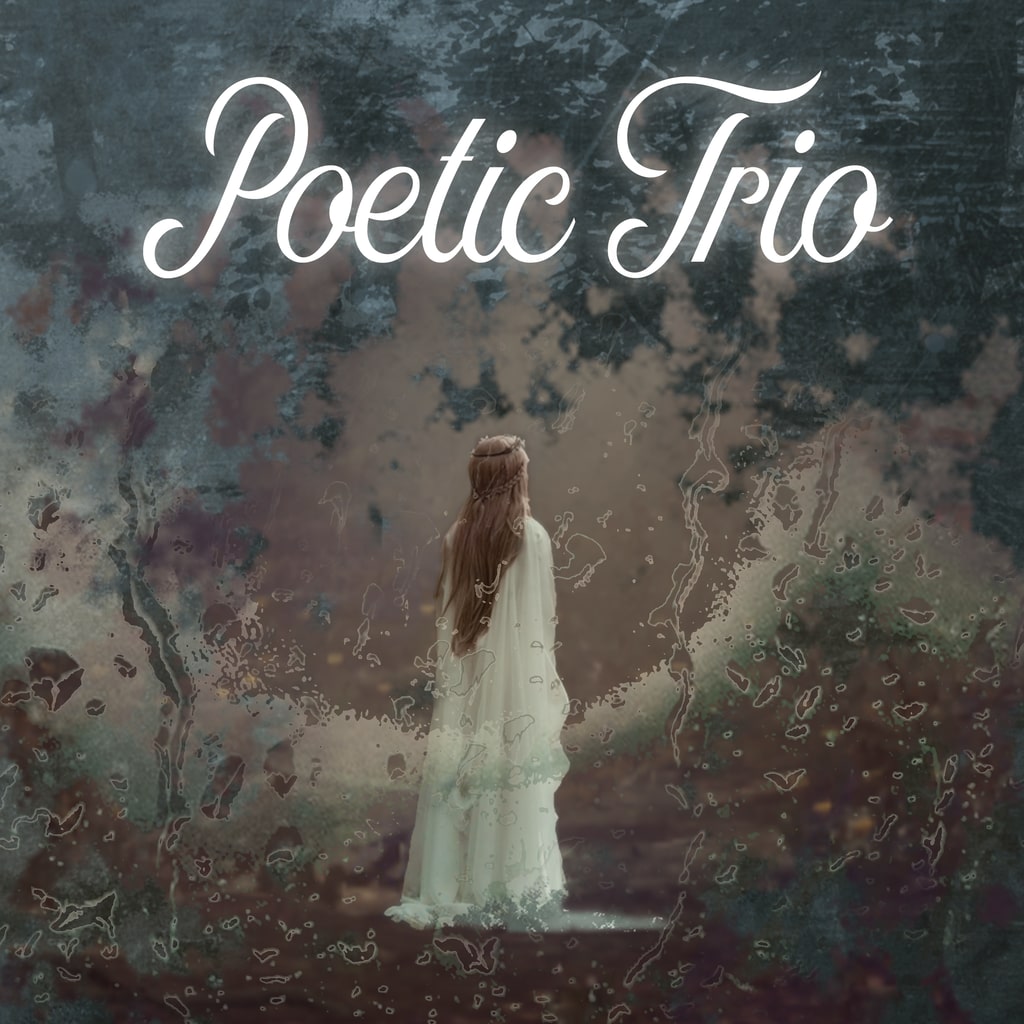
There are games that challenge your reflexes. There are games that test your intellect. Then there are games like Poetic Trio, which ask something entirely different of the player. They ask for patience. They ask for stillness. Most of all, they ask you to slow down and appreciate the small details that often pass unnoticed in everyday life.
Created by Tonguç Bodur and published by Sometimes You, Poetic Trio bundles three short, atmospheric experiences: Pluviophile, Chionophile, and Loverowind. Each focuses on a different element of nature, namely rain, snow, and wind, and each serves as an interactive poem. This is not a collection designed around challenge, progression systems, or elaborate storytelling. Instead, it is a celebration of mood, sound, and solitude.
That approach will not appeal to everyone. Players expecting conventional gameplay will likely bounce off it almost immediately. However, for those willing to embrace its gentle pace, Poetic Trio offers a surprisingly moving journey through beautifully realised natural spaces.
Three Seasons of Solitude
What immediately stands out about Poetic Trio is its confident embrace of simplicity. None of the three experiences lasts long, yet each captures a distinct emotional tone.
Pluviophile is perhaps the purest expression of the collection’s philosophy. You wander slowly through rain-soaked woodland as poetry by Julius Cawein unfolds around you. There are no objectives beyond moving forward and absorbing the atmosphere. The steady rainfall, the distant sounds of nature, and Pınar Karabaş’s delicate musical score combine to create an experience that feels almost therapeutic.
There is something undeniably calming about the way the game presents its world. The forest feels isolated from modern life, untouched by noise or distraction. As the poem gradually reveals itself, the experience becomes less about reaching a destination and more about being in the moment.
Chionophile shifts the focus to winter. While it shares much of the same structure as its predecessor, the snowy setting introduces a different emotional texture. The forests feel quieter, more reflective, and at times almost melancholic. Archibald Lampman’s poetry complements the environment beautifully, creating a sense of peaceful isolation that lingers long after the chapter ends.
Unlike Pluviophile, Chionophile offers a little more freedom. Its second chapter opens into a larger area that encourages exploration rather than simply following a prescribed route. The additional space gives the world room to breathe and allows players to discover hidden corners at their own pace. It remains a straightforward experience, but the expanded design helps prevent repetition from setting in.
Then there is Loverowind, easily the most interactive of the trio. Spring replaces winter’s stillness, bringing brighter colours and a greater sense of movement. Here, players gather flowers and place them on altars to reveal poetry. The addition of simple objectives gives the experience a touch more structure without compromising its contemplative nature.
The roaming circles of light also introduce a small layer of tension. While hardly demanding, they provide just enough interaction to make Loverowind feel distinct from the previous two entries. The result is arguably the strongest chapter in the package, balancing atmosphere and engagement more effectively than its companions.
The Art of Atmosphere
Atmosphere is the heart and soul of Poetic Trio. Everything else exists in its service. Visually, the collection punches well above what its modest scope might suggest. Tonguç Bodur has built a reputation for crafting striking natural environments, and that talent is on full display here. Rain glistens on woodland paths. Snow blankets the landscape with quiet elegance. Spring fields sway gently in the breeze. None of the worlds are especially large, yet each feels lovingly crafted.
The audio design is equally impressive. Rainfall, rustling leaves, distant winds, and subtle environmental sounds create a convincing sense of place. Combined with Pınar Karabaş’s understated musical compositions, the soundscape becomes one of the collection’s greatest strengths.
There were moments during my playthrough when I simply stopped moving and listened. Few games encourage that behaviour. Fewer still reward it. Poetic Trio understands that atmosphere is not merely something you observe. It is something you feel.
The poetry itself deserves recognition as well. Rather than feeling like an awkward addition, the selected works integrate naturally into the experience. They complement the environments without overwhelming them, adding another layer of emotional resonance to already evocative landscapes.
Minimalism for Better and Worse
The biggest strength of Poetic Trio is also its biggest limitation. These experiences are unapologetically minimalist. Beyond walking, observing, and occasionally interacting with simple objects, there is very little to do. For some players, that will be enough. For others, it may feel as if there is hardly a game here at all.
That criticism is understandable. Modern games often condition players to expect constant engagement, frequent rewards, and clearly defined objectives. Poetic Trio rejects those conventions entirely. It prioritises mood over mechanics and reflection over progression.
Whether that works for you will largely depend on what you want from the medium. If you approach the collection expecting puzzles, combat, or meaningful decision-making, disappointment is almost guaranteed. If you view it as a form of interactive art, however, its strengths become far easier to appreciate.
The short runtime may also prove divisive. Each experience can be completed in under an hour, resulting in a total package that lasts only a few hours. While the affordable asking price helps soften that reality, there is little incentive to revisit once the poems have been experienced and the environments explored.
A Quiet Success
What impressed me most about Poetic Trio was its sincerity. In an industry often obsessed with scale, complexity, and spectacle, this collection feels refreshingly honest about what it aims to be. It never tries to mask its simplicity behind artificial systems or unnecessary mechanics.
Instead, it focuses entirely on creating emotional spaces. Spaces where players can wander through rain, snow, and wind while reflecting on poetry and nature. That ambition may seem modest compared with blockbuster adventures, but it is no less valuable.
There is genuine beauty here for those willing to meet the game on its own terms. Not every experience needs to be thrilling. Sometimes it is enough simply to feel present.
Final Verdict
Poetic Trio is a gentle collection of interactive poems presented as walking simulators. Its stunning natural environments, thoughtful use of classical poetry, and exceptional atmosphere create an experience that feels deeply personal despite its simplicity. It will not satisfy players seeking traditional gameplay systems, but that is not its aim.
Instead, it offers a peaceful escape into nature, where rain, snow, and wind become the stars of the show. Brief though it may be, the journey leaves a lasting impression. Like a favourite poem revisited on a quiet evening, its greatest strength lies in the feelings it evokes rather than the actions it demands.