The Second World War remains one of gaming’s most frequently revisited settings, yet few moments carry as much weight as the Normandy landings. D-Day has become synonymous with heroism, sacrifice, and the sheer scale of modern warfare. From films and documentaries to countless video games, the invasion of Normandy has been retold many times. The challenge for any new release is to make familiar events feel meaningful once again.
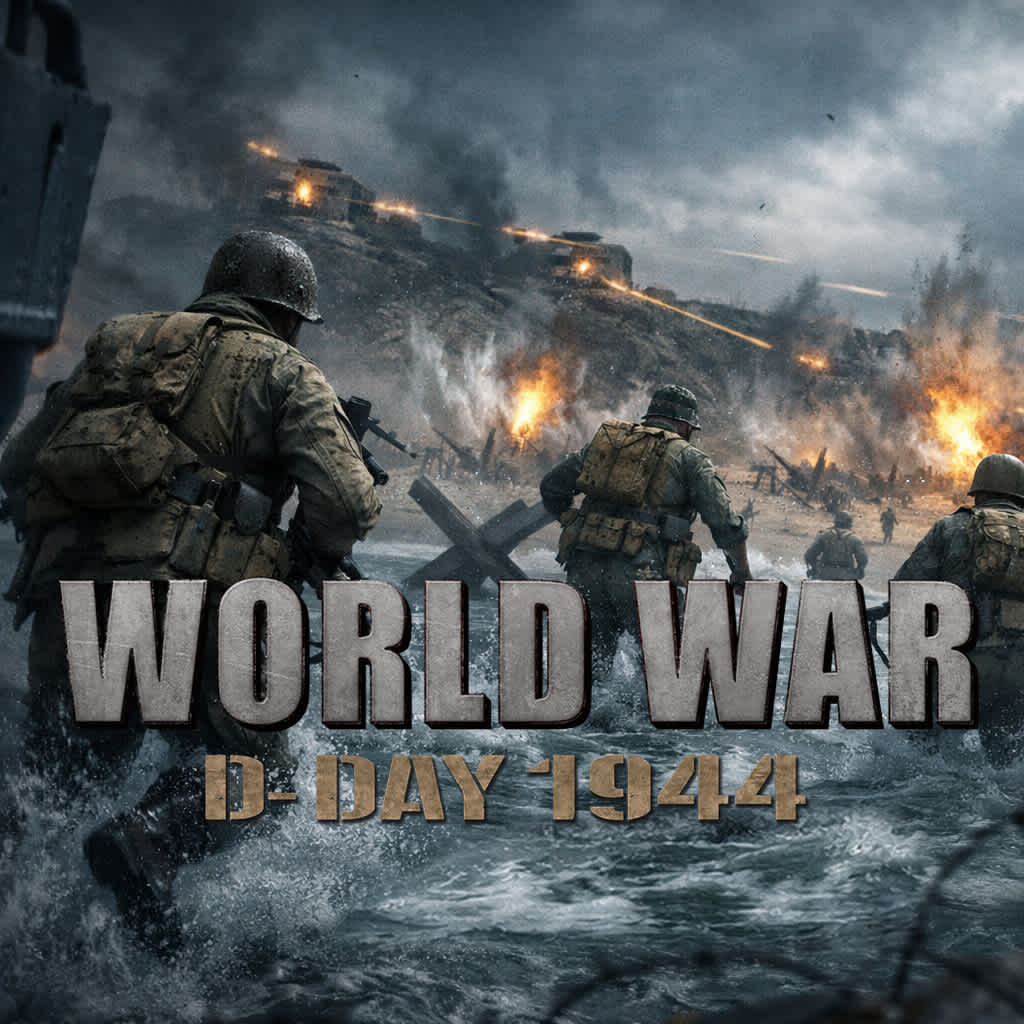
World War: D-Day 1944 attempts exactly that. Developed and published by TROOOZE, this single-player first-person shooter places players directly into Operation Overlord, recreating both the famous beach assaults and the airborne operations that helped pave the way for Allied victory. Built around an upgraded physics engine and modern visual effects, the game aims to blend historical spectacle with accessible action.
The result is a shooter that succeeds most when it focuses on atmosphere and scale. While it struggles to stand alongside the genre’s biggest names in terms of polish and innovation, there is a sincerity to its presentation that helps carry the experience through its weaker moments.
Storming the Beaches
The campaign follows the major beats of the Normandy invasion, beginning with airborne insertions and moving into the brutal fighting that unfolded across the beaches and countryside of France. Military history enthusiasts will immediately recognise many of the locations and scenarios featured throughout the campaign.
The opening airborne missions establish a strong sense of tension. Descending into darkness, with enemy positions still hidden, creates uncertainty that contrasts with the chaos that follows. These sections are among the game’s strongest moments, as the atmosphere builds gradually before the shooting starts in earnest.
Once the beach landings begin, the pace changes dramatically. Bullets cut through the air from fortified bunkers as artillery pounds the shoreline. Allied soldiers rush forward in large numbers, many falling before reaching cover. The game clearly wants players to feel overwhelmed by the scale of the operation, and for the most part it succeeds.
There is an undeniable thrill in advancing through machine-gun fire while explosions erupt around you. These sequences may not reach the cinematic heights of some legendary World War II shooters, but they still deliver several memorable moments that capture the desperation of the invasion.
A Traditional Shooter at Heart
Despite its modern marketing language, World War: D-Day 1944 is fundamentally a straightforward first-person shooter. Movement is familiar, objectives are clearly defined, and combat revolves around pushing through enemy positions while completing mission goals.
The gunplay feels solid without being exceptional. Rifles, submachine guns, and other period-authentic weapons perform as expected. Each firearm carries enough weight to feel satisfying, particularly during longer engagements, when accuracy matters more than simply spraying bullets into enemy formations.
The weapon variety helps maintain interest throughout the campaign. Being able to pick up firearms from both Allied and Axis forces adds welcome variety and encourages experimentation. Players who enjoy historical weaponry will appreciate the effort to include a broad collection of period firearms.
Cover mechanics also play an important role. Running recklessly into open ground is rarely a successful strategy. Instead, firefights often become a careful process of advancing between defensive positions while coordinating with allied soldiers. These moments create a more tactical rhythm than in some arcade-focused military shooters.
The AI companions deserve some credit as well. They are not revolutionary by any means, but they generally contribute to the illusion of participating in a larger military operation. Watching friendly soldiers advance alongside you helps reinforce the scale the game is striving to achieve.
Atmosphere Carries the Experience
What World War: D-Day 1944 does particularly well is create atmosphere. The upgraded audio design plays a major role here. Gunfire echoes convincingly across battlefields, while artillery strikes carry enough force to feel genuinely threatening. The soundscape constantly reminds you that you are part of a much larger conflict rather than a lone action hero charging through enemy territory.
Visually, the game presents an impressive battlefield spectacle for its budget. Smoke drifts across combat zones, debris scatters during explosions, and weather effects help create a sense of immersion. The new shader technology adds welcome depth to environments that might otherwise feel too sterile.
Some of the campaign’s strongest moments occur when gameplay briefly slows. Looking across a battlefield littered with wreckage or watching paratroopers descend through the night sky can be surprisingly effective. These quieter scenes provide breathing room between firefights and help establish a stronger emotional connection to the historical setting.
The cinematic cutscenes unlocked throughout the campaign also contribute to the presentation. While they are not blockbuster-quality productions, they help give structure to the narrative and provide context for the battles being fought.
Where the Cracks Begin to Show
For all its strengths, World War: D-Day 1944 struggles to overcome the constraints of its budget. Enemy AI can be inconsistent. At times, opponents use cover effectively, forcing players into tense firefights. At other times, they behave predictably, exposing themselves unnecessarily or failing to react convincingly to changing battlefield conditions. These inconsistencies occasionally undermine the realism the game works so hard to establish.
Mission design can also become repetitive over longer sessions. While the campaign covers a variety of locations, many objectives eventually boil down to clearing enemies, advancing, and repeating the process. The historical backdrop remains compelling, but the gameplay itself does not always evolve enough to sustain excitement across every chapter.
The visual presentation, while impressive in moments, also reveals some rough edges. Character animations can appear stiff, facial models lack detail, and environmental assets occasionally repeat more often than they should. None of these issues are deal-breakers, but they do remind you that this is not a blockbuster production.
Players expecting the production values of major military franchises may find themselves disappointed. World War: D-Day 1944 operates in a smaller space and feels most comfortable when judged on those terms.
A Respectful Tribute
What ultimately separates World War: D-Day 1944 from countless generic military shooters is the respect it shows for its subject matter. The game clearly admires the history it depicts. Rather than turning every moment into an over-the-top action sequence, it often seeks to highlight the scale, danger, and significance of Operation Overlord. There is a sense that the developers wanted players to appreciate the historical event as much as they wanted them to enjoy the shooting mechanics.
That approach gives the experience a surprising amount of heart. Even when the gameplay occasionally stumbles, the campaign’s commitment to portraying one of history’s defining military operations helps keep players invested.
Military history fans will likely find more to appreciate here than players simply looking for the next great shooter. The historical framing adds context and weight, elevating many of the game’s best moments.
Final Verdict
World War: D-Day 1944 is not the definitive D-Day video game, nor is it likely to dethrone the giants of the World War II shooter genre. What it offers is a sincere, enjoyable campaign that captures many of the sights, sounds, and emotions associated with one of the most important military operations in modern history.
The gunplay is competent, the atmosphere is strong, and the historical setting remains compelling throughout. Technical shortcomings, repetitive mission structures, and uneven AI prevent it from reaching greater heights, but there is enough here to satisfy players seeking a straightforward military adventure.
In a genre often obsessed with spectacle above all else, World War: D-Day 1944 succeeds by remembering the significance of the events it recreates. Sometimes that respect for history is enough to make a familiar battlefield feel worth revisiting.