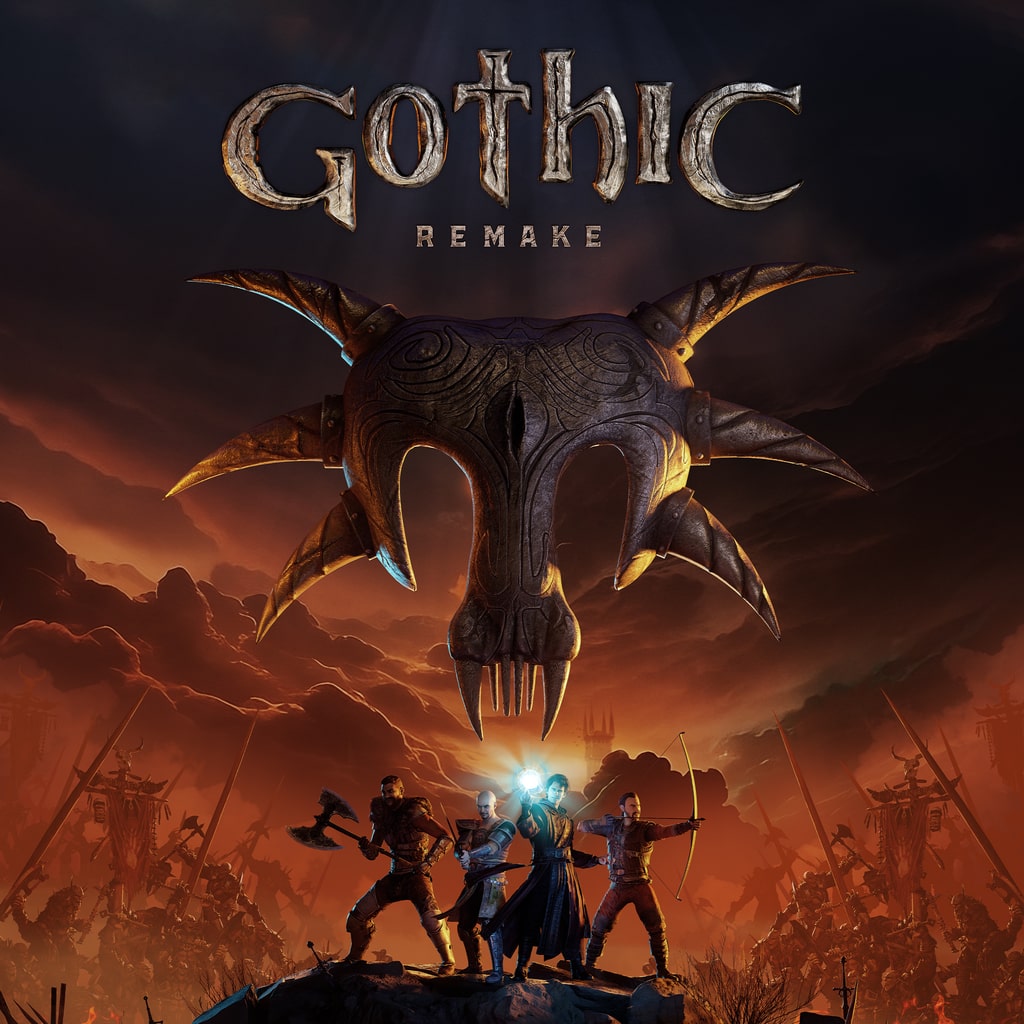
Gothic 1 Remake returns to one of PC gaming’s most uncompromising fantasy worlds, rebuilt from the ground up by Alkimia Interactive using Unreal Engine 5. Scheduled for release on June 5, 2026, this is not a reimagining that tries to soften its edges for a modern audience. If anything, everything shown so far suggests a conscious effort to preserve the original’s roughness, its hostility, and its complete disinterest in holding the player’s hand.
The setting remains the infamous Valley of Mines, a prison colony sealed off from the outside world by a magical barrier that collapsed into something far worse than intended. Inside, society did not evolve so much as fracture into competing survival philosophies. The Old Camp enforces order through trade and hierarchy, the New Camp survives through independence and opportunism, and the Swamp Camp drifts into ritual, belief, and something close to organised delusion.
What makes Gothic’s world endure even decades later is not its scale, but its attitude. This is a place where you are not important. You are simply another body trying not to become dead weight. The remake appears fully committed to preserving that tone, ensuring that your arrival into the Valley feels less like the beginning of a heroic journey and more like being dropped into someone else’s long running crisis.
Gameplay and Progression
From the earliest previews, it is clear that Gothic 1 Remake refuses to dilute the defining philosophy of the original game. You are not powerful at the start. You are not even competent. You are vulnerable in a way that modern RPGs often avoid, and that vulnerability shapes every encounter.
Combat has been completely rebuilt, replacing the original’s infamous stiffness with a modern control system, but the intent behind it has not changed. Every fight is still dangerous. Timing matters, stamina matters, positioning matters. Even basic enemies demand attention, and taking on multiple opponents early on remains a quick way to end your journey.
What stands out most is how deliberately the remake avoids turning combat into spectacle. There is no sense of effortless dominance here. Instead, encounters appear grounded in survival logic. You fight because you have to, not because you are meant to feel unstoppable.
Progression follows the same philosophy. Growth is slow, earned, and closely tied to how you navigate the world rather than how quickly you collect equipment. Becoming stronger feels less like levelling up and more like learning how not to die quite so easily.
World Design and Systems
The Valley of Mines is not just a backdrop for quests. It is a functioning ecosystem that continues whether you are paying attention or not. Unreal Engine 5 brings a significant visual upgrade, but the more important improvement lies in simulation.
NPCs follow structured daily routines. Camps operate like living societies rather than quest hubs. Creatures roam, hunt, and react to environmental conditions. The world does not wait for the player to engage with it, and that alone changes the tone of exploration.
There is also a strong emphasis on memory and consequence. NPCs remember your actions. Stealing, violence, or disrespect does not reset after a loading screen or a completed quest. It becomes part of how the world treats you going forward. That creates a persistent sense that your behaviour carries weight beyond immediate rewards or penalties.
Exploration reflects that same philosophy. There are no obvious markers guiding your path. Instead, you rely on dialogue, environmental clues, and observation. Landmarks matter. Directions matter. Paying attention matters. It is a design approach that feels increasingly rare, and potentially divisive, but also deeply aligned with Gothic’s identity.
Factions and Player Identity
Faction choice remains one of the most important structural elements in Gothic, and the remake appears to expand this system significantly. The Old Camp, New Camp, and Swamp Camp are not simply different quest lines. They represent entirely different ways of surviving within the same hostile world.
The Old Camp offers structure and control, but demands compliance. The New Camp values freedom, but that freedom comes with instability and constant negotiation. The Swamp Camp exists almost outside the rest of the world’s logic, shaped by belief systems that blur the line between faith and survival strategy.
What matters most is that these factions do not feel interchangeable. Choosing one is not just selecting a narrative branch, but committing to a worldview that shapes how the Valley responds to you.
Audio and Atmosphere
One of the most quietly significant elements of the remake is the return of composer Kai Rosenkranz, whose original soundtrack helped define Gothic’s identity. His involvement in expanding and reworking the score suggests a strong focus on atmosphere rather than constant musical presence.
Sound design plays a major role in establishing mood. Wind moves through the Valley with weight. Camps feel alive with distant conversation and activity. Forests are never silent, even when nothing visible is happening. The result is a world that feels constantly present, even in moments of stillness.
Rather than overwhelming the player, the audio appears designed to reinforce the sense that the Valley exists independently of your actions.
A World That Refuses to Change Its Mind
Perhaps the most striking thing about Gothic 1 Remake is its refusal to modernise in the ways many players might expect. There is no heavy quest guidance. No constant UI direction. No attempt to smooth over friction for convenience’s sake.
Instead, it asks players to engage with the world on its own terms. To observe. To listen. To learn through failure as much as success.
That approach will not appeal to everyone. It is demanding, sometimes deliberately so. But it is also what made Gothic memorable in the first place, and the remake seems fully aware that losing that identity would defeat its purpose entirely.
Graphics
Unreal Engine 5 significantly enhances the Valley of Mines with dense environments, dynamic weather, and grounded visual detail while preserving the grim, oppressive tone of the original world.
Gameplay
Combat is modernised but remains deliberately punishing, with a strong focus on stamina, positioning, and timing. Progression is slow and meaningful, reinforcing survival over power fantasy.
World Design
A reactive ecosystem with persistent NPC memory and faction-driven consequences creates a world that feels alive, unpredictable, and indifferent to the player’s presence.
Preview Verdict
Gothic 1 Remake looks like a rare kind of modern RPG, one that is not trying to become more accessible at the expense of its identity. Instead, it is attempting to preserve what made the original so distinctive, even when that means asking more of the player than most contemporary games would dare.
If that vision holds, this could end up being one of the most uncompromising and memorable RPGs of 2026.