There is a certain childhood logic many of us never fully outgrow. The idea that if you collect enough pieces, enough traits, enough “perfect” fragments, you can assemble something ideal. A hero. A companion. A story that finally behaves exactly as you want it to.
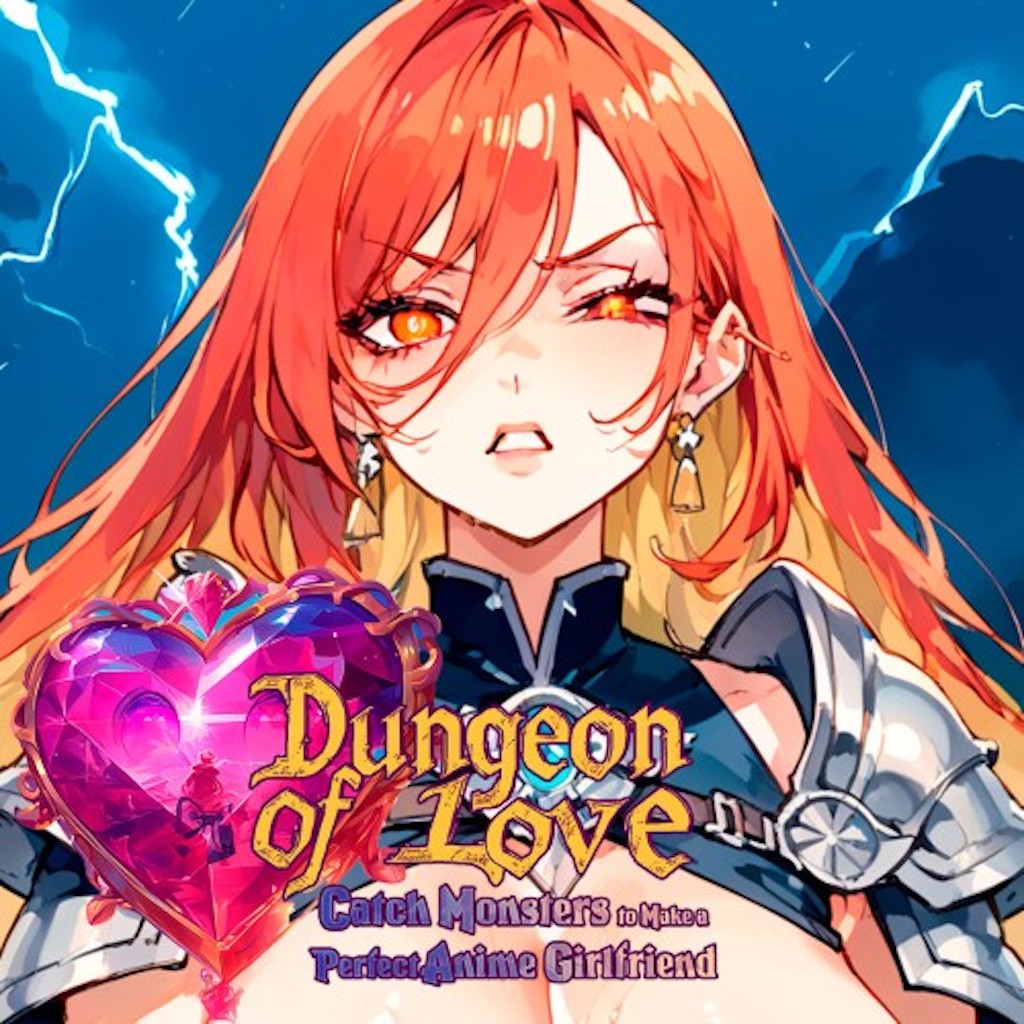
Dungeon of Love: Catch Monsters to Make a Perfect Anime Girlfriend takes that impulse and runs with it, plunging directly into a dungeon full of monsters, flirtation, and questionable emotional decisions.
Developed and published by EpiXR Games, this hybrid dungeon crawler and dating sim is not subtle about its intentions. It is loud, colourful, and intentionally ridiculous. But the further you go, the more it reveals a surprising amount of mechanical depth beneath its parody exterior.
What begins as a joke about romance systems slowly turns into something more curious. A game about construction. About choice. And about how even affection can be systematised if you are given enough menus.
A Dungeon Built on Expectations
The structure of Dungeon of Love is deceptively simple. You descend into a multi-layered dungeon, capture monsters, and bring their essence back to your base. There, those collected traits can be used in a system the game calls Love Alchemy, where you effectively build and customise your ideal companion. It sounds absurd because it is. But it is also the core loop that holds everything together.
The dungeon itself is presented in a simplified, grid-based format. Movement is deliberate and methodical, with encounters triggered at regular intervals rather than through unpredictable exploration. This keeps the focus on resource gathering and decision-making rather than reflex-based combat.
Combat is turn-based and intentionally lightweight. You are not meant to struggle mechanically so much as to observe patterns and collect outcomes. Monsters are less threats and more ingredients, a design choice that says a lot about the game’s tone before any dialogue even begins. Everything feeds into the central idea that what you are really doing is assembling something rather than surviving something.
Love as a System, Not a Feeling
Once you return to your hideout, the tone shifts towards something closer to a visual novel. Here, your crafted companion begins to take shape, both visually and emotionally.
Through dialogue choices, gifts, and repeated interactions, you build an affinity system that determines not only how your companion reacts to you but also how they evolve over time. Personality traits inherited from dungeon monsters subtly but noticeably influence their behaviour.
A more aggressive build might yield sharper dialogue and combat-focused buffs. A gentler composition may unlock supportive abilities and calmer interactions. The game constantly reinforces the idea that your choices are not just cosmetic. They carry mechanical consequences that feed back into the dungeon itself.
This creates a loop in which exploration and relationship-building are tightly connected. What you gather affects who you create. Who you create affects how you survive. There is a strange honesty to how transactional everything feels, even when the game is clearly playing it for humour.
Between Parody and Purpose
At first glance, Dungeon of Love looks like pure satire. It clearly pokes fun at monster-collecting games, dating sims, and the idea of “perfect” virtual companions. The title alone makes that intention obvious. But the longer you play, the more complicated that joke becomes.
The game acknowledges its own absurdity, yet it commits to its systems with surprising sincerity. The crafting mechanics are extensive. The combination system allows for hundreds of variations, and while not all of them feel meaningfully distinct, enough do to make experimentation worthwhile.
There is genuine curiosity in seeing how different traits influence behaviour, not just in combat but in conversation. Some companions become more distant. Others more attached. Some become unpredictable in ways that feel emergent rather than scripted.
It is not emotional depth in a traditional narrative sense. It is systems producing personality through repetition and variation. That alone is more interesting than it has any right to be.
The Limits of Affection
Of course, not everything lands cleanly. The dialogue system is where Dungeon of Love shows its most noticeable cracks. After several hours, conversations start to repeat more often than they should, and some character arcs plateau earlier than expected.
There is also a tonal inconsistency that occasionally surfaces. The game wants to be both a parody and a genuine relationship simulator, and while it mostly balances those identities, there are moments when it feels uncertain about which voice to prioritise.
Yet even these flaws do not fully undermine the experience. If anything, they reinforce the slightly chaotic nature of the game’s premise. Nothing here is meant to feel perfectly stable or fully polished in a traditional sense. It is meant to feel assembled. Built. Revised. Rebuilt again.
A Hideout Worth Returning To
Outside dungeon runs and dialogue sequences, your base becomes a quiet focal point for progression. You can upgrade facilities, decorate spaces, and organise resources gathered during exploration.
It is a simple system, but it gives the player a sense of ownership of the space. More importantly, it serves as a visual representation of your progress. The more you invest in the dungeon, the more your home reflects that investment.
There is a comforting rhythm to returning here after each run, a pause before deciding what kind of relationship you want to continue building next.
When Absurdity Becomes Structure
What makes Dungeon of Love memorable is not its humour, although that certainly helps. It is the way it uses absurdity as a framework for surprisingly coherent systems.
At its core, this is a game about transformation. Monsters become traits. Traits become personalities. Personalities become relationships that feed back into gameplay.
It does not try to simulate love in any realistic sense. Instead, it explores how systems can mimic the structure of affection without ever truly capturing its unpredictability.
That tension lies at the heart of the experience. You are always aware that you are building something artificial. Yet you still find yourself invested in the outcome.
Final Verdict
Dungeon of Love: Catch Monsters to Make a Perfect Anime Girlfriend is messy, self-aware, and more mechanically ambitious than its premise suggests. It does not always maintain tonal consistency, and its dialogue systems can wear thin over time, yet its core loop remains compelling throughout.
It succeeds not because it takes its concept seriously, but because it fully commits to exploring what happens when affection becomes a system you can optimise, remix, and rebuild. It is strange. It is uneven. And yet it is hard to look away from. Sometimes the most interesting games are the ones that ask a simple question and then refuse to give a simple answer.