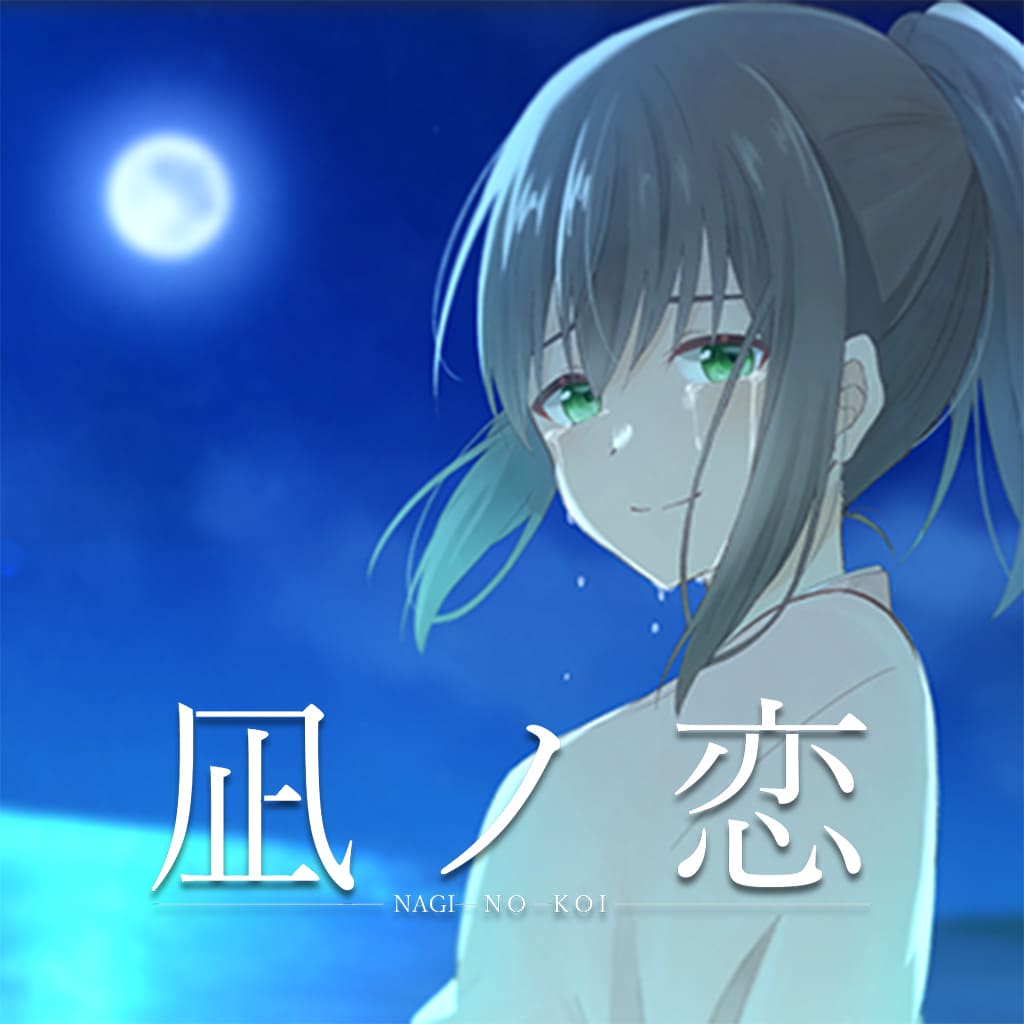
Nagi no Koi is a fully voiced Japanese-style visual novel published by Entergram, featuring an emotionally intense, “pure love” story split into two parts. Released in April 2026 for consoles, with a version that finally feels complete. It follows a man without memories saved by a girl named Suirin, blending romantic drama with personal rediscovery.
The PlayStation and Switch release doesn’t just tidy things up technically. It elevates the experience with full voice acting across the entire cast, including male and supporting characters, something that earlier PC versions only partially delivered. It may sound like a small change, but for a story this intimate, it makes a difference. Conversations feel more grounded. It becomes easier to believe in these people.
Two Stories, One Emotional Thread
Nagi no Koi is divided into two chapters, each telling its own story, yet bound by a shared tone and thematic weight. The first, The Chapter of the Red Spider Lily, follows Masahide, a man whose ambitions have quietly collapsed. Once driven by the desire to rule, he now exists in a state of resignation, moving through life without purpose. It’s a familiar kind of emptiness, one that feels uncomfortably human.
Enter Sahana. What begins as a political arrangement, a loveless marriage built on obligation rather than affection, slowly shifts into something more complicated. Their relationship doesn’t change overnight. It evolves through friction, through confrontation, through moments that feel small but meaningful.
There’s something striking about how the game handles this progression. It doesn’t romanticise the situation. It allows the discomfort to exist. It acknowledges the imbalance, the hesitation, the uncertainty. And then, gradually, it lets something genuine grow.
The Quiet Weight of Change
Masahide’s story is not one of sudden transformation. It’s about rediscovery. About finding a reason to care again after losing sight of who you were. Sahana, in many ways, acts as both catalyst and mirror, challenging him while also revealing parts of herself in the process.
Their dynamic is the heart of this chapter. It’s not always easy to watch. There are moments where the tension feels unresolved, where the characters seem to talk past each other rather than to each other. But that’s part of what makes it feel real. Love, in Nagi no Koi, is not immediate or uncomplicated. It’s something that forms slowly, shaped by circumstance and choice.
A Second Beginning
The second chapter, The Chapter of the Water Lily, shifts perspective entirely. Here, you follow a man without memories. He doesn’t know his name, his past, or even his place in the world. It’s a clean slate, but not in a hopeful way. There’s a quiet sense of loss that hangs over everything. Suirin, the girl who saves him, becomes his anchor.
Where the first chapter is about rebuilding purpose, this one is about constructing identity from nothing. The relationship between the two feels softer at first, more immediate, but it carries its own emotional weight. There’s an underlying question that never quite leaves. Who are you, if you can’t remember who you were?
As the story unfolds, fragments of the past begin to surface. Not all at once, and not always clearly. The game trusts you to piece things together, to sit with uncertainty, to let the story reveal itself in its own time.
Beauty and Brutality
It’s important to understand that Nagi no Koi is not a gentle experience, despite its focus on love. The game deals with mature themes throughout. Violence, loss, and moments of unsettling imagery appear without warning. There are references that push into darker territory, and while they are not constant, they are impactful.
This contrast is deliberate. The tenderness of the relationships stands in sharp relief against the harsher elements of the world. It creates a tension that runs beneath both chapters, a reminder that even the most intimate connections exist within a broader, often unforgiving context. It won’t be for everyone. But for those willing to engage with it, it adds depth rather than distraction.
The Power of Performance
The full voice acting in this console version deserves recognition. Hearing every character brought to life, not just the central figures, changes how scenes play out. Conversations feel more natural. Emotional shifts are easier to follow. Even minor interactions gain a sense of presence that was previously missing. It also helps bridge the gap between the two chapters.
Despite their differences in tone and structure, the consistent quality of performance keeps the experience cohesive. It feels like one story told from two perspectives, rather than two separate works placed side by side.
Where It Holds Back
For all its strengths, Nagi no Koi is not without its limitations. Pacing can be uneven, particularly in the early sections of each chapter. The game takes its time establishing characters and setting, which can feel slow for players expecting immediate engagement.
There’s also a reliance on familiar visual novel structures. Static backgrounds, character sprites, and limited animation are part of the package. While the art is strong and expressive, the presentation doesn’t push beyond genre expectations. For some, that will feel comfortable. For others, it may feel restrictive.
A Story That Stays With You
What lingers after finishing Nagi no Koi is not a single moment, but a collection of them. A conversation that didn’t resolve cleanly. A line that carried more meaning than it seemed at first. A character decision that felt frustrating, but understandable.
It’s not a story that tries to be universally appealing. It’s a story that asks you to sit with it. To accept its pace, its tone, its willingness to explore uncomfortable territory alongside its more tender moments. And if you do, it rewards you with something that feels genuine.
Verdict
Nagi no Koi is a thoughtful, emotionally heavy visual novel that excels at character-driven storytelling and deliberate pacing. Its two-chapter structure presents distinct perspectives on love, identity, and personal growth, held together by strong writing and, in this console version, excellent voice acting.
It can be slow, and its mature themes may not appeal to everyone. But for those willing to engage with its tone and rhythm, it offers a story that feels honest, sometimes painful, and ultimately memorable.