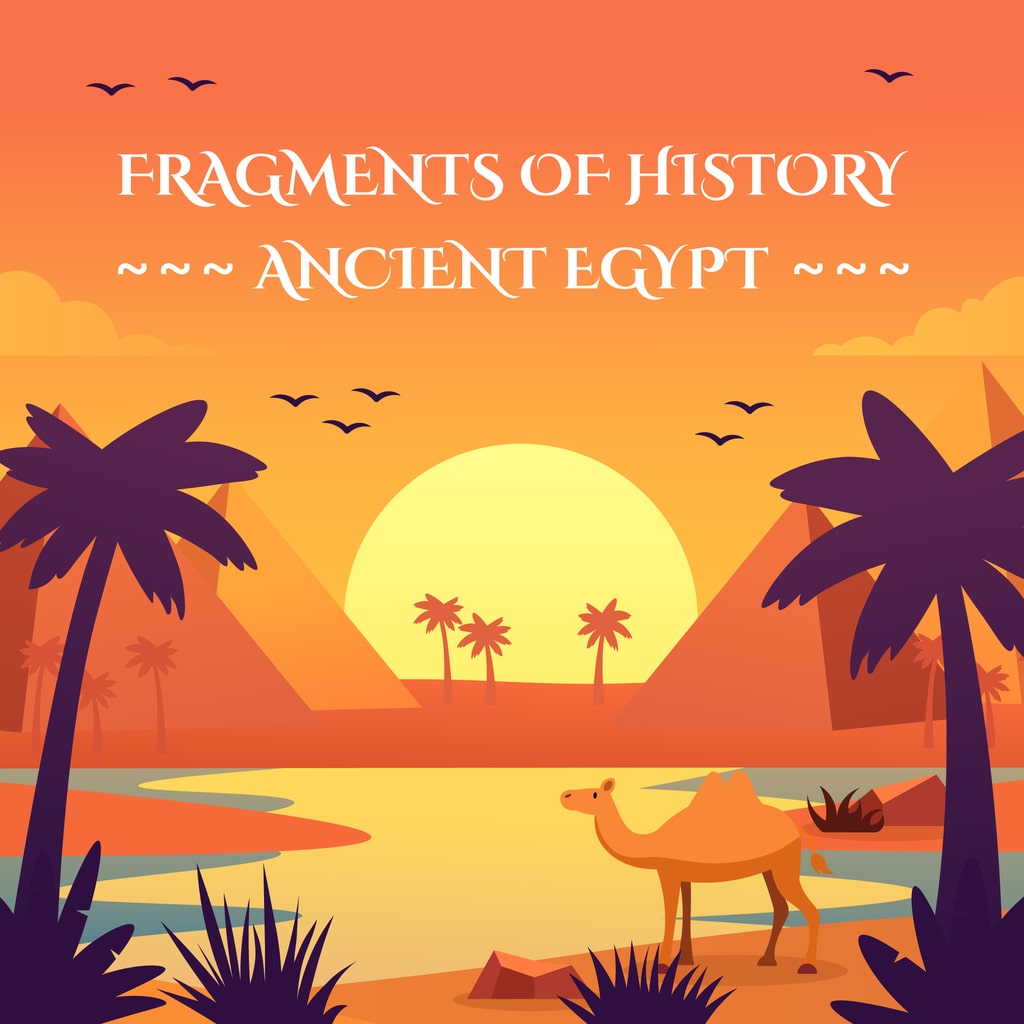
Not every game aims to challenge your reflexes, overwhelm you with systems, or push graphical spectacle to its limits. Some simply want you to slow down, observe, and appreciate history at your own pace. Fragments of History: Ancient Egypt, released February 25, 2026 for PlayStation 5 and PlayStation 4, belongs firmly in that latter category — a calm, contemplative puzzle experience that blends archaeology, education, and relaxation into a surprisingly soothing digital space.
Developed and published by AUTO SLAVIC d.o.o., this entry follows the studio’s growing Fragments of History series, which focuses on reconstructing humanity’s past through interactive artifacts. Rather than presenting history as lectures or encyclopedic text dumps, the game invites players to literally piece together the remnants of Ancient Egypt — one fragment at a time.
It’s not ambitious in scale, but it is sincere in purpose.
Rebuilding the Past, Piece by Piece
The central concept behind Fragments of History: Ancient Egypt revolves around what the developers call “Altered Moments.” The idea is simple yet poetic: objects from history carry stories, and by restoring them, we momentarily reconnect with the people who once used them.
Gameplay unfolds through a series of 3D artifact restoration puzzles. You’re presented with broken historical items — fragments of pottery, pieces of sarcophagi, jewelry components, carved stone relics — and tasked with reconstructing them in virtual space.
This isn’t a traditional jigsaw puzzle. Instead, you rotate, align, and attach fragments using spatial awareness and careful observation. Pieces snap into place when correctly aligned, rewarding patience rather than speed.
There are no timers, no penalties, and no fail states.
The focus is entirely on process over performance.
A Puzzle Game Designed for Calm
From the moment you begin, it’s clear that relaxation is the core design philosophy.
Soft ambient music plays gently in the background, often accompanied by environmental sounds like desert winds or flowing water from the Nile. Menus are minimal, transitions are smooth, and the interface avoids clutter.
This creates an almost meditative rhythm:
- Examine fragments carefully.
- Rotate objects slowly.
- Discover how pieces connect.
- Watch history reassemble itself.
The lack of pressure transforms puzzles into quiet moments of focus rather than mental strain. Even more complex objects never feel overwhelming because the game encourages experimentation without consequence.
In an industry often obsessed with urgency, Fragments of History feels refreshingly patient.
Learning Without Feeling Taught
One of the game’s strongest elements is how it integrates educational content organically.
Completing a restoration unlocks historical insights about each artifact, including:
- cultural significance
- estimated historical era
- materials used in construction
- archaeological discovery context
Importantly, these snippets are concise and readable. They never interrupt gameplay or feel like mandatory lessons.
Instead, curiosity drives engagement. You restore an object first — then naturally want to learn about it afterward.
This approach works exceptionally well, especially for younger players or anyone interested in history but intimidated by dense academic presentations.
It’s educational design rooted in discovery rather than instruction.
Visual Detail and Artifact Presentation
On PlayStation 5, the game benefits from enhanced resolution and texture clarity. While not technically demanding, the visual presentation emphasizes realism where it matters most: the artifacts themselves.
Close inspection reveals:
- worn limestone textures
- chipped paint layers
- subtle engravings
- weathered gold surfaces
Lighting is soft and museum-like, ensuring objects remain easy to study without dramatic shadows obscuring details.
The environments remain intentionally minimal — neutral spaces designed to keep your attention focused on the relics. Some players may wish for more dynamic backdrops, but the restrained presentation reinforces the museum exhibit atmosphere the developers clearly intended.
Accessibility Done Right
A major highlight of Fragments of History: Ancient Egypt is its extensive accessibility design.
The game includes a 10-point accessibility suite, allowing players to enjoy the experience without:
- rapid button presses
- simultaneous inputs
- sustained button holds
Controls are simple, forgiving, and adaptable, making the game approachable for players with motor impairments, younger audiences, or anyone seeking low-stress interaction.
Additionally, puzzles can be skipped entirely through a menu option — a thoughtful inclusion that ensures players interested primarily in the educational or atmospheric aspects never become stuck.
This philosophy feels aligned with the game’s core identity: inclusion over challenge.
Structure and Progression
The game unfolds as a linear sequence of restoration projects, each introducing new artifact shapes and complexity levels.
Early puzzles serve as gentle tutorials, teaching rotation mechanics and alignment logic. Later stages introduce more fragmented objects requiring careful visual reasoning and spatial planning.
Progression is steady rather than dramatic. There are no sudden difficulty spikes, boss puzzles, or mechanical twists — which may disappoint players expecting escalating complexity.
Instead, the game maintains a consistent tone throughout, prioritizing comfort and continuity over surprise.
Trophy hunters will find additional motivation through ranking systems encouraging full exploration and accurate puzzle completion, though even these remain relaxed compared to traditional scoring mechanics.
Where It Falls Short
While the game succeeds at delivering calm, its simplicity also creates its biggest limitations.
Puzzle variety, though pleasant, becomes somewhat repetitive over extended sessions. Mechanics rarely evolve beyond rotating and placing fragments, meaning experienced puzzle fans may crave deeper systems or additional layers of interaction.
Narrative presence is also minimal. While the thematic framing is poetic, players looking for story-driven progression may find the experience emotionally distant.
Additionally, environmental presentation outside the artifacts themselves feels sparse. A few contextual museum settings or excavation scenes could have enhanced immersion without sacrificing the minimalist design.
Still, considering the extremely low price point, expectations should remain grounded in scope.
A Different Kind of Gaming Experience
What makes Fragments of History: Ancient Egypt noteworthy is how deliberately it rejects modern gaming trends.
There are no skill trees.
No progression grinds.
No competitive hooks.
Instead, it offers something increasingly rare: quiet engagement.
It’s the kind of game you play with a cup of tea after a long day, not to win, but to unwind. The experience sits somewhere between an interactive museum exhibit and a mindfulness exercise — educational without being academic, relaxing without becoming dull.
In many ways, its success depends entirely on player expectations. Those seeking challenge may find it too gentle. Those seeking calm will likely find exactly what they need.
Final Verdict
Fragments of History: Ancient Egypt is a small but thoughtfully crafted puzzle experience that understands exactly what it wants to be. By combining artifact restoration with educational storytelling and accessibility-first design, it creates a welcoming and meditative journey through one of history’s most fascinating civilizations.
It doesn’t reinvent puzzle mechanics, nor does it attempt grand ambition — but its sincerity, relaxing pace, and educational charm make it an easy recommendation for players looking to slow down and engage with games differently.
Sometimes rebuilding the past is enough.