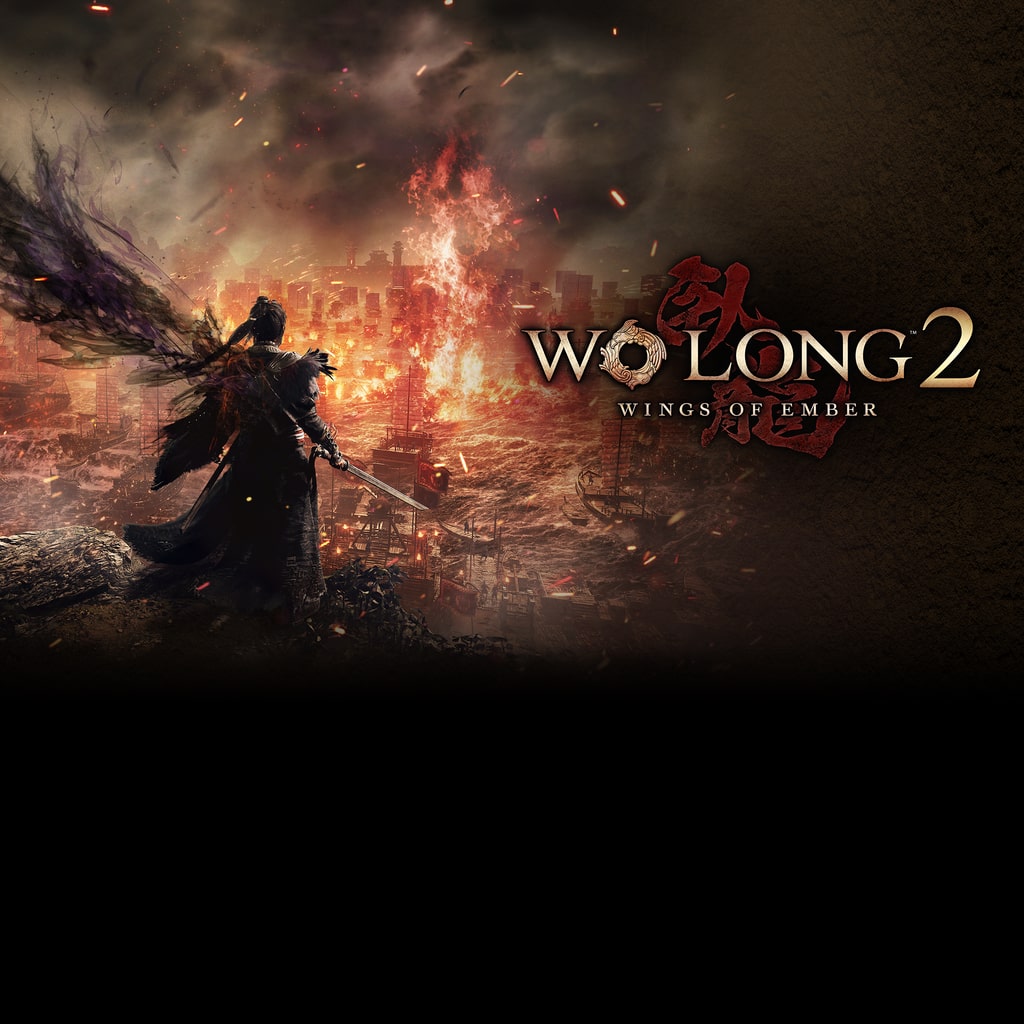
There are few settings as well suited to dark fantasy as the Three Kingdoms period. A land torn apart by war, where legendary warriors fight for power and survival, already provides the foundations for an epic adventure. Add grotesque demons, ancient magic and a mysterious force capable of bringing the deadliest warriors to their knees, and you have the makings of something special. With Wo Long 2: Wings of Ember, Team Ninja appears ready to return to this brutal world, bringing a faster, more expansive and potentially more ambitious experience to a series that has already earned a devoted following.
Developed by Team Ninja and published by Koei Tecmo, Wo Long 2: Wings of Ember is the sequel to Wo Long: Fallen Dynasty, an action RPG that attracted more than five million players worldwide. The original made its mark with aggressive martial arts combat, demanding deflection mechanics and a dark fantasy interpretation of one of China’s most turbulent historical periods. Its successor looks set to build on that foundation, retaining the punishing combat fans have come to expect while introducing greater verticality, more open environments and new ways to take the fight to truly formidable opponents.
This time around, players take control of a customisable warrior empowered by the divine spirit of the phoenix. As the Three Kingdoms descend further into chaos, the conflict over the elixir of immortality brings together legendary historical figures and monstrous supernatural enemies. It is a suitably dramatic premise, and one that gives Team Ninja plenty of room to explore the relationship between human ambition, supernatural power and the terrible consequences of war.
The Art of the Perfect Deflection
Combat was the beating heart of Wo Long: Fallen Dynasty, and it is encouraging to see that Wings of Ember is not abandoning the mechanics that made its predecessor stand out. Deflection remains central to the experience, demanding that players read enemy attacks, judge their timing, and respond with precision rather than relying entirely on blocking or dodging. It is a system that can make even an ordinary encounter feel like a tense exchange between two skilled fighters, where a single mistake can quickly turn a promising battle into a desperate struggle for survival.
The sequel appears to take that philosophy further with its new Insight system. Perfect deflections and well-timed actions can reward players with powerful burst counter options, creating additional opportunities to turn an enemy’s aggression against them. The idea is to make skilled play feel increasingly rewarding, encouraging players to remain engaged with the combat rather than simply waiting for an opening to attack.
This could be one of the most exciting additions to the sequel, particularly if it creates meaningful choices during encounters. A well-executed deflection should already feel satisfying, but having that moment contribute to a more devastating counterattack could make the combat even more dynamic. It also raises the stakes for players who are prepared to master the system, as understanding an opponent’s rhythm may become just as important as choosing the right weapon or spell.
Of course, there is a fine line between rewarding skill and overwhelming the player with too many mechanics. The original already demanded considerable patience and practice, and adding another layer of timing-based combat could make the learning curve even steeper. Team Ninja will need to ensure that Insight feels like a natural extension of the existing mechanics rather than an additional hurdle standing between players and the enjoyment of the game.
Taking the Fight to New Heights
One of the most promising changes in Wo Long 2: Wings of Ember is its emphasis on verticality and aerial combat. The original game offered intense battles across largely linear environments, but the sequel looks set to expand the possibilities by introducing more open spaces and levels that encourage players to explore above and below the traditional battlefield.
This is an exciting direction for a series built around fast, aggressive combat. Greater verticality could create new opportunities to approach enemies, uncover hidden routes and discover alternative ways through dangerous locations. Rather than simply advancing along a familiar path, players may find themselves considering how the surrounding terrain can be used to their advantage.
Enhanced aerial combos also look set to add another dimension to the fighting. The ability to carry attacks into the air and maintain momentum could make encounters feel considerably more fluid, particularly when combined with the game’s faster movement. There is potential for spectacular exchanges here, with players moving between ground-based martial arts, aerial attacks and powerful abilities without losing the intensity that defines the series.
The challenge will be making these systems feel purposeful. Aerial combat is at its best when it gives players meaningful control over an encounter, rather than simply adding visual spectacle. If Team Ninja can make movement, positioning and aerial attacks work together naturally, the result could be a combat system that feels genuinely evolved rather than merely expanded.
A World Beyond the Battlefield
The move towards semi-open environments is another significant step forward. The original Wo Long: Fallen Dynasty was often praised for its combat but could feel restrictive in how its levels were structured. Wings of Ember appears determined to address that limitation by offering larger areas with more room to explore, discover secrets and engage with the world at a pace that suits the player.
This change could have a considerable impact on the overall experience. A broader environment gives players more opportunities to approach encounters differently, explore alternative routes and discover details that might otherwise be missed. It also offers the potential to make the world feel more alive, particularly when the setting is already rich with historical conflict and supernatural mythology.
The Three Kingdoms period is an especially compelling backdrop for this approach. The competing factions, shifting loyalties and legendary figures provide a strong historical foundation, while the dark fantasy elements allow Team Ninja to introduce creatures and situations that go far beyond conventional historical warfare. Moving through these environments should provide a constant reminder that this is a world caught between human ambition and forces far more dangerous than any ordinary army.
There remains a question of how these larger spaces will be structured. Expansive environments can provide a welcome sense of freedom, but they can also lose their appeal if exploration becomes repetitive or the world feels empty. The balance between purposeful level design and open exploration will be crucial to ensuring that the sequel feels more adventurous without sacrificing the carefully constructed encounters that made the original so engaging.
Martial Arts, Magic and the Weight of War
The sequel’s weapon systems and elemental spells are set to remain integral to the experience. Players will be able to draw on a broad range of martial arts techniques, switching between weapons and magical abilities to counter different threats. That flexibility is essential in a game where enemies can vary dramatically in their behaviour, resilience and attack patterns.
The appeal lies in finding a fighting style that suits your instincts while remaining adaptable enough to handle unexpected challenges. Some players will naturally gravitate towards aggressive weapon techniques, while others may prefer to use elemental magic to create openings or control the flow of a fight. The opportunity to combine these approaches should give the combat considerable depth, particularly when facing enemies that demand more than simply repeating a favourite combination.
Morale and momentum also remain part of the tactical picture, reinforcing the importance of how players approach each battlefield. In a game where a single encounter can quickly become overwhelming, understanding when to push forward and when to take a more measured approach could be the difference between victory and a frustrating defeat. These interconnected systems are part of what gives Wo Long its distinctive identity, and retaining them while expanding the combat should help the sequel feel familiar to returning players.
A Darker Tale of Gods and Heroes
Beneath all the martial arts and supernatural spectacle, Wings of Ember has the chance to tell a compelling story about power and the cost of pursuing it. The elixir of immortality is an intriguing focal point for a world already consumed by war, offering a reason for powerful individuals and factions to pursue something that could fundamentally alter the balance of power.
The phoenix is also an evocative symbol. Traditionally associated with rebirth, renewal and the ability to rise from destruction, it feels particularly appropriate for a warrior caught in the middle of a fractured world. The connection between the protagonist and this divine spirit could add a personal dimension to the adventure, especially if the power comes with consequences of its own.
The presence of legendary historical commanders alongside demonic entities should also provide memorable encounters. Team Ninja has a history of blending mythological influences with demanding action, and the Three Kingdoms setting gives the studio a wealth of characters and conflicts to draw upon. Hopefully, the finished game gives these figures enough personality and narrative purpose to ensure they feel like more than simply formidable opponents waiting at the end of a level.
A Few Demons Still to Conquer
Early impressions of Wo Long 2: Wings of Ember have been encouraging, particularly for its faster movement, more fluid combat and expanded environments. The new systems appear to build on the original’s strengths while addressing some of its more noticeable limitations. There is a sense that Team Ninja is aiming for a more complete action RPG, rather than simply delivering another collection of challenging battles.
However, early demonstrations are only a glimpse of what the finished game will offer. Reports of occasional optimisation issues during particularly busy encounters are worth noting, especially in a game that relies so heavily on timing and responsiveness. Even minor performance inconsistencies can become frustrating when a player is expected to execute precise deflections while engaging several enemies at once.
The Insight system will also need careful balancing. Its potential is clear, but it must reward skilled players without making combat unnecessarily complicated for newcomers. With a release date of 4 March 2027, there is still time for Team Ninja to refine these elements and ensure that the additional mechanics enhance the experience rather than detract from it.
The Phoenix Has Plenty of Potential
What makes Wo Long 2: Wings of Ember particularly exciting is that it seems to understand what made the original work while being willing to push the series in new directions. The combat remains aggressive and timing-focused, but the introduction of enhanced aerial abilities, more vertical environments and semi-open exploration suggests a much broader adventure. The phoenix-inspired abilities and the continuing conflict over immortality also provide an intriguing foundation for a story that could be every bit as dramatic as its battles.
There is naturally some uncertainty surrounding the final experience. The learning curve may prove demanding, technical performance still needs attention, and the larger environments will need to offer meaningful exploration. Yet these are challenges that can be addressed through further development, and the early signs suggest that Team Ninja has a strong foundation to build upon.
For returning fans, the prospect of more refined martial arts combat and greater freedom across the battlefield should be reason enough to pay attention. For newcomers, the sequel could provide an appealing entry point into a dark fantasy world where patience, precision and perseverance are essential. Either way, Wo Long 2: Wings of Ember is shaping up to be one of the more intriguing action RPG releases on the horizon.
The Preview Verdict
Wo Long 2: Wings of Ember looks set to build on the foundations of Wo Long: Fallen Dynasty and create something considerably more ambitious. Its faster movement, deeper weapon techniques, aerial combos and new Insight system have the potential to make combat more expressive, while the move towards larger, more vertical environments could give exploration a much-needed sense of freedom.
There are still concerns to address, particularly around performance during chaotic battles and the accessibility of its expanded combat mechanics. Nevertheless, the early response is promising, and the direction Team Ninja is taking feels like a natural evolution rather than a dramatic departure from the original. With the Three Kingdoms once again engulfed in war and a phoenix-empowered warrior ready to challenge the forces behind it, there is plenty of reason to be excited.
If the finished game can deliver on the promise of its early demonstrations, Wo Long 2: Wings of Ember could be a fierce, spectacular and deeply satisfying return to a world where every deflection matters and even the mightiest heroes can fall.