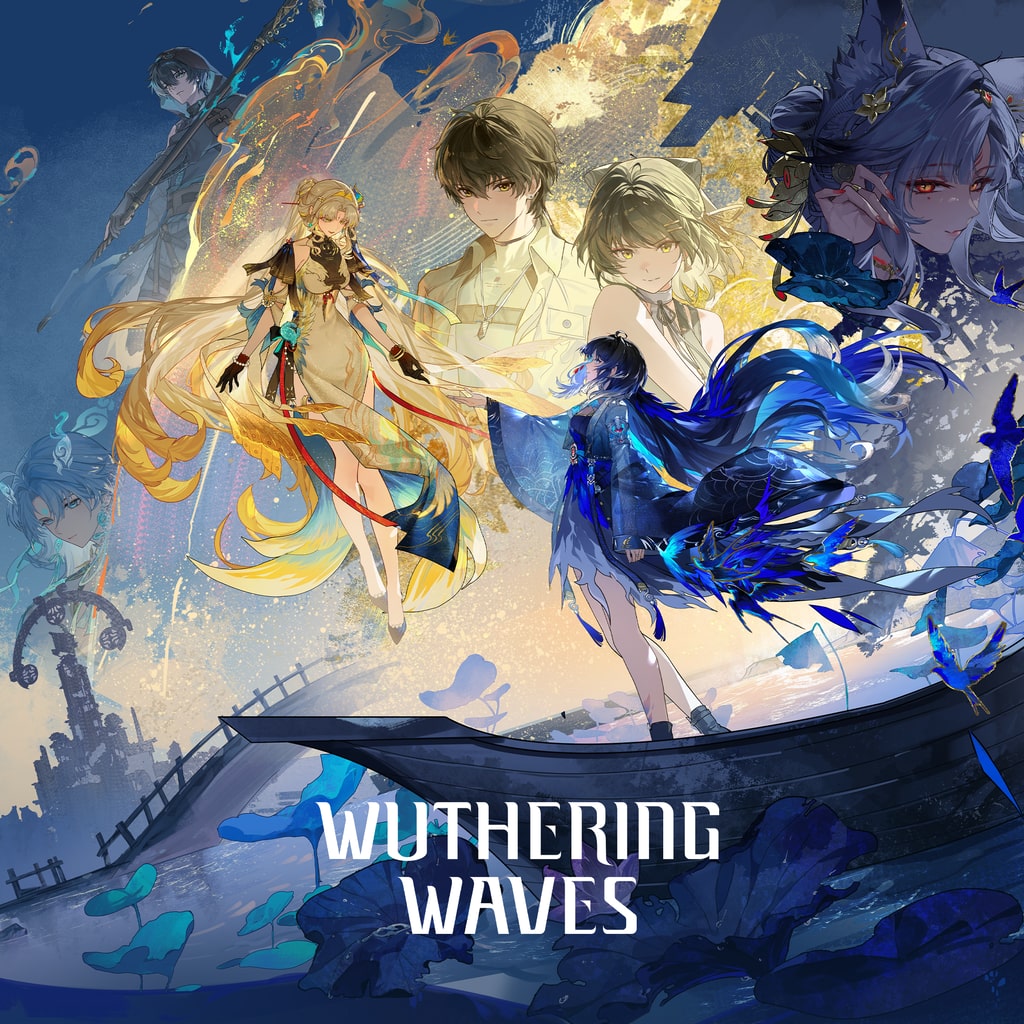
The open-world action RPG genre has become one of the most competitive spaces in gaming. With towering expectations set by some of the biggest releases in recent years, new contenders need more than a beautiful world and a collection of colourful characters to stand out. They need a reason for players to stay, explore every corner, and invest hundreds of hours in their journey. Wuthering Waves enters this crowded arena with confidence, offering a post-apocalyptic adventure that blends breathtaking exploration with one of the genre’s most satisfying combat systems.
Developed and published by Kuro Games, Wuthering Waves casts players as Rover, a mysterious figure who awakens in the aftermath of a devastating event known as The Lament. The world of Solaris-3 has been reshaped by destruction, leaving humanity struggling to rebuild as dangerous creatures known as Tacet Discords threaten what remains. With lost memories, hidden truths, and a world waiting to be understood, Rover’s journey quickly becomes more than a simple search for answers.
At first glance, Wuthering Waves may seem familiar. Its open-world structure, character-driven storytelling, and gacha foundations naturally invite comparisons with other major releases in the genre. However, Kuro Games has crafted something with its own identity, particularly in its movement and combat. This is a game that wants players to feel powerful, not just because of the characters they unlock, but because of the skills they develop along the way.
A World Reborn From Ruin
Solaris-3 is a fascinating setting, combining beauty and devastation in equal measure. The world is not merely a collection of colourful landscapes designed to encourage exploration. It is a place shaped by catastrophe, where abandoned structures, strange technology, and remnants of lost civilisation tell stories without constant explanation. There is a sense that every location has history, even when the game does not directly guide you towards it.
The environmental design is one of Wuthering Waves’ greatest strengths. From vast open fields and ruined cities to mysterious underground areas, the world constantly encourages curiosity. Exploration feels rewarding because the game rarely restricts movement. Instead of forcing players along a strict path, it gives them the freedom to climb, glide, grapple, and run across the environment, making travel feel like part of the adventure rather than a chore.
The movement system deserves particular praise. Wall running, unlimited sprinting outside combat, and the grappling hook create a sense of momentum that makes simply moving around the map enjoyable. Many open-world games struggle with traversal, turning travel into something players endure between objectives. Wuthering Waves understands that exploration should be fun on its own, and it succeeds by making movement feel fast, responsive, and exciting.
Combat That Rewards Skill
Where Wuthering Waves truly distinguishes itself from many of its competitors is in its combat. While character collection and team building remain important, success is not simply determined by having the strongest characters. The game rewards timing, awareness, and an understanding of enemy patterns.
Combat is built around speed and precision. Dodging at the right moment, countering incoming attacks, and switching characters at key moments create battles that feel more like an action game than a traditional menu-driven RPG. Every encounter encourages players to pay attention rather than simply overwhelming enemies with repeated attacks.
The Concerto system adds another layer of strategy by allowing characters to execute powerful swap attacks when certain conditions are met. These transitions make battles feel fluid, with each character contributing something unique to the flow of combat. Switching between a team of Resonators is not just about using different abilities, but about creating combinations that feel smooth and rewarding.
Boss encounters are where the combat system shines brightest. Larger enemies demand patience and observation, forcing players to recognise attack patterns and react accordingly. Defeating a powerful foe after learning its movements provides a genuine sense of accomplishment that is often missing from more straightforward action RPGs.
The Echo System Adds Something Special
One of Wuthering Waves’ most interesting ideas is the Echo system. By defeating enemies, players can absorb their abilities and equip them as additional combat options. This introduces a monster-collection element that gives players another reason to explore the world beyond simply completing quests.
The system works particularly well because it encourages players to engage with enemies they might otherwise ignore. A creature that initially appears as a simple obstacle may become a valuable addition to a player’s build. Hunting for specific Echoes becomes a rewarding side activity, blending exploration, combat, and progression naturally.
Building the right combination of Echo abilities adds another layer of customisation. Players can experiment with different setups to suit their preferred playstyle, whether focusing on damage, support abilities, or more specialised strategies. It gives the world a sense of discovery, as there is always the possibility of finding something useful around the next corner.
A Story With Potential
While Wuthering Waves excels in many gameplay areas, its story presentation is not always as strong. The world is packed with interesting ideas, but the early hours can feel overwhelming because of the sheer volume of terminology and background information introduced. Names, factions, scientific concepts, and historical events are delivered quickly, making it hard to tell what truly matters.
The narrative improves as the journey progresses, particularly once the characters and their personal struggles take centre stage. The strongest moments come when the game slows down, allowing players to connect with the people living in this damaged world. The cast of Resonators brings personality and emotional weight, helping transform Solaris-3 from an impressive setting into a place players genuinely care about.
The voice acting and presentation help to strengthen these moments, although the pacing occasionally falters between major story beats. At times, the game seems more interested in explaining its universe than in letting players experience it naturally. A little more restraint in the opening chapters would have made the initial impression much stronger.
Final Verdict
Wuthering Waves is an impressive achievement that proves the open-world action RPG genre still has room for innovation. It draws on familiar ideas, but its incredible movement system, skill-focused combat, and addictive Echo mechanics give it a personality of its own. This is a game that understands the importance of making players feel involved, whether exploring forgotten ruins or battling powerful enemies.
It is not without flaws. The story can be difficult to follow early on, and the amount of terminology introduced may leave some players feeling lost. However, beneath that complex surface lies a beautifully designed adventure with some of the best combat and traversal mechanics currently available in the genre.
For fans of open-world RPGs, Wuthering Waves offers an exciting alternative that prioritises player skill alongside character progression. It is fast, stylish, and ambitious, creating a world that feels worth returning to long after the opening hours.