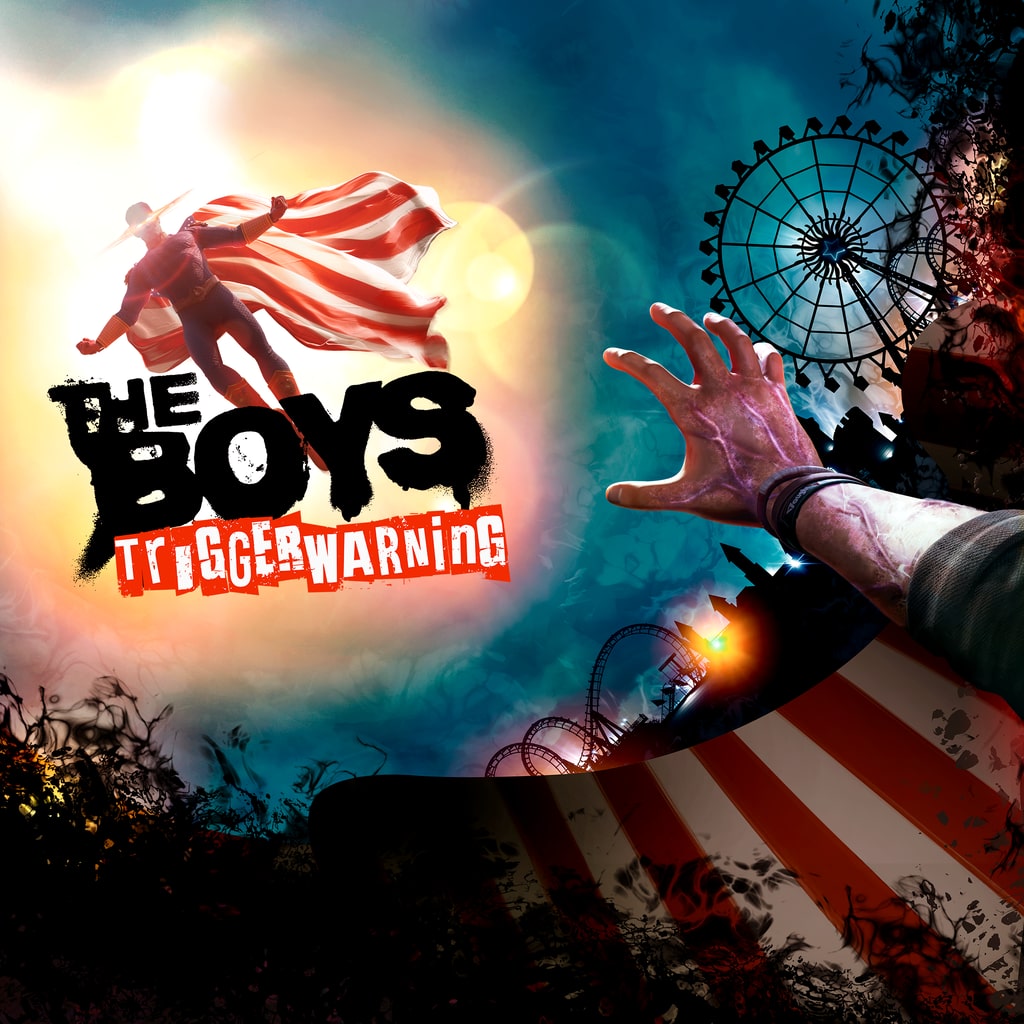
Few television properties seem more naturally suited to virtual reality than The Boys. The world created by Garth Ennis and expanded by Amazon’s hit television series is built on excess, corruption, violence, and the terrifying reality of what might happen if superheroes were treated like celebrities rather than saviours. It is a universe where power is rarely noble and often horrifying. Translating that into a VR experience feels like an obvious fit, yet it also poses a difficult challenge.
Rather than placing players in the boots of an existing fan favourite, The Boys: Trigger Warning introduces Lucas Costa, an ordinary man whose life is shattered after a deadly encounter with a family of unstable Vought-backed superheroes. Rescued by Butcher and Mother’s Milk and fuelled by experimental Temp V, Lucas becomes another weapon in the ongoing war against Vought. The premise feels right at home within the show’s universe, allowing familiar characters to appear without forcing the narrative to revolve entirely around them.
What follows is a surprisingly engaging VR adventure that understands what makes The Boys compelling. This is not a traditional superhero power fantasy. Instead, it is a story about desperation, revenge, and survival in a world where superhuman abilities are as much a curse as they are a gift.
Power Comes at a Price
The strongest aspect of Trigger Warning is how it handles player abilities. Telekinesis underpins most encounters, allowing Lucas to manipulate objects from afar, distract enemies, solve environmental puzzles, and dispatch unfortunate guards in a suitably gruesome fashion.
There is an immediate sense of physicality to these mechanics. Reaching out to pull a crate across a room or hurling an enemy into a wall never loses its appeal. VR excels when interactions feel tangible, and ARVORE clearly understands that. The sensation of controlling objects through gestures rather than button prompts helps sell the fantasy of possessing unstable supernatural powers.
The Temp V system adds another layer of excitement. At key moments, players can inject themselves with the infamous compound to temporarily unlock devastating abilities. Laser vision is every bit as satisfying as fans would hope, reducing enemies to smoking wreckage with alarming efficiency. Camouflage powers enable stealthy infiltration, while blade-like arm weapons transform close combat into a bloody frenzy.
Importantly, these powers are not available constantly. Their temporary nature creates tension and encourages players to think carefully about when to unleash them. That limitation also helps maintain balance, ensuring the game never devolves into a mindless power trip.
The Fear of Homelander
For all the explosive action and outrageous violence, some of the game’s best moments come from restraint. Homelander’s presence looms over the experience, feeling remarkably faithful to the show. Several chapters put players in situations where confrontation is simply not an option. Instead, you hide, listen, and pray you remain unnoticed.
These sequences are genuinely effective. Hearing footsteps echo down a corridor while crouched beneath a desk triggers an immediate sense of panic. The PSVR2’s audio capabilities amplify that tension, making every distant sound feel unnervingly close. Anyone familiar with the character knows exactly how dangerous he is, and the game weaponises that knowledge masterfully.
This balance between empowerment and vulnerability prevents the experience from becoming repetitive. One moment you are tearing apart security forces with laser vision. The next, you are frozen in place, hoping an unstable god in a cape walks past without noticing you.
Bringing The Boys to Life
Authenticity matters when adapting a beloved property, and Trigger Warning earns considerable credit here. The writing captures the cynical, darkly comedic tone that defines The Boys. Vought remains as absurdly corporate and morally bankrupt as fans would expect. Dialogue frequently lands with the same mix of humour and discomfort that made the television series so successful.
The returning cast also elevates the material. Laz Alonso, Colby Minifie, P.J. Byrne, and Jensen Ackles deliver strong performances that help connect this new story to the wider universe. Hearing familiar voices immediately deepens immersion and makes interactions feel meaningful rather than a collection of celebrity cameos.
Particularly impressive is the game’s willingness to explore some of the uglier corners of Vought’s empire. Locations such as Vought Tower and the underbelly of Voughtland reveal a side of the organisation that television viewers have only glimpsed. The world-building feels authentic and often surprisingly detailed.
A Strong VR Showcase with Limits
From a technical standpoint, the PlayStation VR2 version is clearly the definitive way to experience the game. The visual improvements over the standalone headset release are immediately apparent. Environments feature richer lighting, sharper textures, and a far greater sense of depth. Certain locations genuinely impress, particularly the sterile corporate interiors and darker underground facilities, where shadows play a significant role in building atmosphere.
The haptic feedback also deserves praise. Subtle headset vibrations during intense moments add an extra layer of immersion. Adaptive trigger support gives weapons and powers a satisfying weight that standard controllers simply cannot replicate.
Unfortunately, the graphical improvements cannot completely mask some underlying weaknesses. Character models occasionally appear stiff during conversations, and facial animations lack the expressiveness needed to fully sell emotional scenes. Given how narrative-focused the experience is, these shortcomings become noticeable more often than one would like.
Enemy AI also struggles to maintain the illusion of intelligence. Guards follow predictable routes and can often be manipulated with minimal effort. While this is less problematic early on, repeated encounters begin to expose the system’s limitations as the campaign progresses.
More Story Than Sandbox
One aspect prospective players should understand before jumping in is that Trigger Warning is unapologetically linear. There are no sprawling skill trees, deep progression systems, or extensive side activities. The game tells its story, delivers its set pieces, and reaches its conclusion with little interest in long-term engagement. For some players, that focused structure will be refreshing. For others, particularly those seeking dozens of hours of replayability, it may feel disappointingly restrictive.
The campaign itself remains engaging throughout its roughly ten-hour runtime, largely because the pacing is strong and new abilities are introduced at sensible intervals. Still, once the credits roll, there is little incentive to return beyond revisiting favourite moments.
Final Verdict
The Boys: Trigger Warning succeeds because it understands its source material. Rather than simply recreating iconic scenes or relying entirely on fan service, it tells a new story that fits comfortably within the larger universe and makes excellent use of virtual reality’s strengths. The combination of telekinetic powers, tense stealth encounters, and authentic performances creates an experience that often feels like stepping directly into an episode of the show.
It is not without flaws. Enemy AI lacks sophistication, character animations occasionally undermine dramatic moments, and the lack of meaningful replay value limits its longevity. Yet those issues rarely overshadow the core experience.
For fans of The Boys, this is one of the most convincing licensed adaptations in years. For VR enthusiasts, it is another strong addition to the growing PSVR2 library. Brutal, uncomfortable, darkly funny, and occasionally terrifying, The Boys: Trigger Warning captures the spirit of its source material with surprising confidence.