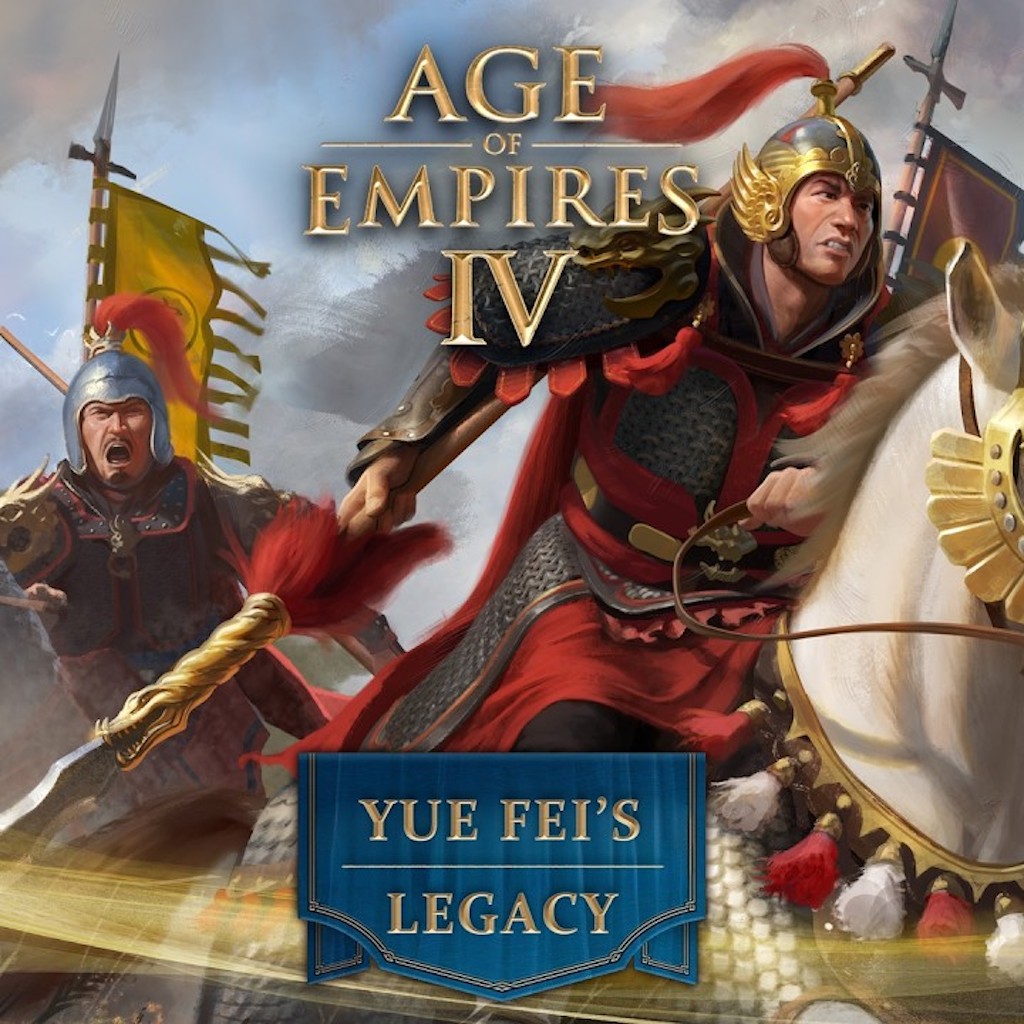
There is a specific, quiet tension we all remember from childhood. The feeling of building something delicate, whether it was a towering stack of cards or an elaborate sandcastle by the tide, knowing deep down that something stronger was coming to tear it apart. Age of Empires IV: Yue Fei’s Legacy captures that feeling completely. This latest expansion for Age of Empires IV trades the triumphant certainty of conquest for something more desperate and human: survival.
Developed by World’s Edge alongside Relic Entertainment and Forgotten Empires, Yue Fei’s Legacy tells the story of a collapsing dynasty fighting to preserve its identity against impossible odds. It is a campaign filled with retreating armies, political betrayals, and last stands carved into frozen landscapes. More importantly, it is one of the most emotionally grounded pieces of content Age of Empires IV has produced to date.
This is not simply another expansion about building armies and capturing territory. It is about protecting a future that feels perpetually on the verge of disappearing.
Campaign
The eight-mission campaign follows the legendary general Yue Fei during the Song-Jin Wars, and from the very first mission the tone feels markedly different from previous expansions. There is urgency everywhere. Villages burn in the distance. Supply lines collapse under pressure. Loyalists argue as enemies close in from every direction.
The campaign structure thrives on momentum. One mission may ask you to escort the fleeing Song prince through dangerous territory while managing limited resources. Another places you in defensive battles where survival matters more than outright victory. This creates a refreshing sense of vulnerability that many RTS campaigns struggle to capture.
Yue Fei himself is portrayed with surprising restraint. Rather than presenting him as an unstoppable mythical hero, the expansion frames him as a deeply burdened leader attempting to hold together a fractured empire. That humanity gives the story weight beyond the usual historical spectacle.
The cinematic presentation deserves praise as well. The historical cutscenes are beautifully directed, balancing dramatic battlefield imagery with quieter moments of political tension within the imperial court. The expansion repeatedly reminds you that wars are rarely decided solely on battlefields. Sometimes the deadliest enemy sits behind the throne.
What impressed me most was how naturally the missions evolve. Objectives shift organically as situations deteriorate. A defensive stand suddenly becomes a retreat. A rescue mission spirals into open warfare. The unpredictability keeps the campaign engaging throughout its runtime.
Gameplay
Mechanically, Yue Fei’s Legacy introduces the Jin Dynasty as a fully playable civilisation and quickly establishes itself as one of the most aggressive factions in the game.
The Jin are built around speed, expansion, and overwhelming pressure. Horse Grasslands create powerful synergies with stables, accelerating cavalry production at alarming rates. Once fully operational, Jin armies feel less like traditional medieval forces and more like a relentless avalanche.
Mounted Villagers are another fascinating addition. The ability to rapidly establish forward economies fundamentally changes the pace of expansion. Combined with Emissaries who capture neutral settlements to form Tributaries, the Jin civilisation constantly encourages map control and territorial dominance. There is an almost predatory rhythm to how the faction operates. You are never meant to sit still for long.
Late-game warfare becomes especially chaotic thanks to the Jin’s devastating gunpowder units. The Mounted Grenadiers are absurdly satisfying to use, launching explosive attacks into clustered formations while maintaining mobility. Meanwhile, Eruptors tear apart infantry lines at close range with brutal efficiency.
Then there are the Iron Pagoda cavalry units, towering armoured nightmares capable of smashing through defensive formations like a battering ram wrapped in steel.
Despite all this offensive power, the civilisation never feels completely unfair. The Jin demand constant momentum to remain effective. Lose control of the battlefield, and their fragile economy can quickly spiral into collapse. That balance makes them enormously fun to master.
Maps & Biomes
The four new maps and two added biomes significantly enhance the expansion’s atmosphere. The frozen desert plateaus, in particular, stand out visually, creating battlefields that feel harsh, isolated, and unforgiving.
Terrain design is crucial here. Narrow passes force brutal choke-point battles, while open grasslands encourage sweeping cavalry assaults. Several maps naturally reward the Jin playstyle without rendering defensive civilisations obsolete.
There’s a wonderful sense of scale throughout these environments. Dust storms roll across valleys as armies clash beneath snow-covered cliffs. This gives battles a cinematic quality that elevates even smaller skirmishes.
Environmental storytelling quietly reinforces the campaign themes, too. These are not thriving lands filled with prosperity. They are scarred frontiers hanging on through sheer endurance.
Audio & Presentation
The sound design throughout Yue Fei’s Legacy is exceptional. Cavalry charges thunder across the battlefield with frightening weight, while exploding gunpowder weapons create sharp bursts of panic in larger engagements.
The new musical score might be the expansion’s greatest aesthetic achievement. Traditional instrumentation blends beautifully with the rising tension of combat, creating tracks that feel melancholic one moment and triumphant the next.
One particular battle theme during a late-game siege stayed with me long after the credits rolled. It captures the exhaustion of prolonged warfare better than any dialogue ever could.
Visually, the expansion also continues Age of Empires IV’s strong art direction. Unit designs are detailed without becoming visually cluttered, and large-scale battles remain readable even during chaotic engagements involving fire, cavalry, and siege weapons.
Performance on current consoles and PC remains impressively stable. Massive battles maintain smooth frame rates, and controller support on consoles continues to feel surprisingly intuitive for a traditionally PC-focused genre.
A More Reflective Expansion
What sets Yue Fei’s Legacy apart from many RTS expansions is its willingness to slow down emotionally. The quieter moments matter here. Some missions make victory feel bittersweet rather than triumphant. Characters celebrate survival rather than conquest. Entire sections of the campaign centre on sacrifice and endurance rather than domination. That emotional maturity gives the expansion a sense of identity beyond its excellent mechanics.
It also helps that the writing rarely slips into melodrama. Conversations feel restrained, allowing the historical weight of the situation to carry the emotion naturally. Even minor supporting characters leave an impression because the campaign treats their struggles seriously. The result is a story that feels grounded despite the scale of the warfare surrounding it.
Final Verdict
Age of Empires IV: Yue Fei’s Legacy is among the strongest expansions the series has seen. It introduces a thrilling new civilisation, meaningful strategic systems, and a campaign that understands the emotional cost of survival far better than most historical strategy games.
The Jin Dynasty brings a wonderfully aggressive playstyle that transforms multiplayer and skirmish modes, while the narrative campaign delivers a rare sense of urgency and vulnerability across its eight missions. Most importantly, the expansion remembers that history is not just about empires rising. It is also about the people desperately trying to stop them from falling apart. That humanity gives Yue Fei’s Legacy remarkable staying power long after the final battle.