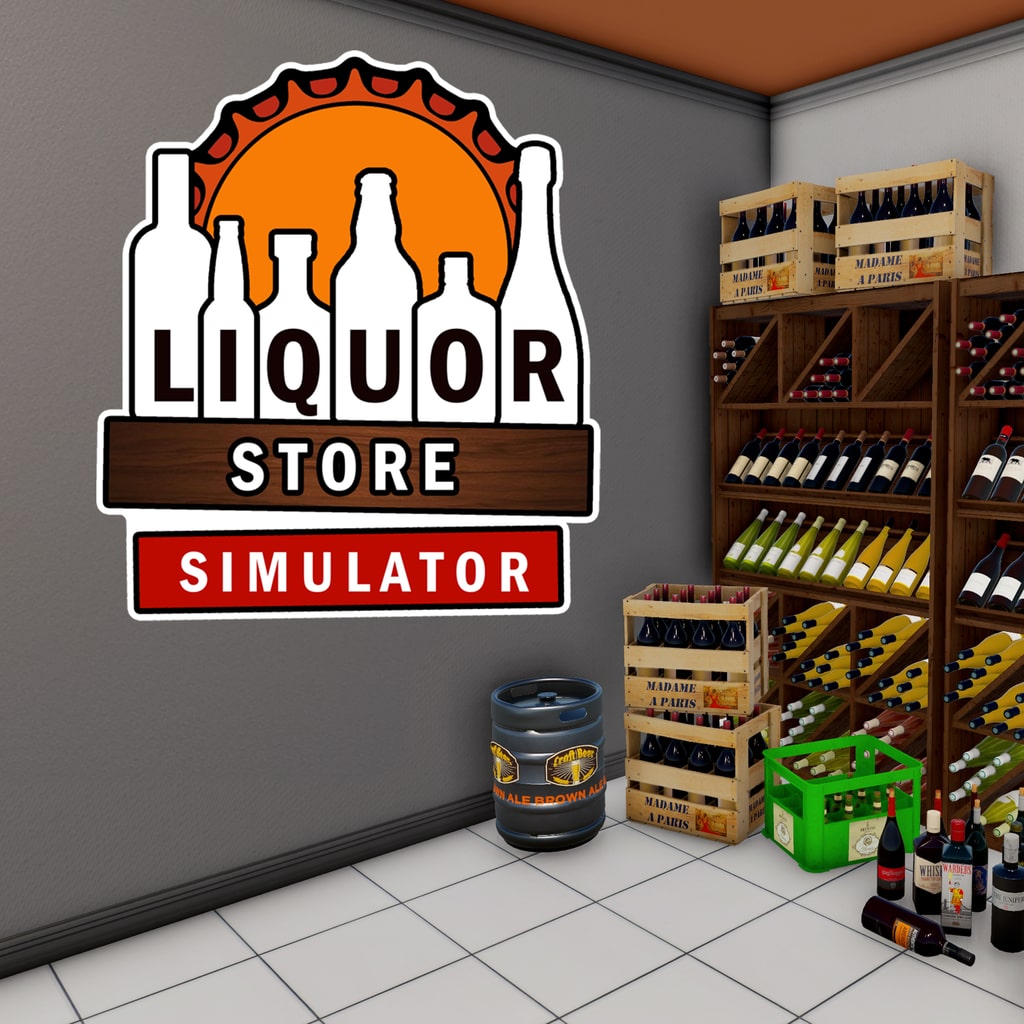
Simulation games have become masters at transforming ordinary professions into compelling entertainment. Whether it is running supermarkets, petrol stations, cafés, or farms, there is something strangely satisfying about taking a modest business and slowly expanding it into something much larger. Liquor Store Simulator follows that familiar formula, but it does so with enough charm and personality to stand out among the ever-growing crowd of retail management games.
Developed by Tovarishch Games and published by PlayWay S.A., Liquor Store Simulator places players behind the counter of a struggling alcohol shop purchased entirely on credit. There are no dramatic story twists or emotional character arcs waiting around the corner. Instead, the game focuses entirely on the journey of entrepreneurship, asking you to transform a neglected storefront into a thriving retail destination through hard work, careful planning, and a healthy amount of patience.
What initially appears to be a straightforward management title quickly reveals itself as a surprisingly engaging time sink. The simple act of opening the doors each morning and watching your business slowly evolve creates a satisfying sense of ownership that keeps you returning for just one more shift.
Every Bottle Counts
One of the game’s greatest strengths is how involved it makes you feel in every aspect of your business. Unlike management games that eventually reduce the player to clicking menus from afar, Liquor Store Simulator keeps you firmly on the shop floor.
In the early hours, you are responsible for everything. Deliveries arrive at the back entrance and need unloading. Shelves sit empty until you stock them. Customers line up at the till expecting service. Floors need maintaining, inventory requires monitoring, and every sale matters because your margins are razor-thin.
This hands-on approach creates an immediate connection between effort and reward. When profits finally start to rise, it feels earned because you personally handled every box, every customer, and every shelf arrangement that contributed to your success.
The first-person perspective reinforces this immersion. Rather than feeling like a distant manager, you feel like an actual shop owner trying to keep the lights on. There is a grounded authenticity to walking through your aisles and seeing products exactly where you placed them.
Finding Comfort in Routine
At its heart, Liquor Store Simulator thrives on repetition, but it is the kind that becomes oddly relaxing rather than tedious. There is genuine satisfaction in unloading deliveries, organising stock, and hearing the familiar beep as items scan through the register. The gameplay loop taps into the same appeal that makes cleaning simulators and management games so enjoyable. Every task contributes to visible progress, and each improvement makes the store feel a little more successful.
The game also wisely avoids overwhelming players with excessive complexity. Utility bills, endless paperwork, and complicated financial systems remain largely in the background. Instead, the focus stays firmly on the enjoyable aspects of running a business. This streamlined design allows sessions to flow naturally. One in-game day transitions smoothly into the next, often making it easy to lose track of time. Before long, what was supposed to be a brief session becomes several hours spent chasing the next upgrade or expansion.
IDs, Beer Taps, and Customer Chaos
While stocking shelves forms the backbone of the experience, Liquor Store Simulator introduces several mechanics that add variety to the routine. The identification system is perhaps the most entertaining. Customers occasionally attempt to buy alcohol with obviously fake identification. Some are hilariously bad, forcing players to inspect documents carefully before approving a sale. Accidentally serving an underage customer results in costly penalties, while refusing legitimate customers can damage your reputation.
These moments break the normal flow of business and require just enough attention to keep you engaged. They never become stressful, but they do prevent the checkout process from feeling completely automated.
The draft beer system adds another layer of management. Once unlocked, players can serve fresh beer directly from taps, adding a small but enjoyable minigame to daily operations. Timing and pouring technique matter, and a poorly executed pour can result in excessive foam and unhappy customers. While the feature is fun, it eventually becomes a double-edged sword. Draft beer generates excellent profits, but it also creates one of the game’s most frustrating limitations. Your employees refuse to handle beer taps, meaning you remain permanently tied to the bar whenever customers want a drink. What begins as a rewarding addition eventually feels more like an obligation.
Building Your Own Identity
Customisation plays a significant role in keeping progression engaging. As profits rise, players unlock new furniture, shelving, equipment, and decorative options. The ability to alter wall colours, flooring, and the overall layout fosters a genuine sense of ownership. No two stores need to look exactly alike, and experimenting with different arrangements becomes a rewarding activity in itself.
The product selection also expands steadily over time. Shelves that once held only a handful of items eventually fill with a wide variety of beverages. The game’s parody brands are particularly amusing, clearly inspired by real-world products while maintaining enough originality to avoid legal complications. Watching your humble corner shop transform into a bustling alcohol superstore offers a satisfying visual representation of your progress. Few management games communicate growth as effectively as simply walking through your own creation.
Where the Cracks Begin to Show
Despite its strengths, Liquor Store Simulator struggles to maintain momentum throughout its progression curve. The most significant issue is the employee AI. As the business expands, hiring staff becomes essential. Unfortunately, these workers often prove less reliable than expected. Employees occasionally become stuck in the environment, ignore obvious tasks, or focus on inefficient stocking priorities. These shortcomings become increasingly noticeable as store complexity grows. What begins as a minor annoyance eventually becomes a genuine management headache.
The economy also suffers from pacing issues in the later stages. Early progression feels rewarding and frequent, with new upgrades arriving at a satisfying pace. Eventually, however, costs increase dramatically while income growth slows considerably. As a result, the final stretch can feel far grindier than the opening hours. Instead of introducing fresh mechanics or meaningful new challenges, the game often asks players to repeat familiar tasks for increasingly expensive rewards. While dedicated simulation fans may not mind the extended grind, others may lose motivation before reaching the highest tiers of progression.
Presentation and Atmosphere
Visually, Liquor Store Simulator is functional rather than spectacular. The graphics serve their purpose well, creating believable retail environments without pushing technical boundaries. What truly elevates the presentation is the atmosphere. The soundtrack deserves particular praise for its calming jazz and lounge-inspired compositions. Combined with the steady rhythm of daily tasks, the music creates an unexpectedly cosy environment.
There is a peaceful quality to running the store. Even during busy periods, the game rarely feels stressful. Instead, it embraces a laid-back pace that encourages players to settle into its routine and enjoy the simple satisfaction of steady progress. That sense of comfort ultimately becomes one of the game’s strongest assets.
Final Verdict
Liquor Store Simulator understands exactly what makes management games appealing. It turns mundane retail tasks into an addictive progression loop of satisfying routines, meaningful upgrades, and a strong sense of ownership. The hands-on approach keeps players engaged through the early and middle stages, while the customisation options provide plenty of motivation to keep expanding.
The experience is not without flaws. Employee AI can be frustratingly unreliable, and the late-game economy drifts into repetitive grinding that lacks the excitement of the opening hours. Even so, the core gameplay remains consistently enjoyable thanks to its relaxing atmosphere and rewarding business-building mechanics. For players who enjoy cosy management simulations and the simple pleasure of watching a small business grow into something substantial, Liquor Store Simulator delivers exactly what it promises.