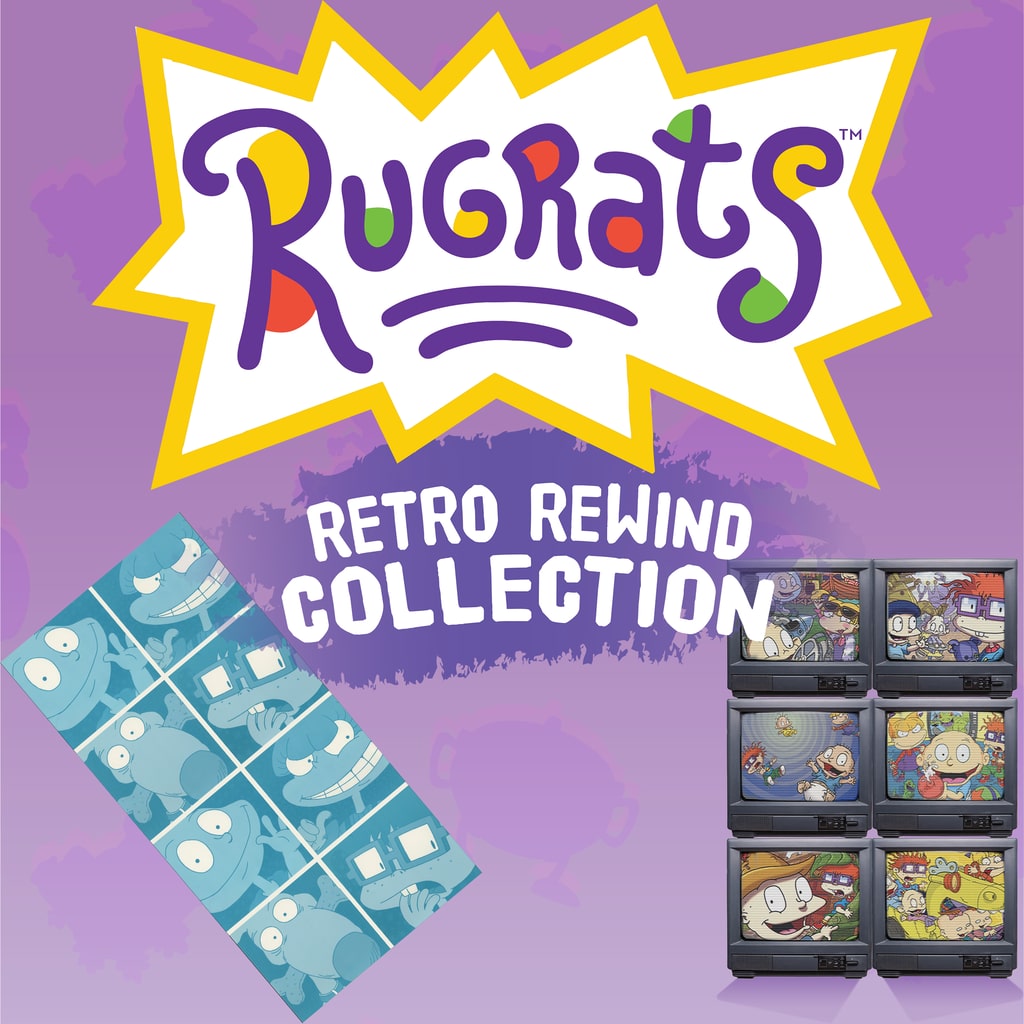
Nostalgia collections live and die by one question: do these games still feel special once the rose-tinted glasses come off? Rugrats: Retro Rewind Collection answers with a surprisingly heartfelt yes. Not every game included here has aged gracefully, and some were never masterpieces even in their own era, but together they create something greater than the sum of their parts. This is not merely a bundle of old cartridges dusted off for modern hardware. It feels like an affectionate archive of childhood memories.
The collection gathers six Rugrats adventures spanning handheld systems and early 3D consoles, covering everything from the beloved Search for Reptar to the often-overlooked Castle Capers. More importantly, it preserves a very specific slice of late-nineties gaming culture, when licensed games could still feel earnest, experimental, and a little weird. These were games built around imagination rather than spectacle, and that spirit still comes through. For anyone who grew up watching Tommy, Chuckie, Phil, Lil, and Angelica turn ordinary household spaces into grand adventures, stepping back into these worlds feels strangely comforting.
Search for Reptar Still Steals the Show
The centrepiece remains Rugrats: Search for Reptar, and thankfully it holds up remarkably well. The game still captures the series’ playful energy through simple exploration and themed mini-adventures. One moment you are racing a toy car around the house; the next you are helping Reptar save the day or wandering through imaginative, dreamlike spaces built from everyday objects.
Its chunky early 3D visuals have aged into something charming rather than awkward. There is an innocence to its design that modern licensed games rarely replicate. Levels feel exploratory without becoming overwhelming, and the soundtrack instantly transports you back to weekend mornings in front of the television.
The same cannot always be said for every title in the package. Handheld entries like The Rugrats Movie and Time Travelers naturally show their age more aggressively. Platforming can feel stiff, and progression occasionally drifts into old-school obscurity. Yet even these rougher experiences carry an undeniable personality. They feel like artefacts from a period when developers squeezed surprising ambition into tiny cartridges.
Six Games, Six Different Flavours of Childhood
One of the collection’s biggest strengths is its variety. Each included game offers a distinct take on the Rugrats universe, preventing the package from becoming repetitive.
Studio Tour remains wonderfully odd, throwing players into themed movie sets with bizarre humour and experimental design choices. It has always felt slightly chaotic, but revisiting it now makes that unpredictability part of the appeal. You never quite know what ridiculous scenario awaits around the corner.
Rugrats in Paris offers another highlight thanks to its cheerful atmosphere and theme park setting. There is an infectious energy to it that still works today. Meanwhile, Castle Capers delivers a surprisingly solid portable adventure with charming fantasy themes and straightforward progression.
Not every game lands equally. Some sections reveal the limitations of their original hardware and era. Certain mechanics feel repetitive, and control schemes occasionally clash with modern expectations. Still, taken as a complete package, the collection becomes a fascinating journey through how Rugrats evolved across generations of gaming.
Modern Comforts Make a Huge Difference
Where Retro Rewind Collection truly excels is in preservation. Limited Run Games clearly understands that revisiting old games should not mean reintroducing old frustrations.
The rewind feature alone changes everything. Difficult jumps, awkward platforming sections, or sudden mistakes no longer result in unnecessary punishment. Save-anywhere support is equally welcome, especially for handheld games originally designed around limited battery saves and passwords.
These additions never feel intrusive because they remain optional. Purists can still experience the games as originally intended, while everyone else gains tools that make the experience smoother and more inviting.
The digital museum deserves praise too. Browsing original manuals and box art can be unexpectedly emotional if you grew up during this era. There is something strangely powerful about seeing scanned covers and instruction booklets preserved with this level of care. It transforms the collection into more than a software archive. It becomes cultural preservation.
The included music player adds another layer of nostalgia. Rugrats always had a distinctive audio identity, balancing playful melodies with quirky energy, and revisiting those tracks outside gameplay feels like rediscovering an old toy box in the attic.
Childhood Imagination Still Matters
What surprised me most about Rugrats: Retro Rewind Collection is how sincere it feels. Modern family games often chase spectacle, but these older adventures were built around perspective. A backyard became a jungle. A toy store became an epic quest. A cardboard box became a limitless possibility.
That childlike lens still resonates today. Playing these games again reminds you why Rugrats connected with audiences in the first place. The babies never saw ordinary spaces. Everything became an adventure. The games mirror that perfectly. Even when mechanics wobble or age shows through, the imagination remains intact. That matters more than pristine design. There is also a warmth here that licensed collections often miss. This does not feel assembled purely for profit. Someone clearly cared about presenting these games respectfully and about preserving the memories attached to them.
Final Verdict
Rugrats: Retro Rewind Collection is not flawless. Some games have aged better than others, and newcomers without nostalgia may struggle with the older design philosophies. A few handheld entries feel more historically interesting than genuinely compelling today. Yet the collection succeeds because it understands what fans want. This is not about perfection. It is about preservation, celebration, and reconnecting with a world where the living room floor could become a grand adventure.
For longtime Rugrats fans, this is an easy recommendation. For retro enthusiasts, it is an intriguing snapshot of licensed gaming history. And for anyone seeking a little childhood warmth, there is plenty here. The babies may have grown up. The players certainly have. But Reptar still rules.