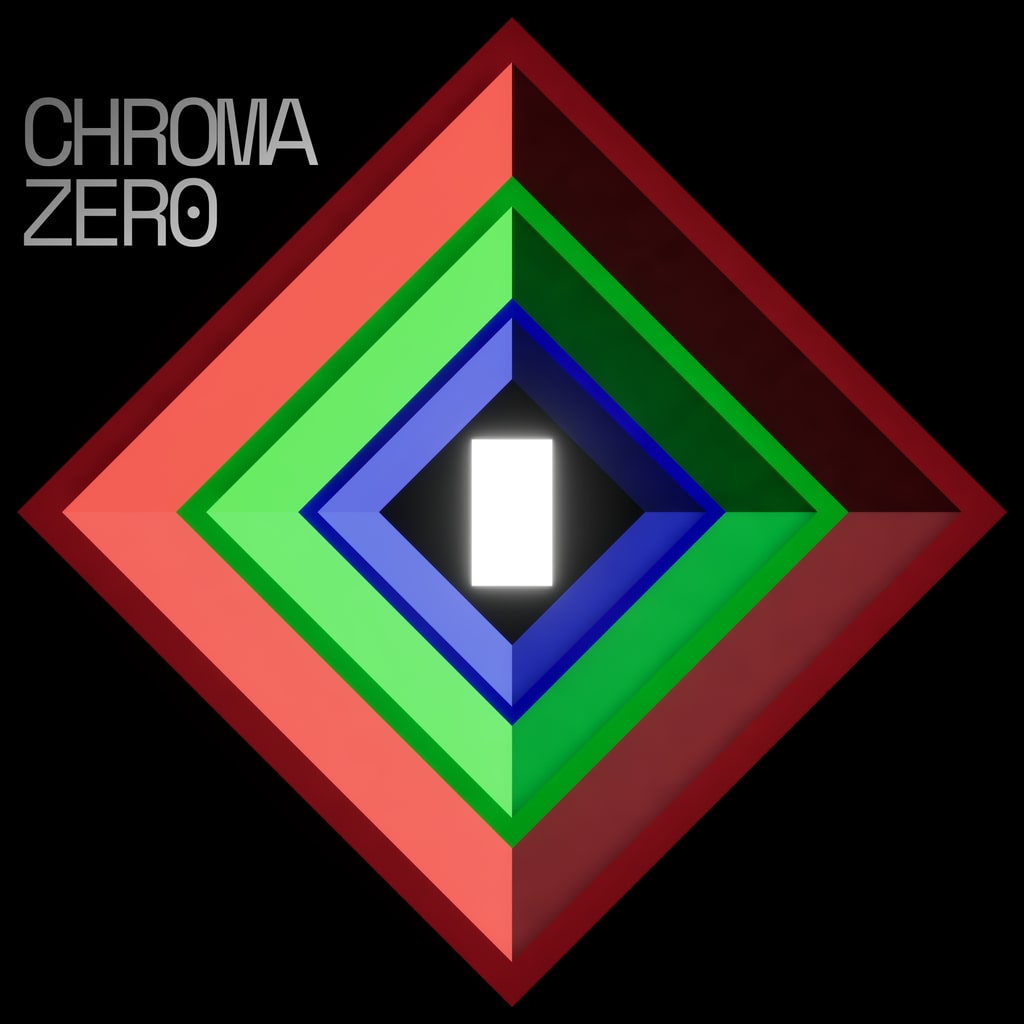
At a glance, Chroma Zero appears deceptively simple. Clean lines, stark contrasts, and an almost clinical presentation suggest a lightweight arcade experience designed for short bursts of play. Spend time with it, however, and that initial impression quickly dissolves. Beneath its minimalist surface lies a tightly constructed action game built around precision, flow, and an unforgiving demand for player focus.
Chroma Zero is not interested in narrative framing or visual spectacle. It strips away almost everything except movement, timing, and colour-based interaction, placing total responsibility for success firmly on the player’s reflexes and spatial awareness. The result is an experience that feels pure, demanding, and occasionally punishing—but rarely unfocused.
Visual Design and Clarity of Intent
The visual language of Chroma Zero is one of its strongest assets. Environments are abstract, composed of sharp geometric shapes and bold colour palettes that communicate function rather than decoration. Hazards, safe zones, and interactive elements are instantly readable, which is essential given the speed at which the game operates.
Colour is not simply aesthetic; it is mechanical. Shifts in hue often signal changes in rules, threats, or player capabilities. This design choice ensures that visual information is always relevant, encouraging players to process what they see instinctively rather than consciously. Over time, recognising these visual cues becomes second nature, contributing to a satisfying sense of mastery.
While the presentation may appear stark, it is far from sterile. Subtle visual effects—pulsing lights, screen distortions, and reactive animations—add texture without clutter. The game understands restraint, allowing the player’s actions to remain the focal point at all times.
Core Gameplay and Mechanics
At its core, Chroma Zero is an action-focused experience built around momentum and precision. Movement is fluid, responsive, and intentionally fast. Players are constantly encouraged to stay in motion, chaining actions together while navigating increasingly hostile spaces.
Controls are tight and dependable, leaving little room for ambiguity. When failure occurs, it is almost always clear why. This transparency is crucial in a game where repetition and improvement are central to enjoyment. Each death becomes a lesson rather than a frustration, provided the player is willing to engage on the game’s terms.
Mechanically, Chroma Zero introduces new concepts gradually, layering complexity over time. Early stages establish fundamentals, while later challenges demand multitasking, rapid decision-making, and near-perfect execution. The game rarely pauses to explain itself, trusting players to learn through play.
This approach will resonate strongly with players who enjoy skill-based progression. Those seeking a more guided or forgiving experience may find the learning curve abrupt, particularly as difficulty ramps up with little warning.
Flow, Difficulty, and Player Psychology
Chroma Zero is built around the concept of flow—the delicate balance between challenge and capability. At its best, the game achieves this balance brilliantly. Successful runs feel almost rhythmic, with actions blending into a seamless sequence of reactions and adjustments.
Difficulty escalation is aggressive but deliberate. The game does not merely increase speed or add hazards; it introduces scenarios that test comprehension as much as reflexes. Players must adapt to new rulesets, often mid-run, without breaking concentration.
This design creates moments of intense satisfaction when everything clicks. Clearing a particularly demanding section feels earned in a way few modern games manage. However, the flip side is that Chroma Zero can be mentally exhausting. Extended sessions demand sustained focus, and frustration can build quickly when progress stalls.
Importantly, the game rarely offers relief. There are few downtime moments, no narrative breaks, and minimal variation in tone. This relentless intensity is central to its identity, but it also narrows its appeal.
Audio Design and Sensory Feedback
Sound design in Chroma Zero is understated but effective. Music leans toward electronic and ambient textures, reinforcing the game’s abstract tone without overwhelming the senses. Tracks are designed to support concentration rather than dominate attention, subtly enhancing momentum during high-intensity sequences.
Audio cues play an important feedback role. Hits, failures, and transitions are clearly communicated through sound, providing immediate reinforcement without visual overload. This tight integration between audio and gameplay helps maintain immersion, particularly during fast-paced segments where visual processing is already stretched.
The restrained soundtrack may not stand out on its own, but it complements the experience well, reinforcing the sense of controlled intensity that defines the game.
Structure and Replayability
Chroma Zero is structured around repeatable challenges rather than a traditional campaign arc. Progress is measured through completion, mastery, and improvement rather than story advancement or character development.
This structure lends itself naturally to replayability. Players are encouraged to refine techniques, chase cleaner runs, and push further into the game’s more demanding content. However, replay value is heavily dependent on personal motivation. Without narrative incentives or significant variation in presentation, the game relies entirely on its mechanics to sustain interest.
For players who thrive on self-improvement and mastery, this is more than enough. For others, the lack of variety may cause engagement to taper off once the core challenge is understood.
Accessibility and Limitations
Chroma Zero makes few concessions to accessibility beyond clear visuals and responsive controls. There are limited difficulty modifiers, and the game largely expects players to adapt rather than accommodate different skill levels.
This design choice reinforces the purity of the experience but also limits inclusivity. The game does not attempt to broaden its appeal, and it is unapologetic in its expectations. This will earn admiration from some and criticism from others.
Final Verdict
Chroma Zero is a focused, disciplined action game that values clarity, precision, and player mastery above all else. It strips away narrative, spectacle, and excess in favour of a refined mechanical core that demands attention and rewards perseverance.
While its minimalist presentation and relentless difficulty will not appeal to everyone, those who connect with its design philosophy will find an experience that is deeply satisfying and consistently engaging. Chroma Zero does not try to be many things; it tries to be one thing done exceptionally well.
For players seeking a pure test of reflexes and concentration, it stands as a confident and uncompromising entry in the modern action space.