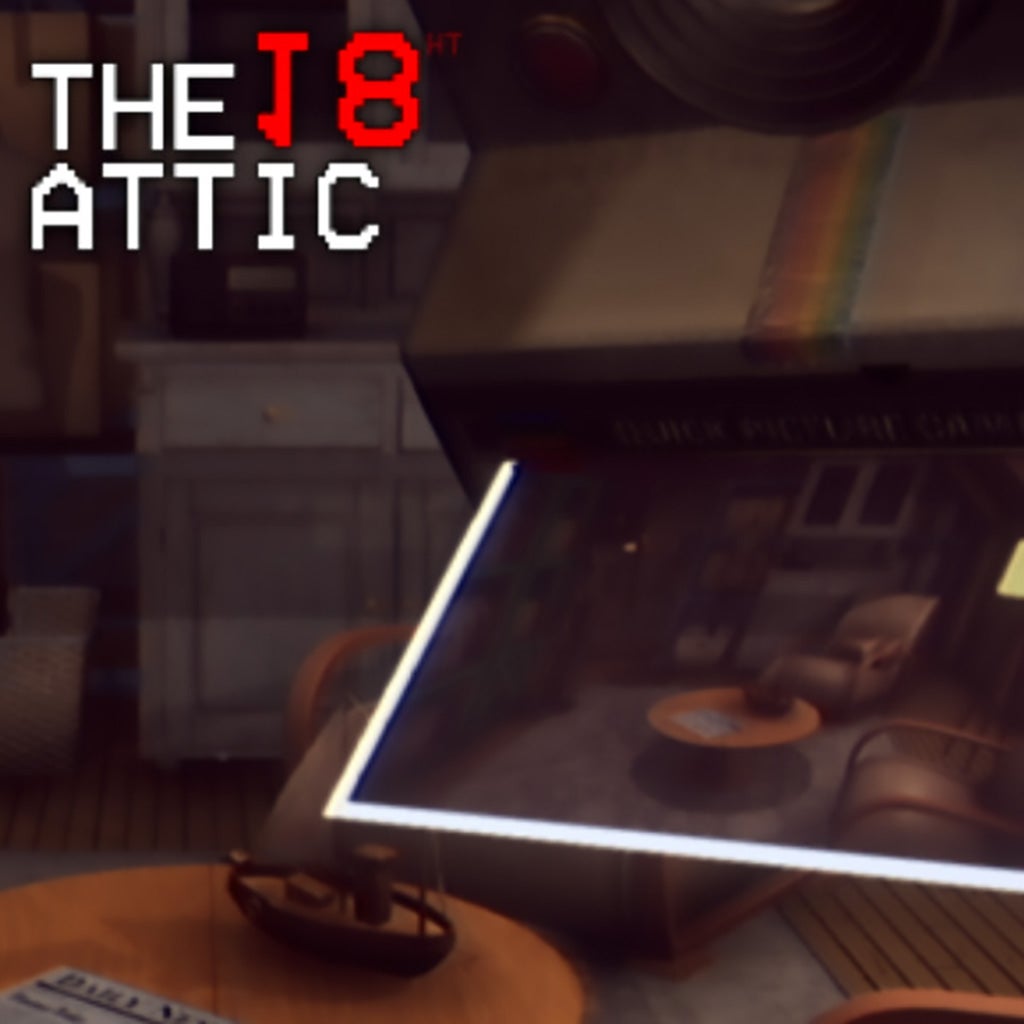
From the first moment you step into the titular attic, The 18th Attic sets a tone of unease that never fully lets up. You play as a man trapped in a looping nightmare, armed with little more than an instant picture camera and a lighter, tasked with uncovering paranormal anomalies that lurk in the corners. At first glance, it might seem like a simple hunting game: spot the anomaly, snap the photo, and progress. But Steelkrill Studio quickly establishes that there’s far more beneath the surface.
The attic itself is as much a character as any entity you’ll encounter. Dimly lit, claustrophobic, and littered with objects that hold fragments of memory, every corner demands careful observation. Shadows stretch unnaturally, objects seem slightly out of place, and any mistake can have dire consequences. The game’s design ensures that you never feel fully safe, instilling a creeping paranoia that gradually builds as you climb deeper into the attic’s floors.
Photography as a Weapon—and a Key
The instant picture camera is central to the gameplay, functioning both as your primary tool and the lens through which the story unfolds. Every photo you take can unlock a memory or reveal an anomaly attempting to conceal itself. The tension comes not from over-the-top jump scares but from the uncertainty of what’s real, what’s spectral, and what could attack you if you’re careless.
Each anomaly is unique: shifting shadows, spectral figures, and cryptic disturbances all behave differently, requiring careful observation and timing. Some anomalies actively try to trick your perception, and others are more aggressive, capable of harming you if you linger too long. This forces players to remain vigilant, scanning every corner and constantly adjusting their strategy. Running out of photo cartridges adds an extra layer of tension, as it limits your ability to detect and capture anomalies, effectively putting you on a timer with every encounter.
Mechanics That Engage the Mind and the Senses
Beyond simply snapping pictures, The 18th Attic asks players to interact with the environment in subtle, meaningful ways. Your lighter illuminates dark corners, revealing objects or anomalies that might otherwise remain hidden. Some areas require patience, forcing you to linger and observe patterns, while others demand swift action to avoid being caught off-guard.
The game’s loop-based design cleverly reinforces its psychological horror. Each cycle provides slightly different anomalies or rearranged environmental cues, meaning that even repeat playthroughs remain tense and unpredictable. Memory and observation are rewarded, and missteps can be costly. This creates a unique rhythm of anxiety and reward, where careful attention to detail pays off in uncovering the attic’s sinister history.
Atmosphere and Audio Design
Atmosphere is where The 18th Attic truly shines. The game’s soundscape is minimalist but effective: the creak of floorboards, the faint whisper of wind through cracks, and occasional distant groans all contribute to a sense of pervasive dread. Coupled with dynamic lighting and carefully crafted shadows, it’s an environment designed to make players second-guess every glance.
Visually, the attic is detailed without being overcrowded. Objects hold weight and meaning; they’re not just decoration but part of the narrative and gameplay. Anomaly design is particularly effective—the subtle distortions, flickering movements, and unnatural forms are unsettling without resorting to cheap scare tactics. It’s a psychological horror experience that respects its audience, preferring unease over gore or jump scares.
Companions, Challenges, and Strategy
As you delve deeper into the attic, you’re occasionally accompanied by a companion who provides a buffer against the tension, confronting anomalies alongside you. While the companion doesn’t eliminate the risk, it adds an interesting strategic layer, allowing for cooperative anomaly management in moments of heightened stress.
Players must also manage their health and resources. Photo cartridges, limited light, and your wits form a delicate balance of survival and investigation. Encountering aggressive anomalies requires split-second decision-making, and overextending can result in being overwhelmed or forced to restart a section of the loop.
The game rewards observation and pattern recognition. Learning how anomalies move, behave, and interact with objects is critical for survival. Each floor climbed, each memory unlocked, builds toward the ultimate goal: uncovering the attic’s mysterious—and increasingly disturbing—past.
Replayability and Narrative Depth
The procedural nature of anomaly placement, combined with the looped design, ensures replayability. No two playthroughs are identical, and the careful balance of randomness and design keeps players on edge. Every photo you take is a small victory, offering clues to the overarching narrative and gradually revealing the protagonist’s history.
Narratively, The 18th Attic is subtle but effective. You are not given outright exposition; rather, the story unfolds through environmental storytelling, anomalies, and memory fragments. The psychological tension, paired with the methodical pace of exploration, makes uncovering each secret feel earned. It’s a slow burn, but one that pays off as the attic’s dark history emerges.
Minor Quibbles
The game isn’t without minor flaws. Resource management can feel punishing at times, particularly if you run out of cartridges during a tense anomaly encounter. Certain loops might feel repetitive to players seeking a faster-paced horror experience, and the companion, while useful, occasionally underperforms in critical moments. However, these issues are overshadowed by the game’s strong atmosphere, innovative mechanics, and narrative depth.
Final Verdict
The 18th Attic is a masterclass in psychological horror and exploration. It takes a simple premise—capturing anomalies with a camera—and transforms it into a tense, atmospheric, and deeply rewarding experience. The looped structure, resource management, and anomaly behavior create a challenging, engaging, and immersive gameplay loop, while environmental storytelling ensures that every step feels meaningful.
For fans of slow-burn horror, mystery, and strategic observation, this game is a must-play. The attic is dark, the anomalies are watching, and every memory you uncover pulls you deeper into a story that lingers long after you’ve put the controller down.